
When Steve Jobs got Google logo changed; told Google: I don’t like the way…
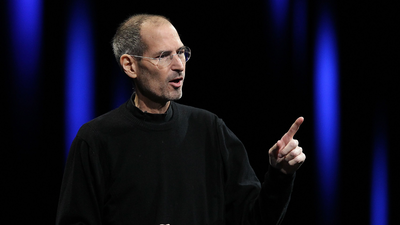
It was a Sunday morning in January 2008. Vic Gundotra, then Google’s Senior Vice President of Engineering, was sitting in church with his family when his phone buzzed with an unknown number. He let it ring. Minutes later, he checked his voicemail—it was Steve Jobs, saying he had something “urgent” to discuss. Gundotra called back almost immediately. Jobs opened with a joke—”Vic, unless the Caller ID said ‘GOD’, you should never pick up during services”—before getting to the point.The issue? The second ‘O’ in the Google logo on the iPhone‘s home screen didn’t have the right yellow gradient. Jobs had been studying the icon and found the colour rendering off. He’d already assigned Greg Christie, Apple‘s Senior Director of Human Interface, to help fix it by Monday morning.
Steve Jobs’ obsession with pixel-perfect design extended even to other companies’ logos on his device
This wasn’t about Google’s global branding. The corporate logo stayed exactly as it was. What bothered Jobs was how the icon rendered specifically on the iPhone’s display—a subtle calibration mismatch that most people would never notice. But Jobs wasn’t most people.Christie promptly emailed Gundotra with the subject line “Icon Ambulance,” attaching corrected gradient files. Google implemented the tweak without fuss. At the time, Apple and Google were close partners—Google Maps and YouTube came pre-installed on the iPhone—and the exchange reflected a working relationship built on mutual respect rather than the rivalry that would develop later.
The anecdote only became public three years later, as a tribute to Jobs
Gundotra kept the story private until August 25, 2011—the day after Jobs resigned as Apple CEO due to declining health. He shared it on Google+ under the title “Icon Ambulance,” framing it as a lesson in leadership.“CEOs should care about details. Even shades of yellow. On a Sunday,” Gundotra wrote.It remains one of the most enduring stories about Jobs—not because of what he built, but because of how closely he looked at everything on screen. Over the years, it’s been retold in Walter Isaacson’s biography of Jobs and cited in countless discussions about design philosophy and product leadership.