UP Dog Life Imprisonment: ‘Life imprisonment’ for stray dogs who bite humans twice in Uttar Pradesh | Lucknow News
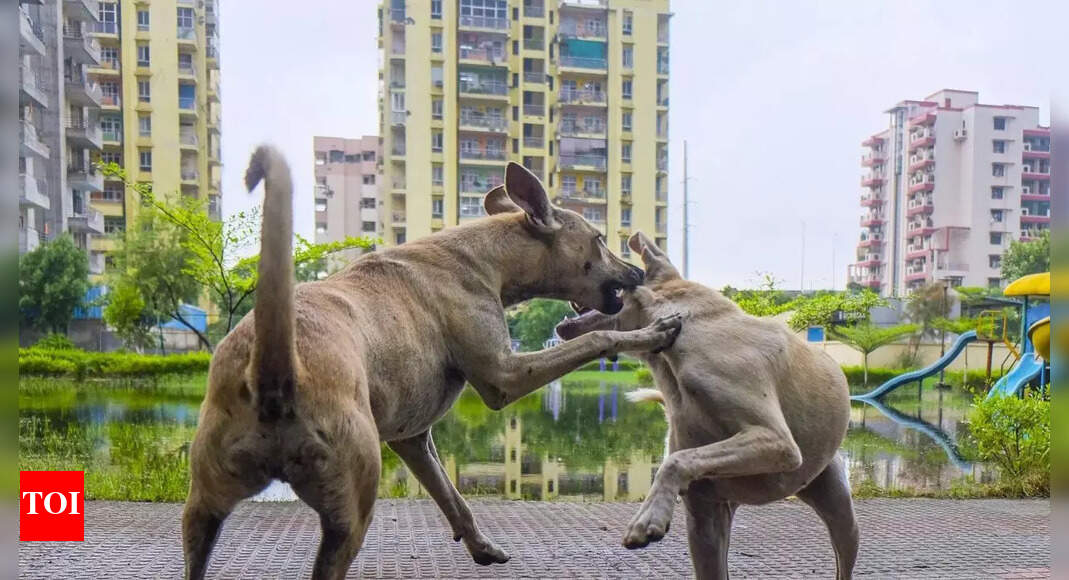

UP introduces new guidelines for managing stray dogs that bite humans, to be kept in animal center for 10 days (Representative Image)
NEW DELHI: The government of Uttar Pradesh has introduced new rules to manage aggressive stray dogs after a series of biting incidents raised alarm across the state. Under the order, dogs that bite humans without provocation will be taken to an animal centre for 10 days of observation. They will then be sterilised if necessary, fitted with a microchip, and released back into the same locality. However, repeat offenders will face ‘lifelong confinement’ in an animal shelter unless adopted, news agency ANI reported.Adopters will be required to sign an affidavit pledging lifelong care and promising not to abandon the animal.
Panel to decide provocation
Dr Vijay Amritraj, Veterinary and Animal Welfare Officer with the Prayagraj Municipal Corporation, said the new system aims to distinguish between genuine aggression and provoked attacks. “A three-member committee will investigate whether the bite was provoked. It will include a veterinary doctor, an animal behaviour expert and a municipal representative. If someone is found repeatedly provoking a dog to attack, action will be taken against them,” he told ANI. In cases where aggression is linked to stress or provocation, officials say dogs will be given behavioural training to help them adapt.
Order issued after court directive
The order, signed on 10 September by Principal Secretary Amrit Abhijat, is part of efforts to curb rising stray dog bite incidents in urban areas. It follows recent Supreme Court directions asking states to develop humane but effective methods to control the problem. Officials say the new policy balances public safety with animal welfare. Still, with dog bite cases steadily increasing, its success may depend on rigorous enforcement and community cooperation.