
Two months after Google CEO Sundar Pichai said AI investment boom has ‘elements of irrationality’, he defends it; says: I think the investment makes sense given…
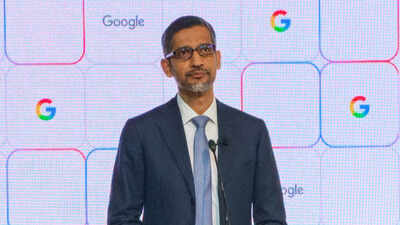
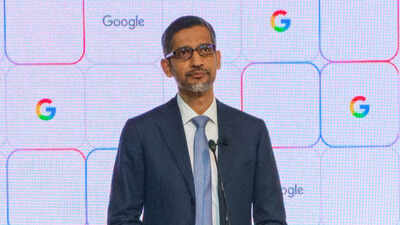
Back in November, Alphabet and Google parent company’s CEO Sundar Pichai openly flagged “elements of irrationality” in the AI investment boom—drawing parallels to the dot-com era and warning that no company, including Google, would be immune if the bubble burst. It was a rare moment of candour from a Big Tech CEO. Two months on, with Alphabet having just committed up to $185 billion in capex for 2026—nearly double what analysts had pencilled in—he’s back on the front foot, making the case for why the numbers make sense. Speaking on the sidelines of the India AI Impact Summit 2026 in Delhi, Pichai didn’t shy away from the scale of it. “This is the Industrial Revolution, but 10 times faster. In fact, larger,” he told moderator Debjani Ghosh, Distinguished Fellow at NITI Aayog. “I think the investment makes sense given the progress in the technology we are seeing and the opportunities we see on top of it.”
In that November interview with the BBC, Pichai had drawn a direct parallel to the dot-com boom—acknowledging that investment cycles like this tend to “overshoot,” and that while AI would ultimately prove as transformational as the internet, the current moment was “both rational and there are elements of irrationality.” He also warned that every company, including Alphabet, would feel the impact if the bubble were to burst.
From ‘irrational exuberance’ to ‘railroad investments’: How Pichai frames the AI spending era
This time, he reached for a different historical analogy. Rather than the cautionary tale of the dot-com crash, Pichai invoked railroad expansion and the US national highway system—infrastructure bets that looked expensive at the time but unlocked enormous economic value down the line.It’s a framing Alphabet clearly needs right now. When the company revealed its 2026 capex target in early February—nearly double what analysts had expected—shares fell more than 6% in after-hours trading. Alphabet wasn’t alone: Amazon pledged $200 billion, Meta committed up to $135 billion, and Microsoft’s capex bill is projected to top $97 billion. Together, Big Tech is set to spend well over $600 billion on AI infrastructure this year.
Google Cloud’s $240 billion backlog is doing a lot of the heavy lifting in Pichai’s argument
Pichai’s strongest card? Cold, hard numbers. Google Cloud’s backlog—future agreements for computing capacity—has doubled to $240 billion over the past year. Cloud revenue itself jumped 48% year-on-year in Q4 2025. Gemini, Google’s AI assistant, has crossed 750 million monthly active users. And a new deal to power Apple’s redesigned Siri gives Alphabet access to over 2.5 billion devices.“The backlog has doubled to $240 billion. So that shows the potential for return on the other side,” Pichai said in Delhi.
With Alphabet going all-in, the pressure is on to show real returns—not just projections
Still, investor skepticism hasn’t fully faded. Alphabet’s stock was down roughly 2% the morning after Amazon’s own eye-watering capex announcement, as markets collectively processed what a $600 billion-plus infrastructure buildout actually means for near-term profitability.Pichai has consistently argued that Google’s unique position—owning everything from its own AI chips to YouTube’s data to frontier research at DeepMind—gives it more leverage than most to ride out any turbulence. Whether that logic holds as the bills come due is the defining question of tech’s biggest spending era yet.