Trump administration expands controversial university compact to all colleges, restricting DEI and international enrollment
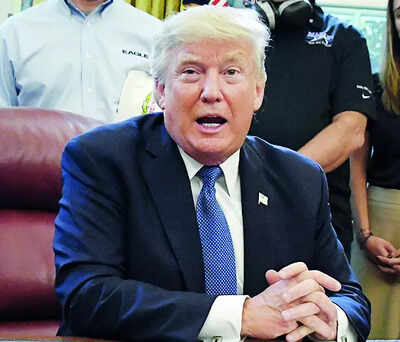
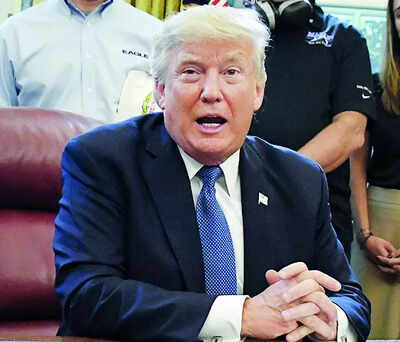
The Trump administration has expanded his contentious higher education initiative, the Compact for Academic Excellence in Higher Education, to all US colleges and universities, escalating a policy push that ties federal funding to bans on Diversity, Equity, and Inclusion (DEI) practices and strict limits on international enrollment.According to Bloomberg News, sources close to the matter confirmed that the agreement, initially circulated among nine leading universities, is now being offered nationwide. The decision, which came just a few days after MIT rejected it, has triggered unease across academic circles, with administrators warning that the plan could entrench financial divides between institutions and impose unprecedented political oversight on campus governance.
Preferential funding in exchange for compliance
Under the terms of the compact, universities that agree to its conditions would gain preferential access to federal research and grant funding. In return, they must adhere to a set of sweeping requirements: Abolishing DEI offices, freezing tuition fees for five years, and capping international undergraduate students at 15% of total enrollment, with no more than 5% from any single country.The agreement also requires participating institutions to submit international student data to the government upon request and to dismantle any campus units deemed to “punish or belittle” conservative viewpoints. Another provision bans political speech or activism by university employees, a clause that legal experts say may conflict with constitutional protections on free expression.
MIT rejects the compact
The Massachusetts Institute of Technology (MIT) became the first institution to reject the proposal outright, calling it “fundamentally inconsistent” with its principles. In a public statement, MIT asserted that “scientific funding should be based on scientific merit alone,” a stance widely interpreted as a rebuke to federal attempts at ideological conditioning.The other eight universities that received the initial proposal, reportedly including several large public systems, have so far declined to comment substantively. The University of Texas System chair expressed support, calling the invitation an “honour,” while others issued neutral statements indicating they were still “reviewing” the compact.