Switching formats: After white-ball glut, players return to red-ball cricket as Ranji season resumes | Cricket News
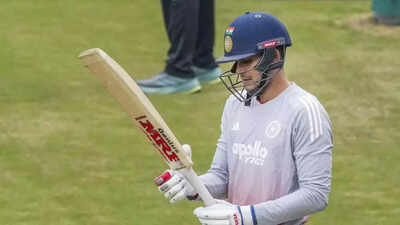

BENGALURU/PUNE: Sixty-three days. That is the gap between two Ranji Trophy matches this season. In the intervening period, the domestic calendar was packed with two white-ball tournaments — the Syed Mushtaq Ali Trophy and the Vijay Hazare Trophy.Go Beyond The Boundary with our YouTube channel. SUBSCRIBE NOW!As the country’s premier domestic competition resumes from Thursday, it raises an uncomfortable question: Is the Ranji Trophy still premier in terms of relevance? The looming T20 World Cup or an IPL auction can hardly be a justification for shuffling tournaments in a manner that fractures continuity.
While there is considerable focus on workload management for international cricketers, the burden on domestic players often goes unnoticed.On Sunday, just hours after New Zealand clinched their maiden ODI title in India, Vidarbha secured their first Vijay Hazare Trophy. Ironically, for all the rhetoric about prioritising domestic cricket, both the marquee contests were scheduled on the same day.And the churn has been relentless. Less than four days after lifting the trophy, Vidarbha are back in action against Andhra in Anantapur, while the runners-up have returned home to host Punjab — another reminder of how little breathing space the domestic calendar affords its protagonists.
Poll
Should the mid-season break in the Ranji Trophy be removed?
Maharashtra captain Ankit Bawne is not a fan of the mid-season break, “I feel the break shouldn’t be there. This is a very prestigious tournament and it would be ideal to play it in one stretch,” Bawne said on Wednesday. On managing workloads, particularly of fast bowlers amid a packed schedule, Bawne acknowledged the challenge. “We have to look after the health of the pacers because they’ve also played the limited overs formats. If we qualify for the knockouts, I’ll need them fit and available there as well. So it is a bit challenging, but it is what it is,” he explained.Echoing similar concerns, another player, who requested anonymity, pointed out that multiple factors — including the change of format and the semifinals and final being played under lights — could make the transition demanding for players. Calling the Ranji Trophy the toughest format to play, Bawne added that adaptability would be key. “Ranji is the most challenging format. We call it a grind. You can’t go out and play shots like in white-ball cricket. But cricketers are mature now. They’ll adapt quickly to conditions and adjust their game accordingly,” he said.As the domestic season heads into the home stretch with two rounds remaining, the focus will be on how players navigate the shift between formats. With the demands of white-ball cricket bleeding into the red-ball calendar, success in the Ranji Trophy may hinge on who manages the transition best.