
Starting March 17, America may not allow any of China’s …
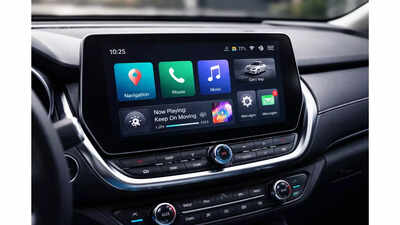
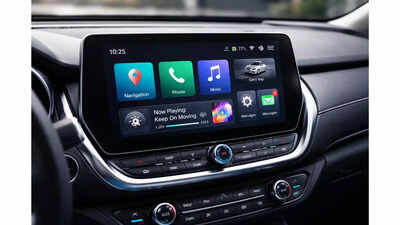
Modern cars come with internet-connected apps and features that provide real-time data, convenience, and safety options. They enable the vehicle to communicate with external systems (the cloud), the driver’s smartphone, and, in some cases, other vehicles or road infrastructure. Several of these systems are powered by Chinese technology. Now, the American car industry is reportedly scrambling to identify and remove this technology ahead of a looming March 17 deadline.New US government rules will soon ban Chinese software from internet-connected vehicle systems. This comes as part of an effort to prevent cameras, microphones, and GPS tracking in cars from being misused by foreign adversaries. Before the deadline, carmakers must demonstrate to the US government that key components of their products don’t contain software written in China or developed by a Chinese company.
The connected-vehicle rule was introduced by the US Commerce Department’s Bureau of Industry and Security, which also permits the use of Chinese code transferred to a non-Chinese entity before March 17. The Bureau of Industry and Security team has also suggested it plans to extend restrictions on Chinese technology to other products, including commercial vehicles and drones. This will be a test case for America’s ability to decouple from Chinese supply chains.According to a Wall Street Journal report, the approaching deadline has increased pressure across the auto industry to reduce reliance on Chinese components. The shift began during pandemic-related supply chain disruptions and has continued amid growing geopolitical tensions, the report notes. Last year, Tesla decided to stop sourcing parts from China-based suppliers for vehicles manufactured in the US.
How carmakers and their suppliers are reacting to US government’s deadline
Automakers typically procure electronic systems from large suppliers, who may, in turn, rely on smaller companies or joint ventures in China for software. This layered supply chain makes it difficult for automakers to clearly understand the origin of all the software in their vehicles. As new rules limit the use of Chinese software, companies are under pressure to gather information they did not previously need. However, suppliers are often unwilling to share details. As Brandon Barry, founder of Block Harbor, said, “The suppliers don’t want to share source code. That’s their IP.”Even when Chinese software is identified, replacing it is not straightforward. Since automotive software is highly customised, making changes to an existing vehicle can pose safety and technical risks. Because of these challenges, cybersecurity experts expect that some automakers and suppliers may receive temporary exemptions if they can show they are managing risks through other measures.These rules are also driving changes across the industry. According to Matt Wyckhouse, CEO of Finite State, companies are restructuring their operations. Global suppliers are relocating China-based software teams elsewhere, while Chinese firms are seeking new owners for their Western businesses. Pirelli is one example. The tyre maker may be affected because its largest shareholder is Sinochem, a Chinese company, and its smart tyres connect to the cloud. Pirelli, its shareholders, and the Italian government are discussing options. This includes reducing Sinochem’s stake or separating the US smart-tyre business.Some companies are benefiting from the shift. Ohio-based Eagle Wireless is working to build a US supply of cellular modules. It acquired source code from China’s Quectel and is helping automakers deliver software updates ahead of deadlines.“The connected-vehicle rule is a major tailwind for onshoring both software development and manufacturing,” said Mark Kvamme of Eagle.Chinese companies still dominate the market, holding 87% share last year. This has raised concerns.“If you think rare earths are a bad dependency to have on China, wait till you’re dependent on cellular modules. It’s much, much worse. It’s broader,” said Charles Parton, an ex-UK diplomat, at a US congressional committee in December 2025Volvo CEO Håkan Samuelsson said, “More challenging is to be sure that no data that the car collects can ever be transmitted to China.”