
Shocked Sam Altman to Elon Musk: Get your Maths right, do not …
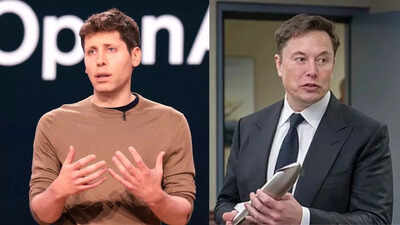
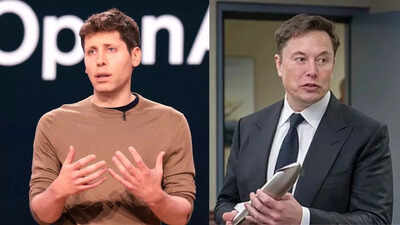
Elon Musk is seeking between $79 billion and $134 billion in damages from Sam Altman-led OpenAI and its biggest investor, Microsoft. In a recently filed lawsuit, the Tesla CEO accused the AI startup of moving away from its nonprofit mission and “making a fool out of him” as an early investor of OpenAI. To reach this amount, Musk hired an expert named C. Paul Wazzan, who claimed Musk’s early contributions to OpenAI generated 50 to 75% of OpenAI’s current value. However, this substantial amount claimed by the world’s richest person has shocked Altman’s OpenAI and Microsoft, which could also lead to punitive damages for the companies if they lose the case. According to a report by Ars Technica, the companies have filed a motion to block Wazzan’s opinions from the lawsuit, arguing that it’s necessary to prevent unfair influence on the jury. In their filing, OpenAI and Microsoft also claimed that Wazzan’s calculations appeared “made up,” claiming the economics expert relied on calculations he had never used before and had allegedly “conjured” them simply to meet Musk’s expectations.How C. Paul Wazzan estimated the damages Elon Musk is seeking from OpenAI and MicrosoftWazzan arrived at his estimate by considering four factors: Musk’s total financial contributions before he left OpenAI in 2018, Musk’s proposed ownership stake in OpenAI in 2017, Musk’s current ownership stake in xAI, and Musk’s nonmonetary contributions to OpenAI (such as investing time or lending his reputation).For example, Wazzan allegedly ignored that Musk left OpenAI after leadership disagreed on how to value Musk’s contributions to the nonprofit. The problem is that Wazzan’s calculations depend on an imaginary timeline in which OpenAI agreed to Musk’s 2017 attempt to control 51.2% of a new for-profit entity under consideration at the time. But that never happened, so it’s unclear why Musk would be owed damages based on a deal that was never made, OpenAI argues.It’s also unclear why Musk’s stake in xAI is relevant, since OpenAI is an entirely different company that doesn’t need to match xAI’s offerings. Wazzan allegedly wasn’t even given access to xAI’s actual numbers to help with his estimate, and he only referred to public reports that estimate Musk owns 53% of xAI’s ownership. OpenAI accused Wazzan of including the xAI numbers to inflate the total damages to please Musk.Further frustrating OpenAI and Microsoft, Wazzan stated that Musk and xAI should receive the same total damages whether they succeed on just one or all of the four claims raised in the lawsuit.What OpenAI and Microsoft said in their appeal“By all appearances, what Wazzan has done is cherry-pick convenient factors that correspond roughly to the size of the ‘economic interest’ Musk wants to claim, and declare that those factors support Musk’s claim,” OpenAI’s filing noted.OpenAI and Microsoft hope the court will agree that Wazzan’s calculations are an “unreliable… black box” and exclude his opinions as improperly grounded in calculations that cannot be independently tested.OpenAI has even claimed that Musk’s lawsuit is a harassment campaign aimed at slowing down a competitor so that his rival AI company, xAI, can catch up.In a statement to Ars Technica, an OpenAI spokesperson said, “Musk’s lawsuit continues to be baseless and a part of his ongoing pattern of harassment, and we look forward to demonstrating this at trial. This latest unserious demand is aimed solely at furthering this harassment campaign. We remain focused on empowering the OpenAI Foundation, which is already one of the best resourced nonprofits ever.”Wazzan is “a financial economist with decades of professional and academic experience who has managed his own successful venture capital firm that provided seed-level funding to technology startups,” Musk’s filing noted.OpenAI explained that Musk connected with Wazzan, who stated that any of Musk’s companies had never hired him. Instead, three months before he submitted his opinions, Wazzan said that Musk’s legal team had reached out to his consulting firm, BRG, and the call was directed to him.Wazzan’s job was to determine how much Musk should be owed after investing $38 million in OpenAI, roughly 60 per cent of its seed funding. Musk also made nonmonetary contributions Wazzan had to consider, like “recruiting key employees, introducing business contacts, teaching his cofounders everything he knew about running a successful startup, and lending his prestige and reputation to the venture,” Musk’s filing said.The “fact pattern” was “pretty unique,” Wazzan testified, while admitting that his calculations weren’t something you’d find “in a textbook.”Additionally, Wazzan had to factor in Microsoft’s alleged wrongful gains by determining how much of Microsoft’s profits were used to fund the nonprofit. Microsoft claimed Wazzan got this estimate wrong after assuming that “some portion of Microsoft’s stake in the OpenAI for-profit entity should flow back to the OpenAI nonprofit” and randomly decided that the portion must be “equal” to “the nonprofit’s stake in the for-profit entity.” With this unusual calculation, Wazzan double-counted the nonprofit’s value and inflated Musk’s damages estimate, Microsoft claimed.“Wazzan offers no rationale, contractual, governance, economic, or otherwise, for reallocating any portion of Microsoft’s negotiated interest to the nonprofit,” OpenAI’s and Microsoft’s filing said.Perhaps most notably, Wazzan reached his opinions without ever considering the contributions of anyone but Musk, OpenAI claimed. That means that Wazzan’s analysis not only discounted efforts of co-founders and investors like Microsoft, which “invested billions of dollars into OpenAI’s for-profit affiliate in the years after Musk quit.” It also dismissed scientists and programmers who invented ChatGPT as having “contributed zero per cent of the nonprofit’s current value,” OpenAI claimed.“I don’t need to know all the other people,” Wazzan testified.OpenAI argued that Wazzan did not correctly calculate the value of Elon Musk’s non-cash contributions. According to OpenAI, Wazzan’s estimates were unclear and could range from thousands to billions of dollars based on vague math.OpenAI also said Musk’s own legal filings appear to go against Wazzan’s approach. Musk’s lawyers acknowledged that a jury may need to adjust the total damages. However, because Wazzan assigns the same damage amount to each claim and does not provide a breakdown, OpenAI argued that a jury would not be able to make those adjustments.OpenAI strongly criticised Wazzan’s methods, saying, “Wazzan’s methodology is made up; his results unverifiable; his approach admittedly unprecedented; and his proposed outcome—the transfer of billions of dollars from a nonprofit corporation to a donor-turned competitor—implausible on its face.”OpenAI also warned that sharing Wazzan’s damages figure with the jury could be misleading. “Allowing a jury to hear a disgorgement number—particularly one that is untethered to specific alleged wrongful conduct and results in Musk being paid amounts thousands of times greater than his actual donations—risks misleading the jury as to what relief is recoverable and renders the challenged opinions inadmissible,” the filing said.The trial is set to begin in April. Musk will try to persuade the court that he is owed substantial damages. OpenAI argues this should fail, partly because “it is legally impossible for private individuals to hold economic interests in nonprofits” and because “Wazzan conceded at deposition that he had no reason to believe Musk expected a financial return when he donated… to OpenAI nonprofit.”