
Russia witnesses record winter: Entire neighbourhoods buried under mountain of snow — watch
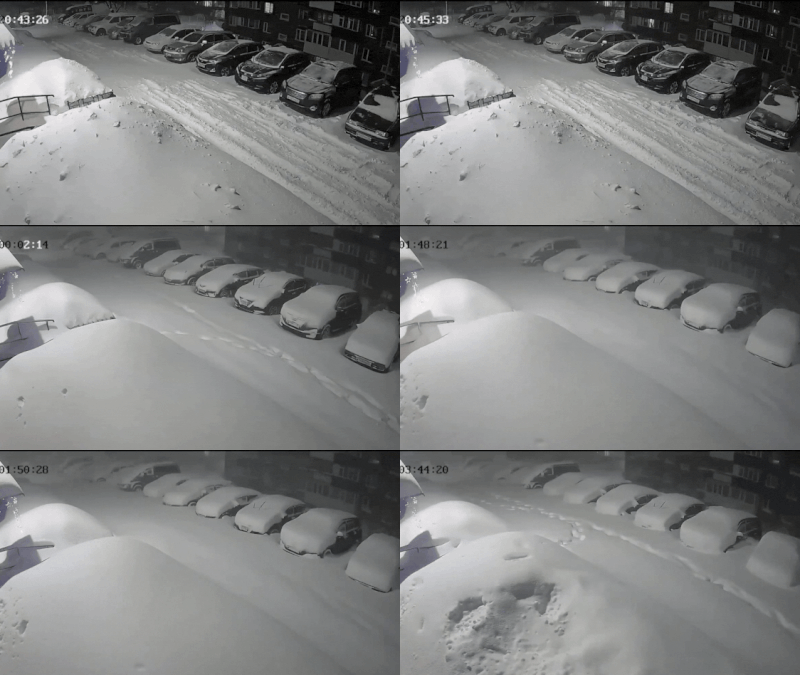

Parts of Russia’s Far Eastern Kamchatka Peninsula are reeling under extreme and record-breaking snowfall, with powerful winter storms dumping several metres of snow and bringing daily life to a near standstill.Footage has emerged showing heavy snowfall in Russia that lasted for four days without interruption, blanketing residential areas, roads and buildings. In Petropavlovsk-Kamchatsky, the capital of Kamchatka Krai, road conditions remain “critical” after a series of storms battered the region with snow, ice and strong winds, reported The Moscow Times.Meteorologists said the level of snowfall recorded since early January has not been seen in more than 50 years. As per The Moscow Times, the average snow height in the city has reached around 170 cm, with drifts exceeding 2.5 metres in some neighbourhoods. In some areas, drifts have risen several metres high, blocking building entrances and burying cars almost completely.People were seen digging out their cars after a powerful snowstorm dumped several feet of snow across parts of Russia’s Kamchatka Peninsula, as visuals showed locals carving paths through towering snowbanks. Russian children were also seen enjoying the unusual conditions, sliding on snow piled up near multistorey buildings, while residents in some areas had fun snow-gliding and diving into massive drifts.The current record-breaking snowfall in Russia’s Kamchatka Peninsula has seen drifts reach up to five metres (16 feet).City authorities declared a state of emergency after at least two elderly men were killed by snow falling from rooftops last week, as per The Moscow Times. Officials warned that icicles and heavy snow accumulation on roofs continue to pose serious risks, while prolonged snowfall has also raised avalanche concerns in residential areas.According to Reuters, Kamchatka has witnessed its heaviest snowfall in around 60 years, disrupting transport and forcing residents to adapt to extraordinary conditions. Life in the region remains severely affected as authorities race to clear roads and restore normal movement.