PayPal Mafia’s Peter Thiel makes one of his biggest donations to California group in Silicon Valley that is fighting …
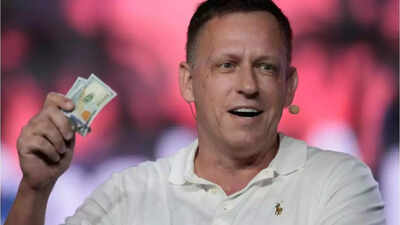
PayPal co-founder Peter Thiel has donated $3 million to a California business group leading the fight against a proposed billionaire wealth tax. In December 2025, the venture capitalist contributed to the California Business Roundtable, a Sacramento-based lobbying group that represents large employers and corporate interests. The donation positions Thiel as one of the earliest and most prominent financiers of an emerging campaign to stop the 2026 Billionaire Tax Act before it reaches voters.A New York Times report cited a public disclosure to claim that the $3 million contribution is the first seven-figure cheque publicly tied to opposition to the billionaire tax proposal. This is also Thiel’s largest disclosed political gift since the 2022 midterm elections, when he spent more than $35 million backing populist conservative candidates.
While the money is not formally earmarked only for the wealth-tax fight, the Roundtable is expected to serve as a central vehicle for organising and funding the business community’s push to defeat the measure. Rob Lapsley, the group’s president, has said he is actively seeking donors across the state to build corporate and elite support against the tax initiative and other proposals viewed as unfriendly to business.
What is California’s proposed billionaire wealth tax and why some Silicon Valley leaders are opposing it
Under the proposed 2026 Billionaire Tax Act, California residents whose net worth exceeds $1 billion will be subject to a one-time 5% tax. Instead of focusing on income, the proposed tax will target assets like privately held companies, stocks, bonds, artwork, collectibles, and intellectual property.Meanwhile, real estate, as well as some retirement plans and pensions, would be exempt. Otherwise, the proposed legislation is intended to target a wide array of financial and intangible assets in ultra-rich portfolios.If passed, the tax will apply to all individuals who are California residents or part-year residents as of January 1, 2026, with the bill calculated based on asset values as of the end of 2026 and due in 2027.Billionaires will have the option to pay the taxes over 5 years, but will also have to pay an additional 7.5% non-deductible tax on the unpaid amount each year.However, it is worth noting that the tax campaign is still in its early stages, as the group must collect almost 900,000 valid signatures to put the issue on the ballot in November.Already, news of the proposed tax has attracted reactions from tech leaders in Silicon Valley, with some founders and investors considering moving to other states or further cutting their ties to California.Several tech billionaires have already left the state in the past few years, and business leaders are warning that the tax could accelerate this trend and harm the innovation ecosystem that fuels California’s tech industry.Thiel himself owns a property in Miami from years ago. However, he is still very much part of the Silicon Valley scene through his investments and board memberships, and his donation is a sign that he has chosen to take on this policy politically rather than just sit back and observe. In 2023, Thiel also told Joe Rogan that he thought real estate prices in Miami were too high.Opponents of the tax have also predicted that more than $75 million could ultimately be spent to defeat the initiative, with Thiel’s $3 million cheque serving as an opening contribution in what is likely to become one of 2026’s most closely watched economic battles.Apart from Thiel, Google founders Sergey Brin and Larry Page have moved an entity tied to them out of California ahead of a proposed wealth tax on billionaires. Filings from last month revealed that T-Rex LLC, formed in 2006 and managed from Palo Alto, was converted into a Delaware-based company, T-Rex Holdings. The new filing lists Reno, Nevada, as its principal office, with Brin and Page remaining managers. Earlier this month, Larry Page converted his family office into a Delaware entity and incorporated other ventures in Delaware, including those funding influenza research and flying car projects. However, Brin remains connected to various California-based entities, such as the Sergey Brin Family Foundation and Bayshore Global Management, though filings show no other exits linked to him.Meanwhile, LinkedIn founder Reid Hoffman, who was also a part of the PayPal mafia, has also opposed California’s proposed wealth tax. In a post on X (formerly Twitter), Hoffman called the tax “badly designed”, with “massive flaws”, and warned that it could harm innovation. Hoffman even revealed that California representative Ro Khanna reached out to him to discuss the proposal and has made his opposition clear. Hoffman wrote: “One well-documented example is the horrendous idea to tax illiquid stock in the proposal. Poorly designed taxes incentivise avoidance, capital flight, and distortions that ultimately raise less revenue.”