Pakistan-Afganistan War: Why Pakistan and Afghanistan are fighting: History of Kabul–Islamabad standoff and the ‘graveyard of empires’ narrative
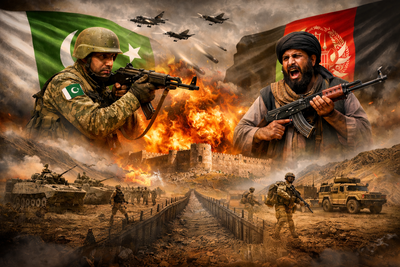
NEW DELHI: Pakistan carried out air strikes on Afghanistan’s major cities, including Kabul, Kandahar and Paktia, sharply escalating months of border tensions between the two neighbours. Officials in Islamabad and Kabul confirmed the strikes, which followed days of cross-border firing along the Durand Line — the disputed frontier separating the two countries.Both sides accused each other of initiating the latest round of violence. Pakistan declared it was in an “open war” following retaliatory attacks by Taliban forces. The escalation marks one of the most serious confrontations since the Afghan Taliban returned to power in 2021, deepening an already strained relationship shaped by militant attacks, border closures and diplomatic mistrust.
Afghanistan’s ministry of national defence said 55 Pakistani soldiers were killed in retaliatory operations launched at 8:00 PM on the 9th of Ramadan, corresponding to February 26. It said two bases and 19 posts were captured. Pakistan rejected those claims. A spokesperson for Prime Minister Shehbaz Sharif said at least 133 Afghan Taliban fighters were killed and more than 200 wounded, and denied that Pakistani soldiers had been taken prisoner. Pakistan’s Information Minister Attaullah Tarar said two Pakistani soldiers were killed and three wounded.Taliban spokesperson Zabihullah Mujahid condemned the air strikes, calling them “cowardly”, and said no casualties were reported in the strikes on Kabul, Kandahar and Paktia.Pakistan subsequently announced an operation titled ‘Ghazab Lil Haq’, describing it as a response to what it termed “unprovoked aggression” from Afghanistan. Prime Minister Shehbaz Sharif said Pakistan’s armed forces were fully capable of responding to aggression. Defence Minister Khawaja Asif said Pakistan’s “cup of patience has overflowed” and described the situation as an “open war”.To understand why the conflict has escalated so sharply, it is necessary to examine the historical relationship between Pakistan and the Afghan Taliban, the role of the Tehreek-e-Taliban Pakistan, the unresolved dispute over the Durand Line, and Afghanistan’s longer history as a battleground for external powers.
From sponsor to adversary: Pakistan and the Afghan Taliban
For decades, Pakistan was widely regarded as the Afghan Taliban’s closest external supporter. In the 1990s, Pakistan’s security establishment backed the rise of the Taliban movement in Afghanistan. Islamabad viewed a friendly government in Kabul as providing “strategic depth” in its rivalry with India and as a means of ensuring influence in Afghanistan.When the Taliban returned to power in August 2021 following the withdrawal of US and NATO forces, then-Prime Minister Imran Khan said Afghans had “broken the shackles of slavery”. Islamabad was among the capitals that publicly welcomed the change in Kabul.
.
However, relations deteriorated within a year. Pakistan says the leadership and fighters of the Tehreek-e-Taliban Pakistan, or TTP, are based in Afghanistan. It also alleges that Baloch insurgent groups seeking independence for Pakistan’s southwestern province of Balochistan use Afghan territory as a safe haven.Kabul has denied allowing militant groups to use Afghan soil to launch attacks in Pakistan. The Afghan Taliban, in turn, have accused Pakistan of harbouring fighters linked to Islamic State, an allegation Islamabad rejects.This mutual distrust has reshaped the bilateral relationship. Pakistan’s expectation of a cooperative Taliban government focused on preventing cross-border militancy has clashed with Kabul’s emphasis on sovereignty and its reluctance to be seen as acting under Pakistani pressure.
The Tehreek-e-Taliban Pakistan: A central fault line
The Tehreek-e-Taliban Pakistan was formed in 2007 by an umbrella of militant outfits operating in northwest Pakistan. Commonly known as the Pakistani Taliban, the TTP has carried out attacks on markets, mosques, airports, military bases and police stations. It was responsible for the 2012 attack on schoolgirl Malala Yousafzai, who later received the Nobel Peace Prize.The TTP fought alongside the Afghan Taliban against US-led forces in Afghanistan and hosted Afghan fighters in Pakistan. Despite similarities in ideology and shared history, the TTP and the Afghan Taliban are distinct organisations with separate leadership structures and objectives.Pakistan launched military operations against the TTP, including a major offensive that ended in 2016 and reduced attacks for several years. However, violence has surged again since 2022. Pakistani security sources have said they possess “irrefutable evidence” linking recent attacks and suicide bombings to militants operating from Afghanistan.One attack in Bajaur district killed 11 security personnel and two civilians. Pakistani sources said the attacker was an Afghan national and that the attack was claimed by the TTP.The presence and activities of the TTP have become the principal source of friction between Islamabad and Kabul. Pakistan argues that without decisive action by the Afghan Taliban against the TTP, cross-border attacks will continue. Kabul maintains that it does not permit its territory to be used for such purposes.
The Durand Line: An unresolved border
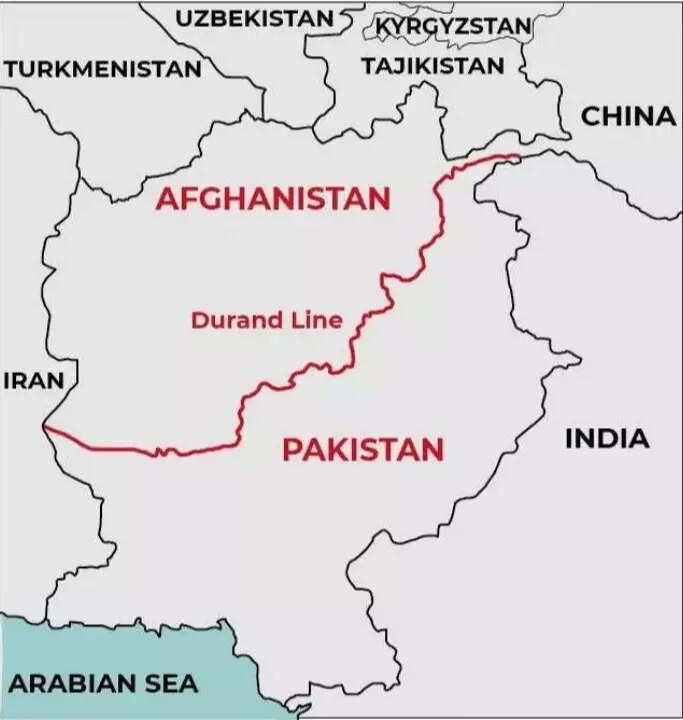
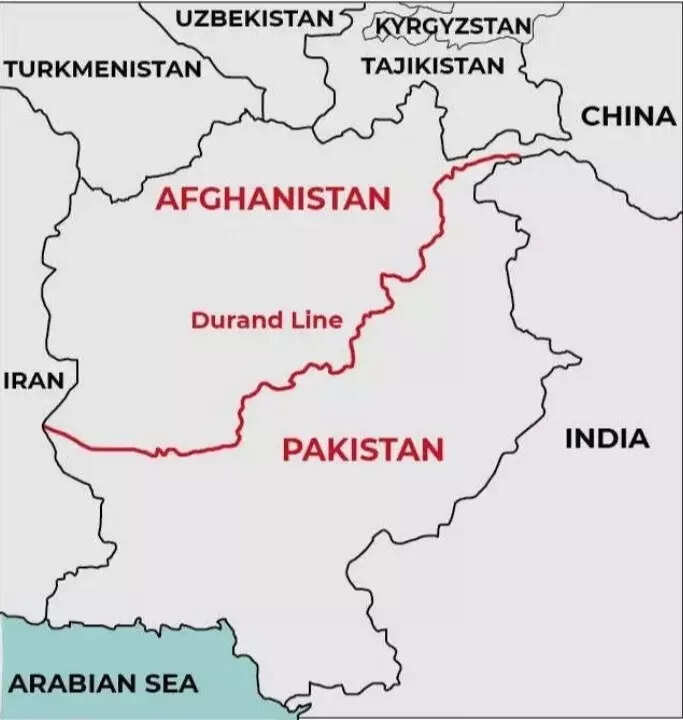
At the heart of the confrontation lies the Durand Line, a 2,600-kilometre boundary drawn in 1893 between British India and Afghanistan. After the creation of Pakistan in 1947, Islamabad inherited the frontier. Afghanistan, however, has historically disputed the legitimacy of the Durand Line as an international border.The line cuts through Pashtun tribal areas, dividing communities and families across the frontier. Cross-border movement has long been part of daily life in the region. Efforts by Pakistan in recent years to fence large portions of the border have triggered periodic clashes with Afghan forces.Border closures and restrictions have disrupted trade and movement. Skirmishes along the frontier are frequent, particularly at key crossings such as Torkham and Chaman.The disputed status of the Durand Line complicates counter-terrorism coordination. For Pakistan, the frontier is a sovereign boundary requiring enforcement. For many in Afghanistan, it remains an imposed colonial demarcation.
Military asymmetry and battlefield realities
On paper, there is a significant imbalance between the two militaries. Pakistan’s armed forces comprise more than 600,000 active personnel, thousands of armoured vehicles and hundreds of combat aircraft, according to data from the International Institute for Strategic Studies. Pakistan is also a nuclear-armed state.The Afghan Taliban’s forces are estimated at around 172,000 personnel. They possess aircraft and helicopters inherited after 2021, though their operational condition is unclear. They do not have fighter jets or a conventional air force comparable to Pakistan’s.Yet, Afghanistan’s terrain and patterns of warfare have historically reduced the advantage of superior conventional forces. Air strikes and cross-border shelling can inflict damage, but sustained control of mountainous border regions presents operational challenges.
Afghanistan and the ‘graveyard of empires’ narrative
Afghanistan is frequently described as the “graveyard of empires”, a phrase reflecting the difficulty external powers have faced in establishing long-term control.In the 19th century, the British Empire fought three Anglo-Afghan Wars. The first ended in a disastrous retreat from Kabul in 1842. While Britain later reasserted influence, it accepted Afghanistan as a buffer state rather than integrating it fully into its empire.In 1979, the Soviet Union deployed tens of thousands of troops to support a communist government in Kabul. Despite controlling major cities, Soviet forces faced sustained insurgency. They withdrew in 1989.After the September 11, 2001 attacks, the United States and NATO launched military operations in Afghanistan. The Taliban government was toppled, but the insurgency persisted. After nearly two decades of war, US and NATO forces withdrew in 2021, and the Taliban returned to power.These episodes illustrate recurring patterns: external intervention, initial military success in urban centres, protracted insurgency in rural and mountainous regions, and eventual withdrawal.Afghanistan’s geography, particularly the Hindu Kush mountains, and its decentralised social and tribal structures have shaped these outcomes. Warfare in remote valleys and passes often favours local fighters familiar with the terrain.
Why defeating the Taliban has proved difficult
The Taliban’s resilience has been shaped by several structural factors.First, the movement is embedded within local networks, particularly in rural Pashtun areas. Decentralised command structures have allowed it to survive leadership losses.Second, external support and shifting alliances have historically sustained insurgencies in Afghanistan. During the Soviet occupation, mujahideen groups received backing from multiple countries. During the US-led intervention, the Taliban drew support from networks operating across borders.Third, the nature of insurgency warfare differs from conventional conflict. Even when outmatched in air power and heavy equipment, insurgent groups can rely on guerrilla tactics, mobility and local support.These dynamics do not make the Taliban militarily invincible, but they help explain why successive external campaigns have struggled to achieve decisive outcomes.
Close, porous and interlinked: The Afghanistan–Pakistan frontier
Afghanistan and Pakistan share deep ethnic, economic and historical ties. Millions of Afghan refugees have lived in Pakistan for decades. Cross-border trade is vital for Afghanistan, a landlocked country reliant on transit routes through Pakistan.The Pashtun population straddles both sides of the Durand Line. Tribal affiliations and kinship networks transcend the border. This interconnectedness complicates security policy.Military escalation risks disrupting trade routes and humanitarian flows. Border closures can affect food and fuel supplies in Afghanistan and economic activity in Pakistan’s frontier regions.
Why the Pakistan-Afganistan conflict matters for India
The escalation between Pakistan and Afghanistan comes as India cautiously rebuilds engagement with Kabul after the Taliban’s return in August 2021. While New Delhi has not formally recognised the Taliban government, it reopened a technical mission in Kabul in June 2022, resumed contacts at multiple levels and expanded humanitarian assistance, including wheat, medicines, vaccines and earthquake relief.Instability along the Pakistan–Afghanistan border raises concerns about militant networks operating in the region. Groups active in the Afghanistan–Pakistan belt have historically affected South Asian security. India’s key concern is whether renewed hostilities create space for transnational militant regrouping or shifts in operational patterns.Pakistan has long viewed Afghanistan through the lens of countering Indian influence. If Islamabad’s confrontation with the Taliban deepens, Kabul may seek diversified engagement with India and other regional actors. Conversely, prolonged conflict could limit Afghanistan’s diplomatic bandwidth and internal stability.Afghanistan is central to India’s outreach to Central Asia. The Chabahar Port in Iran provides India an alternative access route bypassing Pakistan, while the Zaranj–Delaram highway links Iran to Afghanistan’s road network. Broader insecurity could slow trade flows, transit projects and regional integration plans.India has hosted regional dialogues on Afghanistan and maintained communication channels with Kabul. Escalation may reshape alignments involving Iran, Russia, China and Gulf states, requiring calibrated diplomacy from New Delhi.In sum, the conflict intersects with India’s counter-terrorism priorities, connectivity ambitions and evolving engagement with Kabul, making it a development with wider regional implications.The current crisis between Pakistan and Afghanistan did not emerge in isolation. It is rooted in decades of cross-border militancy, the unresolved status of the Durand Line, the complex legacy of Pakistan’s support for the Taliban, and Afghanistan’s history of resisting external pressure.The latest air strikes, retaliatory operations and declarations of “open war” represent a significant escalation. While the immediate triggers relate to militant attacks and border clashes, the structural drivers are older and more deeply embedded.As both sides exchange claims of casualties and territorial gains, the broader question remains whether diplomatic channels can prevent further deterioration. Past ceasefires, facilitated by regional mediators, have proven fragile.