
One of world’s biggest toilet maker Toto called ‘most undervalued and overlooked AI company’ as it uses…
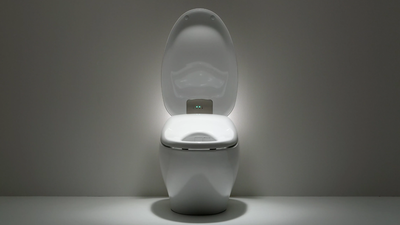
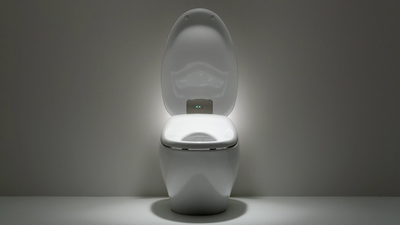
UK-based activist investor Palliser Capital has taken a significant stake in Japan’s Toto—the company best known for heated toilet seats and Washlet bidets—calling it “the most undervalued and overlooked AI memory beneficiary.” The fund sent a letter to Toto’s board last week, urging the company to do a better job of showcasing its advanced ceramics business, which quietly contributes over 40% of operating profit.At the heart of Palliser’s argument are electrostatic chucks (ESCs)—precision ceramic components that hold silicon wafers in place during memory chip manufacturing. Toto has been making these since the 1980s, drawing on decades of ceramics know-how that originally came from building toilets. But it’s only in recent years, with AI-driven demand sending memory chip prices through the roof, that this side of the business has started pulling serious weight.
Toto’s ceramics are built for the kind of extreme cold that advanced chip-making demands
The company’s ESCs are engineered to stay stable at very low temperatures, making them essential for cryogenic etching—a process used to carve ultra-deep channels in 3D NAND chips that are now stacked over 200 layers high. As memory architectures get more complex, the need for components like Toto’s only grows. The chucks combine cold-resistant ceramics with integrated heaters and cooling channels to maintain uniform wafer temperatures even under intense plasma and vacuum conditions.Palliser, now among Toto’s top 20 shareholders, believes the company holds a five-year competitive moat before rivals can catch up. The fund projects 30% or more revenue growth for the ceramics segment over the next two years, fuelled by the ongoing NAND upgrade cycle.
Shares are up 60% in a year, but Palliser sees another 55% upside
Toto’s stock has already climbed sharply—up over 60% in the past year and nearly 40% in 2026 alone. Goldman Sachs upgraded the stock to “buy” last month, pointing to profit growth potential from expanding AI data centre investments. Still, Palliser argues the market hasn’t fully caught on, estimating a valuation gap of roughly ¥554 billion ($3.6 billion). The fund says fixing disclosure, tightening capital allocation, and putting Toto’s ¥76 billion ($496 million) net cash to better use could unlock that value.
Palliser has been pushing hard across corporate Japan
Founded by former Elliott Management executive James Smith, Palliser has become a key player in Japan’s shareholder activism wave. Its other stakes include property firm Tokyo Tatemono, Keisei Electric Railway, and Japan Post Holdings. The fund bought into Toto roughly six months ago and isn’t just asking for better storytelling—it wants more investment directed toward the high-margin ceramics unit rather than the slower-growing bathroom business. When a toilet maker is being pitched as critical AI infrastructure, it’s a sign the boom is reshaping supply chain thinking in ways few saw coming.