MP: SC allows Hindus, Muslims to offer prayers at Bhojshala on Basant Panchami — what was the dispute? | India News
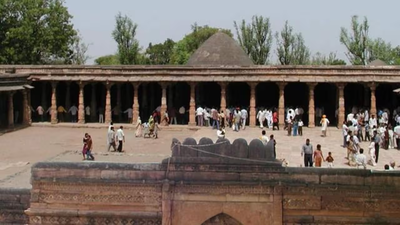
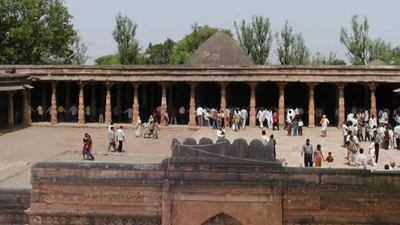
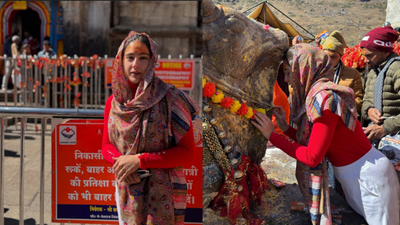
NEW DELHI: The Supreme Court on Thursday allowed Hindu prayers from sunrise to sunset on Basant Panchami at the disputed Bhojshala-Kamal Maula Mosque in Dhar, Madhya Pradesh, while permitting Muslims to offer namaz from 1 pm to 3 pm on the same day.The court also directed that a list of persons from the Muslim community coming for namaz be furnished to the district administration and instructed the administration to make law and order arrangements at the site for the offering of prayers.A bench comprising CJI Surya Kant and Justices Joymalya Bagchi and Vipul M Pancholi appealed to both sides to observe mutual respect and cooperate with the state and district administration for maintenance of law and order.Given the sensitivity of the situation, nearly 8,000 police personnel, including forces from the Central Reserve Police Force (CRPF) and Rapid Action Force (RAF), have been deployed across Dhar district. CCTV surveillance, foot and vehicle patrols, and social media activity are being closely monitored, officials said. Saffron flags and ‘Akhand Puja’ billboards have also been put up in the city ahead of Basant Panchami. Hindus consider Bhojshala, an ASI-protected medieval-era monument, to be a temple dedicated to Goddess Vagdevi (Saraswati), while the Muslim community calls it the Kamal Maula mosque. The Bhoj Utsav Committee has requested permission to perform puja throughout January 23, with patron Ashok Jain stating that 30,000 to 50,000 devotees are expected to participate in the ‘Akhand Puja’ (continuous prayers). Meanwhile, Zulfikar Pathan, head of the Kamal Maula Namaz Intezamia Committee, said the Muslim community has requested Friday prayers between 1 pm and 3 pm, in accordance with the ASI’s April 7, 2003 order, “without any hindrance.” The Supreme Court also directed that the Archaeological Survey of India (ASI) report on the religious character of the Bhojshala-Saraswati Temple cum Kamal Maula Mosque be shared with both communities by the Madhya Pradesh High Court. The ASI report has been filed in a sealed cover before the High Court. Indore Rural Range Inspector General of Police, Anurag, has personally inspected the Bhojshala complex and reviewed the security arrangements ahead of the religious activities. Under the ASI’s 2003 arrangement, Hindus perform puja on Tuesdays, while Muslims offer namaz on Fridays.
What is the Bhojshala-Kamal Maula Mosque dispute
Historical research, both Indian and foreign, indicates that the Bhojshala complex, including the Vagdevi temple, existed centuries before the Kamal Maula Mosque, Radheshyam Yadav, former convenor of Hindu Jagaran Manch’s Indore division, has said. He claims the mosque was built after dismantling ancient Hindu temples.“Muslims refer to an ASI survey of Bhojshala in 1902-03 and ask why there should be a fresh study. Today, we have technology and scientific techniques that were not available then. This survey, along the lines of Gyanvapi and Ayodhya, will help reveal the truth about Bhojshala,” he said.Petitioners, Hindu Front for Justice, said the mosque was built during Alauddin Khilji’s reign over a preexisting temple, while Kamal Maula Mosque was constructed in 1514 under Mehmood Khilji II. ASI reports also note that parts of Bhojshala and the Vagdevi temple were dismantled to build the mosque. They point to inscriptions, carvings, and ritual structures as evidence of the temple’s prior existence.Dhar Shahar Qazi Sadiq countered, “For 700 years, salah/namaz has been offered at Kamal Maula Mosque. How can it be a temple? It was never a temple or school, and there was never any idol installed there. Dirty politics is leading to this tense situation.”The controversy began in 1893 when ASI’s German Indologist Alois Anton Fuhrer noted some sutras on the pillars but lacked evidence. The term “Bhojshala” was popularized in 1903 by Dhar Dewas’ education commissioner KK Lele, though the Imperial Gazetteer of 1908 later corrected this