‘Lawrence Bishnoi 007’: How Pakistani handlers are using ‘blend in’ tactic to get live feed on troop movement | Delhi News
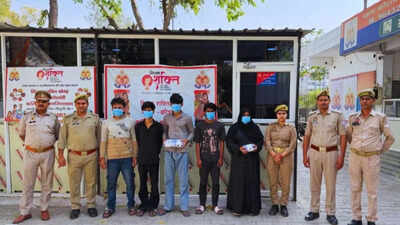
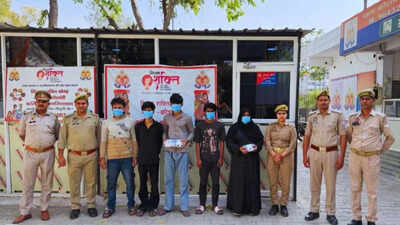
NEW DELHI: What began as a routine investigation into a case of Arms Act violation quickly snowballed into a major cross-border counter-espionage operation, with Ghaziabad Police stumbling upon a suspicious WhatsApp group named ‘Lawrence Bishnoi 007′.Infiltrating this digital circle, the cops found out that the platform was being used as a front for deeper and more sinister activities than mere possession of weapons. Surveillance on a number — 97184795** — led them to a suspect named Ritik who had allegedly sent out around a dozen suspicious images and 10 videos from his handset.The module was subsequently busted and six suspects were arrested. While intelligence agencies are cautious with the probe revealing that the suspects had even installed solar-powered CCTV cameras at Delhi Cantonment in the capital, they are more alarmed because the police action has exposed a shifting and dangerous paradigm in cross-border espionage. Sources said that it has pulled back the curtain on a disturbing new modus operandi: the strategic recruitment of youths from both religions into the same module to carry out high-level reconnaissance on Indian soil. This marks a significant departure from traditional radicalisation patterns, suggesting that handlers are now prioritising “blending in” to bypass the scrutiny of security agencies. According to the sources, the suspects had successfully breached the security of Delhi Cantt railway station seven to eight months ago. They installed a hidden, high-definition camera at the facility, specifically positioned to capture the ebb and flow of security personnel and logistics. To ensure uninterrupted surveillance, the operatives even attached a solar panel to the CCTV system. This enabled live video feed transmitted directly to Pakistani handlers, providing them with a real-time window into one of the capital’s most sensitive transit hubs. “The primary objective of this live stream was monitoring Indian troop movement. By analysing the footage, handlers across the border could track the frequency, volume and timing of military deployments moving through NCR,” a senior officer said.However, the scope of the espionage extended far beyond a single railway platform. Sources close to the probe indicated that the accused had systematically gathered and shared granular details of Railway Protection Force (RPF) and Government Railway Police (GRP) deployments. This data effectively mapped the security vulnerabilities of the entire railway network within NCR.The betrayal of national security doesn’t seem to have stopped at Delhi’s borders. The suspects reached Mumbai and elsewhere to film critical infrastructure, all for Rs 10,000 to 15,000 a task. In Mumbai, they allegedly photographed and documented public places, vital government offices and restricted defence installations.The intelligence shared included topographic details and entry-exit protocols that could be leveraged for future disruptions. “By employing local youths who did not fit the ‘traditional profile’ of an insurgent, Pakistan’s Inter-Services Intelligence (ISI) managed to operate under the radar for an extended period, utilising social media and financial inducements to lure their targets into the web of espionage,” said an investigator. The agencies are also alarmed over the possibility of the presence of such hybrid espionage modules in other cities, which may have dodged the anti-terror sleuths. Incidentally, this is the second time since the doctor-terror module of Faridabad was busted by J&K Police that local cops have helped Indian intel agencies counter ISI’s nefarious plans.