
How can Budget 2026 insulate India’s growth story from Trump’s tariff war?
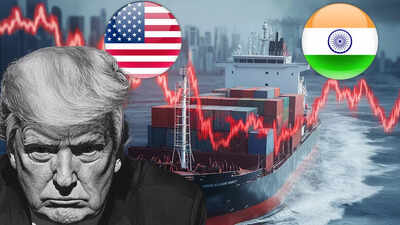
Finance Minister Nirmala Sitharaman will present the Union Budget 2026 at a time when the global economy is facing headwinds from the trade war unleashed by US President Donald Trump. India has been levied with one of the steepest tariffs – 50% for its exports to the US. The implication of this decision is important since America is India’s largest trading partner.An India-US trade deal is still stuck in negotiations – the US wants India to stop buying crude oil from Russia, and it wants India to open up its agriculture and dairy sectors to American products. On both demands, India has maintained a firm stance – decisions on which country to procure crude from is about economics and strategic autonomy, and agriculture and dairy sectors have never been opened for access as part of trade deals.In this backdrop, Budget 2026 assumes significance – how will the Modi government insulate the Indian economy from the impact of Trump’s trade tariffs?
India’s Economic Big Picture & What’s the Threat From Trump Tariffs?
India is among the world’s top 5 economies in nominal GDP terms and is on the road to become the third largest after the US and China in the coming years. It is also the world’s fastest growing major economy. With the world’s largest population, the importance of India as a market to sell in cannot be ignored.Importantly, India is largely a domestic demand driven growth story – a fact that somewhat insulates it from external headwinds. Dr DK Srivastava, Chief Policy Advisor at EY says, “It (Indian economy) is in some sense insulated from the ongoing global uncertainties. India’s strategy is to diversify its export destinations and become more competitive, so that for the domestic producers, there is cost competitiveness and scale offered through domestic demand over and above which they can export,” he tells TOI. But as it looks to step up its exports, the 50% tariffs from the US are a major impediment.India’s merchandise exports to the US fell 1.83% year-on-year to $6.88 billion in December 2025, while imports rose 7.57% to $4.03 billion, even as exports grew 9.75% during April–December. Despite a 50% US tariff on Indian goods from August 27, Commerce Secretary Rajesh Agrawal has said exports remain on a positive growth path as both sides negotiate a bilateral trade agreement.As Rishi Shah, Partner and Economic Advisory Services Leader, Grant Thornton Bharat notes: Over the past few years, the Union Budget has played a constructive role in engineering an ecosystem for growth, with a decisive tilt toward productive public expenditure, balance-sheet repair and macro stability. This has allowed India to absorb repeated global shocks with relatively limited disruption.
How Can Budget 2026 Help Deal With Trump Tariff Risks?
Economists surveyed by Times of India Online are of the view that India’s economic growth story is largely domestic driven, which largely insulates it from external headwinds and shocks. However, the exports facing sectors, which are bearing the brunt of the global trade war need relief. Steps to enhance export competitiveness and diversification of basket, customs duty rationalisation, along with relief for MSMEs are needed, feel experts.Most economists also stress the need for continued capital expenditure push while working to reduce fiscal deficit, and focus on job creation.Ranen Banerjee, Partner, Government Sector Leader at PwC India tells TOI, “There are sectors that have a higher exposure to externalities and some of them are labour intensive and many in the MSME segment. Given there cannot be a direct intervention to support them, the budget can look at bringing down their cost of doing business, cost of working capital and also help lay the foundations for competitiveness.”“This could be through higher allocations for the credit guarantee scheme, reducing compliance burdens and creation of common shared infrastructure/facilities that help them improve quality control, meeting export standards in the finished products. The short term pressures on employment in the job intensive sectors affected by global uncertainties could be supported by redirecting the labour to construction through continued higher allocations to capex and concessions to housing and property to spur housing demand,” he says.“Budget 2026 should aim to further boost consumption by following policies that would create jobs and lower the cost of living,” an economist at an industry body told TOI.The economist advocates boosting public investment, crowding in domestic and foreign private capital through investor facilitation, prioritizing affordable housing via a National Urban Planning Authority, and strengthening future-ready education and skilling to expand employment opportunities.Rishi Shah of Grant Thornton Bharat says that Budget 2026 should now return to first principles and reinforce the economy’s internal resilience.First, policy must focus on strengthening businesses by durably lowering the cost of doing business—not through protection, but via regulatory certainty, simpler compliance, faster dispute resolution and continued logistics efficiency gains. In a fragmented global trade environment, competitiveness will matter more than preferential market access, and these measures directly support both domestic activity and export viability.Second, public sector capital expenditure must remain elevated and well-targeted. Beyond its near-term demand impact, public capex expands productive capacity, alleviates infrastructure bottlenecks and improves private investment viability—especially when global financial conditions remain uneven.Third, the budget should sharpen its emphasis on innovation, quality standards and domestic value addition, particularly within manufacturing and MSMEs. Sustained growth will increasingly depend on India’s ability to move up the value chain rather than merely scale volumes.Finally, fiscal credibility remains a macro anchor. Improving expenditure efficiency while maintaining a transparent and credible deficit path is essential to preserve investor confidence and monetary-fiscal coordination. In combination, these priorities can help India de-risk growth from external volatility while laying the groundwork for durable economic transformation.The above four themes are also the broad recommendations of most economists that TOI Online spoke to.Madan Sabnavis, Chief Economist at Bank of Baroda notes that uncertainty relating to trade wars is likely to remain until a trade deal is signed and the content examined.“The Budget can buffer certain vulnerable sectors through measures to support the MSME segment. This group largely houses industries like garments, leather products, jewelry, handcrafts, auto parts etc, which are the ones which are susceptible to an impact due to the ongoing tariff regime pursued in the USA,” he advises.Radhika Rao, Executive Director and Senior Economist at DBS Bank is of the view that the centre might prioritise strategic sectors, which include defence, semiconductors, electronics, renewable energy, artificial intelligence/robotics etc.“Budget allocations towards the defence sector have targeted modernisation and expansion of the indigenous manufacturing capacity, with indications of a double-digit increase in the FY27 Budget. An uncertain geopolitical environment also increases the urgency to boost domestic procurement and strengthen the security apparatus. Development of new core technologies will also require a skilled workforce, which can benefit from industry and cross-country collaborations,” she tells TOI.Yuvika Singhal, Economist at QuantEco says that diversification in terms of products and geographics is the biggest insulation. “Friend shoring has emerged as a relevant underlying guiding principle for crafting trade deals that are mutually beneficial. In the past one-year India has successfully concluded trade deals with UK, EFTA, Oman & New Zealand. The icing on the cake would be the signing of the much awaited US-India trade deal. To expedite the conclusion of the same, it would perhaps become imperative for India to revamp its customs duty framework, including the non-trade barriers,” she tells TOI.“In this context, we expect the FY27 Union Budget to notify critical changes to the existing customs rate framework. This would be consistent with the long-standing demand for correcting the inverted duty structure in several manufacturing sectors and promotion of ease of doing business,” she adds.Rumki Majumdar, Economist at Deloitte India recommends that the policies need to be reoriented towards supply-side resilience. This can be done by easing compliance and expanding capacity. She tells TOI that the export market for India should be widened and deepened through effective FTA implementation. She says that public capex should be sustained with a focus on debt-to-GDP discipline to bolster competitiveness and insulate domestic demand.Sachchidanand Shukla – Group Chief Economist at Larsen & Toubro tells TOI, “Budget will do well to reiterate India’s thrust to insulate growth by continuing to lean on buttressing growth via improved quality of expenditure (maintaining focus on Infrastructure, adequate support to needy segments esp the ones hit by Tariffs), transparency (weeded out off-budget borrowings) and communicating the shift to debt/GDP with more clarity and better communication since debt will be the fiscal anchor as against fiscal deficit, which was relatively better understood as the annual operating target.”“The idea of keeping debt on a declining path may not be as easy to understand or communicate and that may have implications for interest rates and the pricing of government securities,” he adds.Fiscal discipline with emphasis on capital expenditure is a common ask by economists. Sujan Hajra, Chief Economist and Executive Director at Anand Rathi Group, said Budget 2026 should sustain high government capital expenditure to ease infrastructure bottlenecks. Economic growth needs to be supported as global demand softens amid trade tensions.He adds that maintaining a credible fiscal consolidation path is essential to anchor investor confidence.DK Srivastava of EY India also talks of fiscal focus. “There would be some further rationalization on customs duty and there may be some reciprocal commodity by commodity decision that the government takes, but the budget will actually ensure that these growth drivers that have helped the Indian economy in FY 26 will continue to operate. The budget will emphasize continued fiscal consolidation and government capex demand to remain stable and supportive so the overall fiscal policy supports growth,” he says.