How and why Google’s new launch has sent stocks of some of the biggest video game companies plummeting
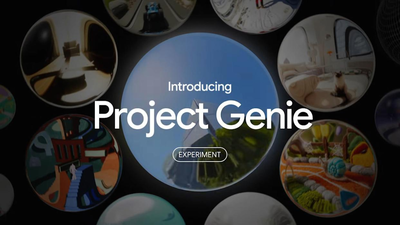
Major video game companies watched billions evaporate from their market value Friday following Google‘s announcement of Project Genie, an AI tool that generates interactive virtual worlds from simple text prompts. Take-Two Interactive saw its stock plunge 8%, wiping out over $3.5 billion in a single day, while Unity Software tumbled 24% and Roblox dropped 13%.The market panic appears to stem from investor fears that AI could fundamentally disrupt how games are made. But here’s the thing: Project Genie can’t actually create real video games yet—at least not in any meaningful sense.
What Project Genie actually does (and doesn’t do)
Google’s tool generates 60-second interactive environments at 720p resolution and 24 frames per second. Users can walk around these AI-created spaces with basic controls, but that’s essentially where the capabilities end. There are no objectives, no scoring systems, no sound, and no actual gameplay mechanics.When reporters tried recreating The Legend of Zelda: Breath of the Wild using Project Genie, they got something that looked vaguely similar but wasn’t playable in any traditional sense. The AI-generated “Link” looked unsettling, and the tool had to copy from existing content rather than creating something original.
Why investors are spooked despite the limitations
The stock selloff reveals a disconnect between Wall Street’s understanding of game development and industry reality. Investors seem particularly worried about “platform” companies. Unity, used by roughly 70% of top mobile games, faces concerns about relevance if AI can supposedly replace game engines. Roblox, built entirely on user-generated content, appears vulnerable if tools like Genie take over creation duties.Traditional game development involves hundreds of people working for five to seven years on premium titles, with budgets reaching hundreds of millions of dollars. AI tools might eventually help with early-stage work like previsualisation, but they’re nowhere near replacing the complex web of artists, programmers, designers, and writers behind actual games.
The harsh technical realities nobody’s talking about
Beyond the obvious limitations, there are practical problems. RAM prices have surged recently, and the world doesn’t have the infrastructure to suddenly run millions of AI-generated games simultaneously. Project Genie itself is limited and requires substantial computing power. Plus, as AI models improve, their power consumption increases—raising serious sustainability questions.Industry experts have pointed out another glaring issue: most examples circulating online show direct copies of existing games like Fortnite and Dark Souls, raising serious copyright concerns. The only “functional” demonstrations have been recreations of established IP rather than original creations.For now, not all gaming stocks suffered equally. Sega closed slightly up, suggesting some investors recognise this panic for what it is: overreaction to impressive-looking demos that can’t yet deliver on their implied promises.