
Heart Shaped Lake: NASA captures ‘heart-shaped’ lake glowing pink in Argentina |
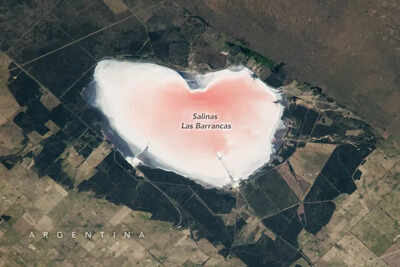
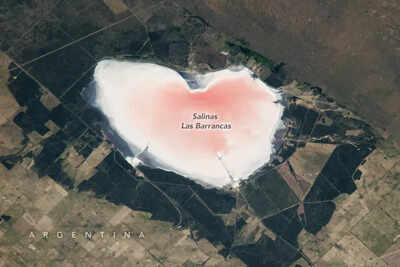
In the heat of the austral summer, a shallow salt lake in southern Argentina turns a muted shade of pink. The site, known as Salinas Las Barrancas, sits near the port city of Bahía Blanca. In January 2024, an astronaut aboard the International Space Station captured a clear image of the lake from orbit. The photograph, later released by the US space agency NASA, shows a heart-shaped basin filled with pastel coloured water, edged by pale salt flats. The image circulated widely after NASA published it through its Earth Observatory platform, drawing attention not only for its appearance but also for the environmental and industrial activity taking place below.
NASA image shows heart-shaped lake formed by seasonal salt and algae
Salinas Las Barrancas lies in a natural depression below sea level. When seasonal rains arrive, water collects across the flat basin. During dry months, much of that water evaporates, leaving behind thick layers of salt.The lake is also known locally as Laguna de Salinas Chicas. Its outline, visible in the NASA image from space, appears almost symmetrical. From ground level, it looks more subdued, a wide open stretch of brine and crusted white mineral.
Salt mining continues using traditional methods
Salt has been harvested here for decades. Local workers extract up to 300,000 metric tons twice a year, usually between the region’s rainy seasons. Most of the mineral content is replenished naturally by later rainfall.Mining remains largely manual. Workers scrape salt from the surface using handheld tools. Protective clothing is necessary. The glare from white crystals under intense sunlight can damage eyes and skin. Despite the scale of extraction, experts estimate that reserves could last thousands of years under current patterns.
High salinity shapes the lake’s unusual colour
The lake’s pink tone comes from microscopic life. In highly saline conditions, few organisms survive. One exception is Dunaliella algae, which produces red and yellow pigments known as carotenoids. These pigments help the algae tolerate extreme salt and sunlight.Tiny crustaceans feed on the algae. In turn, birds consume those crustaceans. The pigments move up the food chain, influencing the colour of the wildlife that visits the flats.
Flamingos and yellow cardinals depend on carotenoids
Among the most visible species are the Chilean flamingo and the endangered yellow cardinal. Flamingos are born greyish white. Their pink feathers develop through a diet rich in carotenoids. Yellow cardinals, which are naturally red in tone, also rely on these pigments for their bright appearance.Vegetation around the lake’s edge is sparse but salt tolerant. It survives where freshwater plants cannot. The setting appears harsh, yet it supports a small, adapted ecosystem.From orbit, the lake looks decorative, almost artificial. On the ground it is a working landscape shaped by climate, salt and industry. The colour shifts with season and light. The mining continues quietly, and the birds return when conditions allow.