Google DeepMind CEO Demis Hassabis may have just dropped ‘bombshell’ for OpenAI CEO Sam Altman
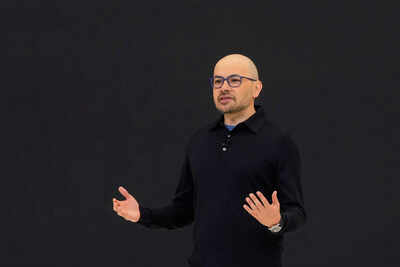
Demis Hassabis just told the AI world that ChatGPT’s path to superintelligence might be a dead end. The Google DeepMind CEO, in an CNBC “The Tech Download” podcast, argues that large language models—the technology behind OpenAI‘s flagship products—can’t achieve true scientific breakthroughs because they’re missing what he calls “a world model.”It’s a direct shot at Sam Altman‘s scaling strategy. While OpenAI has bet billions on making LLMs bigger and faster, Hassabis says that approach hits a fundamental wall. “Today’s large language models are phenomenal at pattern recognition,” he explained on “The Tech Download.” “But they don’t truly understand causality. They don’t really know why A leads to B. They just predict the next token based on statistical correlations.”
Deepmind CEO reveals the missing ingredient that LLMs can’t fake
Real scientific invention, Hassabis argues, requires something deeper: the ability to run thought experiments, simulate physics accurately, and reason from first principles. That needs a world model—an internal simulation engine that understands how reality actually works, not just how words typically follow each other.DeepMind is already building this. Their Genie 3 system, released last August, generates interactive 3D environments from text. SIMA 2 trains AI agents inside those simulated worlds. Early research shows these hybrid approaches outperform pure LLMs by 20-30% on reasoning tasks. More importantly, they don’t hallucinate basic physics the way ChatGPT sometimes does.
Why Demis Hassabis’ attack on OpenAI lands differently right now
The timing makes this more than academic debate. Google’s Gemini 3.0 launch in November triggered what Altman called “Code Red” inside OpenAI—an emergency refocus after ChatGPT started losing ground. Hassabis essentially confirmed in January that Google forced that panic.Meanwhile, Meta’s Llama 4 flopped spectacularly in April, accused of gaming benchmarks. OpenAI hasn’t shipped a major model breakthrough since GPT-4. The industry narrative is shifting from “scale solves everything” to “maybe we need different architecture entirely.”Hassabis estimates AGI is still 5-10 years out and requires what he calls “two AlphaGo-scale breakthroughs.” One of them, he’s making clear, isn’t just bigger language models. It’s teaching AI how the world actually works—something OpenAI’s current playbook doesn’t address.Whether world models deliver on that promise remains unproven. But Hassabis just made his bet public, and he’s positioning Google as the company that saw the limitation first.