
Fasting during Ramadan: Experts suggest how people with diabetes can manage the fasting window


Fasting during Ramadan can be safe for many people with diabetes, provided that preparation, portion control, hydration, and medical supervision are taken well into consideration. A well-planned eating schedule which also takes in account balanced macronutrients and regular blood sugar monitoring can significantly reduce health risks. Also, before fasting, it is adviced to consult a healthcare provider to assess personal risk factors and adjust medications if necessary. We reached out to health experts to understand the healthy way to fast. Dr Anshul Singh, Team Leader, Clinical Nutrition and Dietetics Department, Artemis Hospitals believes people with diabetes need to plan and get medical advice before they fast during Ramadan. “Not eating or drinking for long periods of time can change your blood sugar levels which can lead to hypoglycemia, hyperglycemia, dehydration or even problems if not handled correctly. Before you start the fast, you should see a doctor. Checking your own blood sugar levels is very important, and it doesn’t break the fast. Checking your sugar levels often helps you catch sudden drops or spikes early,” he says. “For Suhoor, the meal before dawn, choose foods that take a long time to digest, like whole grains, lentils, vegetables, eggs, and healthy fats. Avoid foods that are both salty and sweet. They can make you thirsty and raise your blood sugar quickly. Eat small amounts at Iftar to slowly break your fast. Stay away from too many fried foods and sweets. If you get dizzy, sweat or feel very weak you need to break your fast for safety reasons. If they plan ahead, keep an eye on their blood sugar levels, and eat balanced meals, a lot of people with diabetes can fast safely and mindfully,” he adds. Dr Rajiv Kovil, Head of Diabetology and weight loss expert, Zandra Healthcare explains, “Fasting during Ramadan is spiritually meaningful, but for people with diabetes it must be approached with preparation and medical supervision. The first step is risk stratification. Individuals with well-controlled type 2 diabetes may fast safely with structured guidance. However, patients with kidney disease, heart failure, established heart disease, pregnancy, recent or ongoing infections, or any acute illness should be strongly advised not to fast, as the risks outweigh the benefits.““Medication adjustment is central to safety. Those on sulfonylureas or insulin require dose modification — morning doses are usually reduced or shifted to the evening to prevent hypoglycemia during the fasting window. If someone is on even a low dose of sulfonylurea, it is often safer to transition to agents with minimal risk of low sugars during Ramadan. The goal is stability, not aggressive glucose lowering. Sehri (pre-dawn meal) should be balanced — rich in fiber and protein with slow-release carbohydrates and adequate hydration. Iftar should begin with portion control; dates must be counted within the carbohydrate allowance. Try to keep dinner relatively early and avoid excessive fried foods such as bhajiyas at night, as these contribute to late glucose spikes. The night period is metabolically vulnerable, and sugars often rise after heavy meals. Taraweeh prayers, which involve repeated standing and movement, can serve as light to moderate physical activity and help blunt post-Iftar glucose excursions if one is able to perform them safely. Regular glucose monitoring is essential and does not break the fast. Any reading below 70 mg/dL or above 300 mg/dL warrants breaking the fast. Ramadan and diabetes can coexist but only with preparation and medical partnership,” Dr. Rajiv stresses.Dr David Chandy, Director, Endocrinology & Diabetology, Sir H. N. Reliance Foundation Hospital says glucose monitoring does not break the fast. “Frequent blood glucose monitoring is strongly encouraged and does not invalidate the fast. Patients should check glucose levels at least before Suhoor, mid-day, mid-afternoon, and two hours after Iftar. Additional checks are needed if symptoms arise.”Further he suggests that fasting should be broken immediately if:
- Blood glucose falls below 70 mg/dL
- Blood glucose exceeds 300 mg/dL
- Symptoms of hypoglycemia, hyperglycemia, or dehydration occur
Nutritionist expert, Madhura P Behki says, “While people with diabetes can fast safely, it requires careful planning, medical supervision, and smart nutrition strategies to avoid complications such as hypoglycemia (low blood sugar), hyperglycemia (high blood sugar), and dehydration.”Madhura shares a few tips to keep in mind to fast without having any health complications.
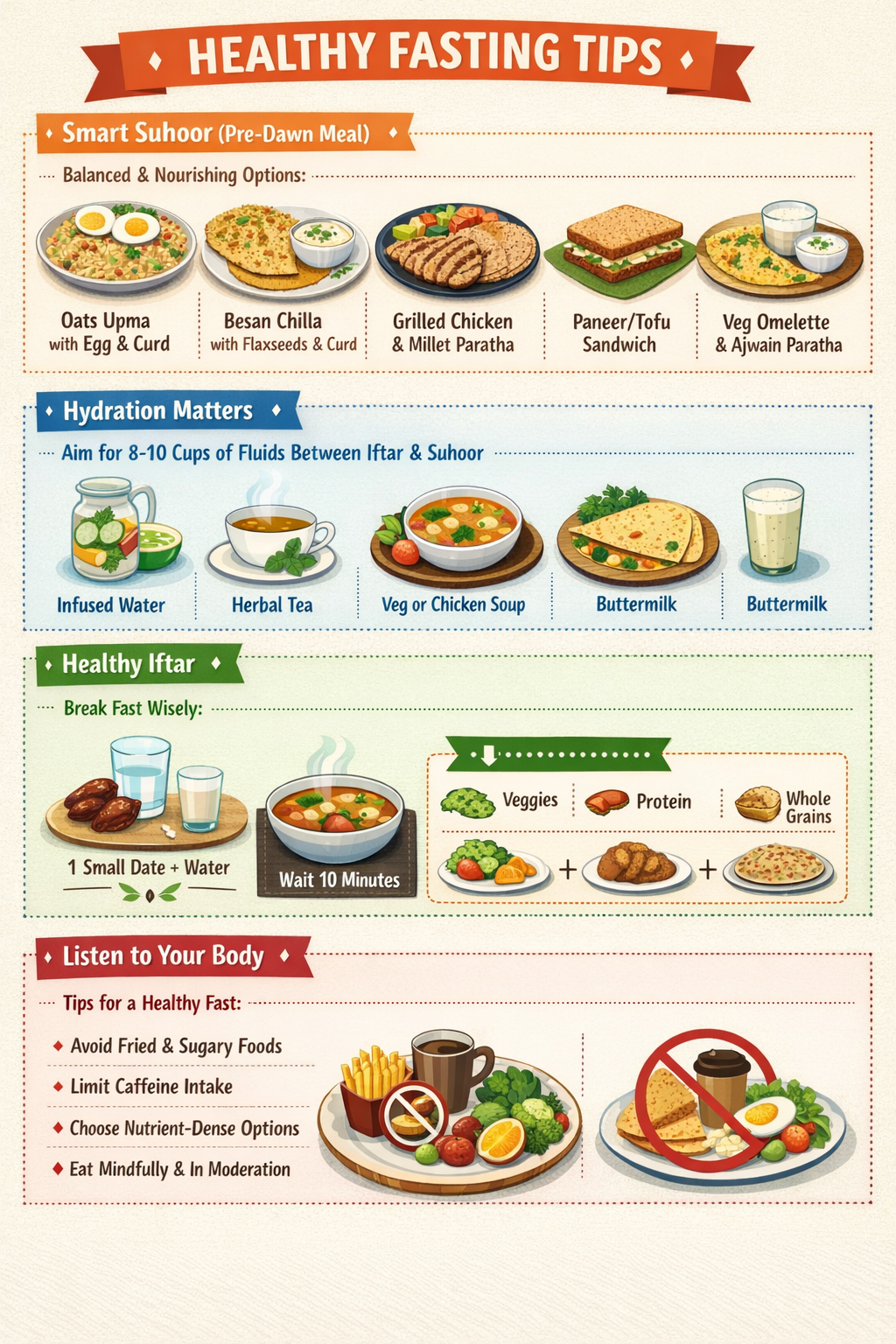
We reached out to health experts to understand the healthy way to fast.
1) A smart suhoor (pre- dawn meal)
The meal should be packed with slow digested carbs, good quality protein and health fats. Such a combination will keep the blood sugar steady and also energy levels in check.Here are some food options to start the day with:
- Rolled oats vegetable upma with boiled egg & curd
- Meethi besan chila with flax seed & curd
- Grilled chicken with millet paratha & sauteed veggies
- Whole wheat bread panner/tofu sandwich
- Vegetable omelet with ajwain paratha & buttermilk
2) Hydration matters
Long fasting hours without fluids can increase the risk of dehydration, which may worsen blood sugar control and lead to serious complications.Between Iftar and Suhoor, aim for 8–10 cups of fluids. Here are some smart hydration options for the same:
- Infused water with cucumber/berries/lemon/mint
- chamomile/peppermint tea
- vegetable/chicken broths
- vegetable/dal/mutton soups
- Buttermilk
3) A healthy fast breaking
Traditionally, many Muslims break their fast with dates. Dates contain natural sugars and can quickly raise blood glucose.A smart way would be to have a small date with some water/lemon water and post 10 min a cup of vegetable soup. Take some break to avoid overeating which can lead to sugar spikes.Build a balance plate
- ½ plate non-starchy vegetables
- ¼ lean protein (grilled chicken, fish, legumes)
- ¼ whole grains or controlled portions of rice
4) Listen to your body
Many times you will see all the junk at the table, but such foods that are fried, sugary, simple carbs can make sugars go for a toss.Hence keep healthy options around so such foods don’t lead to making a bad choice.Limit caffeine intake to avoid dehydration.Medical experts consulted This article includes expert inputs shared with TOI Health by: Dr Anshul Singh, Team Leader, Clinical Nutrition and Dietetics Department, Artemis HospitalsDr Rajiv Kovil, Head of Diabetology and weight loss expert, Zandra HealthcareDr David Chandy, Director, Endocrinology & Diabetology, Sir H. N. Reliance Foundation HospitalInputs used to highlight how individuals with diabetes can safely observe fasting during Ramadan.