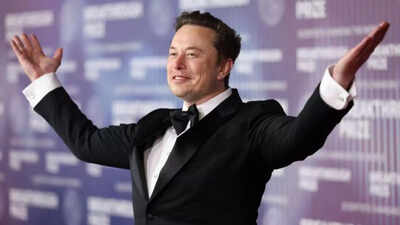
Elon Musk once revealed that he worked 120 hours a week, roughly 17 hours a day, while steering both Tesla and SpaceX through turbulent phases. He has often spent nights at the office, showering at the YMCA in his early career and later sleeping on factory floors to oversee production. For Musk, this extreme level of commitment is not an exception but an expectation. When he took over X, in 2022, he told employees to “dedicate their lives to working or leave the company,” Business Insider reports.To Musk, remote work is “morally wrong,” and the idea of work-life balance almost irrelevant. It is a view shared by several of the world’s most successful business leaders who see ambition and equilibrium as fundamentally at odds.
The myth of balance
The notion of work-life balance has long been held up as an ideal, a steady equilibrium between professional ambition and personal fulfilment. Yet for many at the top, it is a myth. Billionaire entrepreneur Mark Cuban put it bluntly on The Playbook, a series by Sports Illustrated and Entrepreneur: “There is no balance.”Cuban said that while those seeking a standard 9-to-5 career can find balance, the exceptionally ambitious cannot. “If you want to crush the game, whatever game you are in, there is somebody working 24 hours a day to kick your ass,” he said. His view captures a sentiment common among founders and investors who believe that balance often comes at the cost of dominance.
From balance to harmony
Amazon founder Jeff Bezos also rejects the traditional definition of work-life balance. In a 2018 event hosted by Axel Springer, he described the concept as “debilitating” because it implies a trade-off. Instead, he argues for what he calls “work-life harmony.”For Bezos, work and life are not opposing forces but interconnected energies. “If I am happy at home, I come into the office with tremendous energy,” he said. “If I am happy at work, I come home with tremendous energy.” It is not balance but a circle, where personal contentment and professional output feed each other.Microsoft Chief Executive Officer Satya Nadella echoes a similar idea. In an interview with the Australian Financial Review in 2019, Nadella said his early career was driven by the need to separate rest from work. Over time, he realised the key was not balance but alignment, integrating one’s “deep interests” with their professional pursuits.
The culture of overwork
In China, this idea has been institutionalised. Alibaba cofounder Jack Ma famously championed the “996” work culture, which means working from 9 a.m. to 9 p.m., six days a week. In 2019, he called it a “huge blessing” for young workers. “If you do not work 996 when you are young, when can you ever work 996?” Ma said at the time.For Ma, passion justifies the intensity. “If you find a job you like, the 996 problem does not exist,” he argued. Yet China’s Supreme People’s Court later declared the practice illegal in 2021, following widespread burnout and protests among younger employees. Despite this, the 996 ethos continues to influence corporate life in parts of Asia, a testament to how deeply the ideal of overwork remains embedded in the pursuit of success.
Redefining ambition
Across continents and industries, these leaders share a conviction: the pursuit of extraordinary success demands extraordinary sacrifice. Whether it is Elon Musk’s sleepless nights, Jeff Bezos’s circular harmony, or Jack Ma’s 12-hour workdays, their philosophies redefine what it means to work hard.But as the lines between work and life continue to blur, the question remains: At what cost? If balance is indeed a myth, perhaps the challenge for the next generation of leaders is not to restore it but to redesign it.