
Denmark just uncovered a 600-year-old ship, the largest medieval cargo vessel ever found | World News
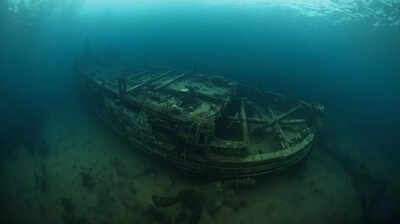
For centuries, the sound of the seabed between Denmark and Sweden has been disturbed by currents, anchors and passing ships. Little attention was paid to what lay beneath until construction work for Copenhagen’s new Lynetteholm district required closer inspection. During those routine surveys, maritime archaeologists from the Viking Ship Museum encountered something that did not fit the usual patterns of wreckage. What first appeared as timber fragments soon suggested a much larger structure. Gradually, as sand and silt were removed, the shape of an unusually large mediaeval vessel emerged. The find has since been confirmed as the largest cog ever discovered, offering rare physical evidence of how trade, shipbuilding and everyday life were organised across Northern Europe in the early fifteenth century.
This 600-year-old ship was bigger than anyone thought possible
The shipwreck, now known as Svaelget 2, was uncovered at a depth of around 13 metres. It lies in a sheltered part of the Sound, where sediment helped protect the remains from erosion. Archaeologists quickly realised the vessel was far larger than any previously documented cog.According to a press release from the Viking Ship Museum, measurements show the ship was about 28 metres long, 9 metres wide, and 6 metres high. Its estimated cargo capacity was close to 300 tonnes. Dendrochronological analysis dates its construction to around 1410. No other known cog comes close to this scale. According to excavation leader Otto Uldum, the size alone sets the ship apart. It suggests a level of planning, investment and demand that goes beyond small-scale or opportunistic trade.
Size mattered in medieval trade
Essentially, large cargo ships were integral parts of the trade system. A ship like Svaelget 2 would have been meaningless without a trading system that was stable and had merchants buying and selling goods in volume.Cogs were well thought out to be very efficient. They could be heavily laden yet still be handled by a small crew, making them ideal for long and sometimes dangerous journeys, including the passage around Skagen and into the Baltic.The magnitude of Svaelget 2 indicates that it was more likely involved in household goods than rare luxuries. For example, goods such as salt, timber, bricks and basic foodstuffs could be moved in such quantities that they brought about the transformation of the regional economies.
The cog significantly transformed shipping practices in Europe
The cog emerged in the North Sea region and gradually became the dominant cargo ship of the Middle Ages. Its flat bottom, high sides and large hold made it well suited to bulk transport. By the fourteenth and fifteenth centuries, cogs were central to trade across Northern Europe. They lowered costs and reduced risk, allowing goods used by ordinary people to travel long distances.Archaeologists see Svaelget 2 as physical confirmation of how far this ship type could be pushed. Until now, the upper limits of cog construction were largely theoretical.
Where the ship was built and with what materials
Analysis of the ship’s timber has revealed a complex supply chain. The planking was made from oak sourced in Pomerania, in what is now Poland. The frames came from oak grown in the Netherlands.This suggests the ship was built in the Netherlands, where expertise in constructing very large cogs was available. Heavy timber was imported, while other elements were prepared locally. The combination reflects a practical approach and highlights how raw materials moved across borders long before modern logistics.
What survived and why preservation matters
One of the most unusual aspects of Svaelget 2 is its extraordinary preservation. The entire starboard side of the hull from keel to gunwale is intact, a phenomenon rarely seen in cog finds. The archaeologists have also discovered extensive remains of the rigging. These consist of ropes and fittings that shed light on the control of sails and the fastening of masts. Usually, such components are not preserved, but they are critical for confirming how ships would have operated at sea.
Life on board may have been like
The excavation revealed signs of daily life that are often missing from medieval shipwrecks. Among the finds were painted wooden bowls, shoes, combs and rosary beads. A brick-built galley was also discovered, complete with cooking equipment, ceramic bowls and remains of fish and meat. Around 200 bricks and 15 tiles formed the structure, suggesting sailors had access to hot meals. These objects hint at a more organised and settled life on board than is usually associated with medieval seafaring.
The absence of the missing cargo still conveys a significant story
No trace of the ship’s cargo has been found. This absence is not considered unusual. The open hold meant barrels and bundles would have floated free as the ship sank. The lack of ballast suggests the vessel was fully loaded at the time. Archaeologists are confident it was a merchant ship, with no evidence of military use.Svaelget 2 now stands as a material record of a trading world that depended on ships of unprecedented size. It does not rewrite history, but it grounds it in timber, rope and brick, resting quietly where trade once passed above.