
‘Brain-eating amoeba’ claims 19 lives in Kerala | Kochi News
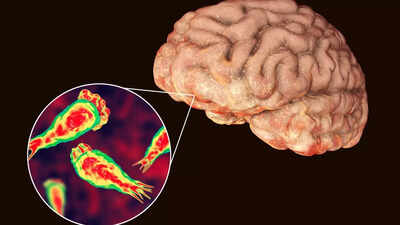
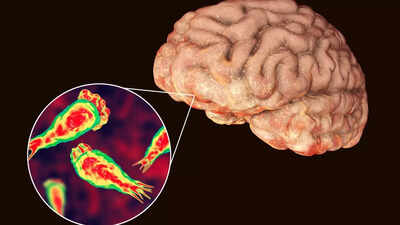
NEW DELHI: Kerala health authorities are on high alert after at least 19 people died this year from Primary Amoebic Meningoencephalitis (PAM), a rare and often fatal infection caused by the so-called “brain-eating amoeba.” State health minister Veena George said 69 cases have been recorded so far in 2025, but stressed that unlike last year, there is no evidence of clusters linked to a single water source.Speaking to ANI, Minister George said, “Not clusters, single cases. We did have clusters, but not in 2025… but back in 2024, there was a cluster there because the same water source was used, here, there is no cluster, but we have cases, we have a total number of 69 cases.”
A deadly infection
PAM is caused by Naegleria fowleri, a free-living amoeba that thrives in warm freshwater and can enter the body through the nose. Once it reaches the brain, it causes severe inflammation, which is usually fatal. Patients reported in Kerala this year range from infants as young as three months to elderly people aged 91. So far, 33 of the cases have been male and 19 female, officials confirmed.
Heightened surveillance
Authorities say they stepped up monitoring after the 2023 Nipah outbreak. “We issued strict instructions to investigate every meningoencephalitis case. If amoeba is detected, treatment begins immediately. Early detection leads to saving lives,” George said. The National Centre for Disease Control (NCDC) and Kerala’s health department are carrying out epidemiological investigations, including environmental sampling and testing of water sources. Hospitals have been alerted, and awareness drives are under way to warn communities about the risks of exposure to untreated freshwater.
Previous outbreaks
In 2024, clusters of PAM were reported in Kozhikode, Malappuram and Kannur, linked to contaminated water sources. This year, officials say infections appear to be sporadic. Public health teams have urged chlorination of wells and community water sources, alongside testing of symptomatic patients. Despite these measures, doctors acknowledge the challenge: treatment options remain limited, and survival rates are low.