
Beyond speed: How safety and worker fatigue are rewriting the 10-minute delivery story | Delhi News

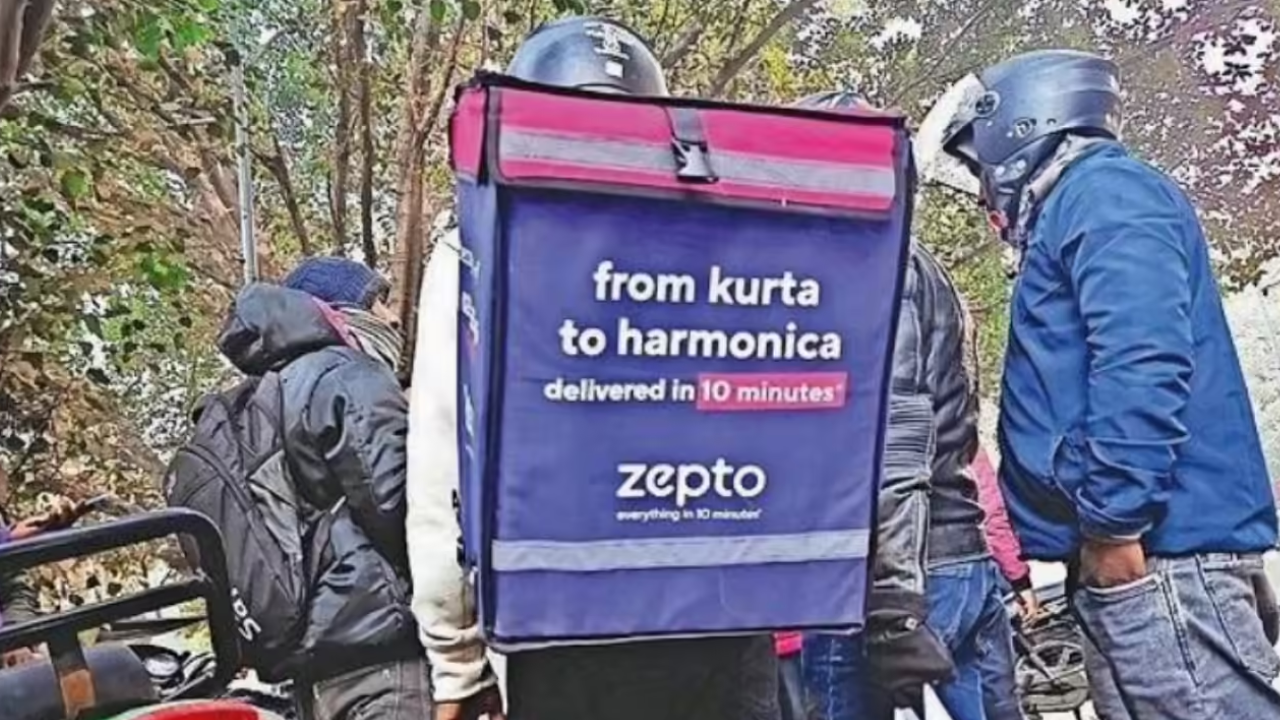
The era of ultra-fast “10-minute deliveries” in India’s booming quick commerce sector is steadily drawing to a close, bringing visible relief to gig workers and reigniting a national conversation on labour safety, regulation and the real cost of convenience. Leading platforms such as Blinkit, Zepto, Swiggy Instamart and Flipkart Minutes have begun scrapping the high-speed branding from their apps following directives from the Union labour ministry and sustained protests by gig workers’ unions.The move comes after Union Labour Minister Mansukh Mandaviya urged quick commerce companies to abandon rigid delivery timelines and prioritise rider safety. The directive followed a nationwide strike by gig workers on New Year’s Eve 2025, which highlighted widespread concerns over road safety, long working hours, declining earnings and lack of job security.

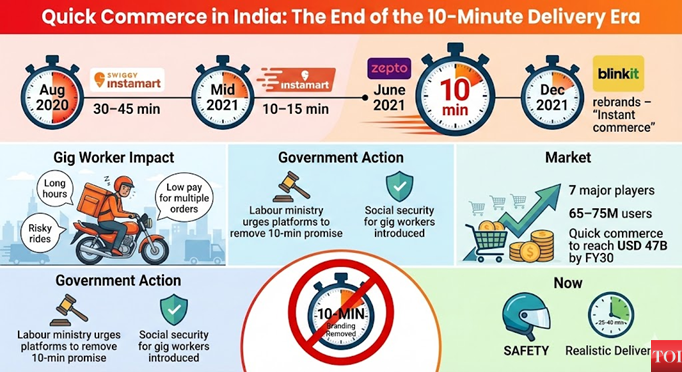
Platforms drop aggressive branding after government nudgeBlinkit has revised its principal tagline from “10,000+ products delivered in 10 minutes” to “30,000+ products delivered at your doorstep”. Zepto now uses the phrase “Groceries in minutes”, while Swiggy Instamart displays “Groceries and More” on Android and iOS app stores. Flipkart Minutes has also moved away from explicit time-bound claims. Tata Group’s BigBasket, however, continues to show “10 min grocery app”.Industry watchers say the rollback signals an acknowledgment that aggressive timelines had begun to attract regulatory scrutiny and public criticism. According to estimates, seven major players currently operate in India’s quick commerce market, which serves 65–75 million monthly transacting users.
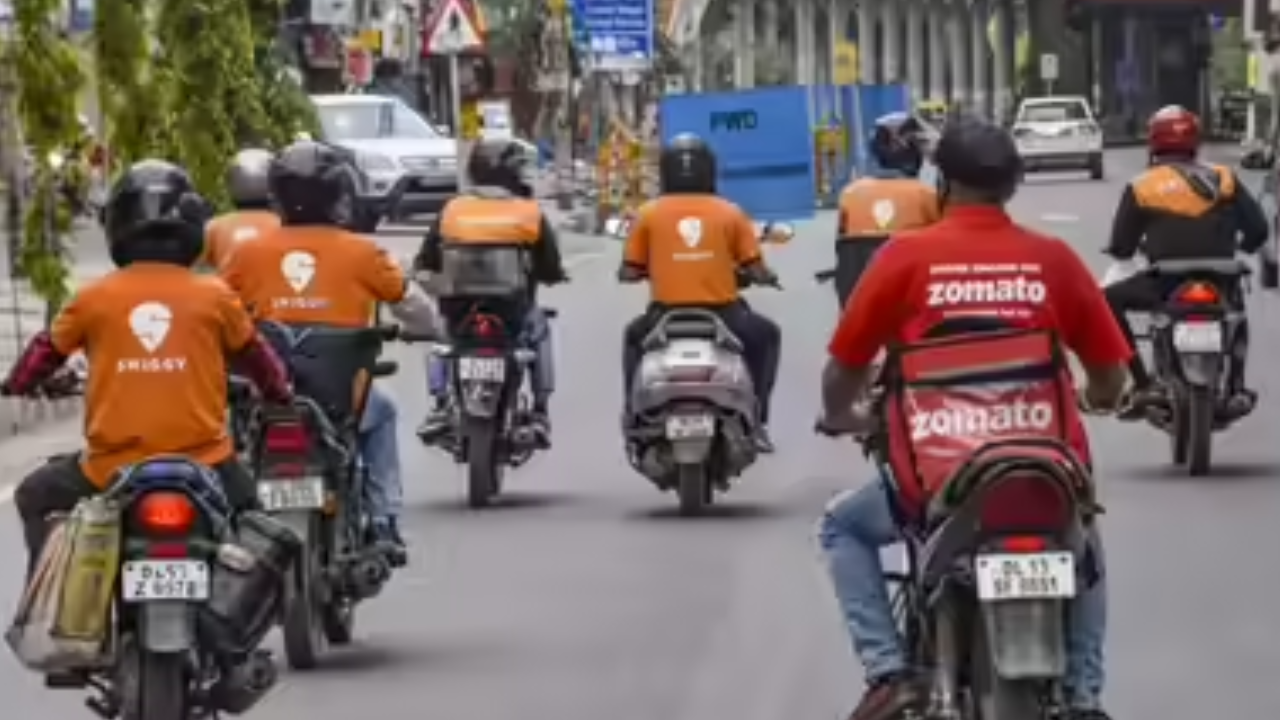
Gig workers call move a long-overdue correctionGig workers’ bodies have welcomed the decision, describing the 10-minute delivery promise as a hazardous strain on delivery personnel. The Gig Workers Association said the model forced workers to rush, “endanger themselves on roads, and endure extended shifts amid relentless app-driven pressures from incentives, ratings, and order assignments.”“… Workers are often paid the same amount for a multi-order delivery as for a single order. In one such case, a worker was paid only Rs 19.30 for delivering two orders together. This increases risk and workload without any additional compensation,” the association said.The body stressed the urgent need for a permanent institutional framework to facilitate dialogue between workers, platforms and the government to address safety concerns and prevent disputes from escalating.
Voices from the ground: ‘A peaceful mindset without rushing’For delivery partners navigating congested urban roads daily, the move has been widely welcomed, particularly in cities like Bengaluru.“It’s a good move. They mention it as 10 minutes, but usually we take 10-15 minutes to deliver. With that removed, we’ll have more time and a peaceful mindset instead of rushing. There have been instances of customers scolding us in case of delay. It is very difficult to rush in Bengaluru traffic with a 10-minute window,” said Asha A, a gig worker with four to five years of experience.Another delivery partner, said: “We’re very happy with the move. Recently, one delivery person died while trying to deliver on time. Sometimes we are in faraway places and can’t reach on time. We also sometimes jump traffic signals and ride on pavements. Traffic police usually don’t catch us because they are generous toward delivery partners, but we are risking our lives. Now, without the 10-minute pressure, we can travel peacefully.”“Earlier, we were constantly worried about being late and getting penalised. Without the 10-minute pressure, we can ride more carefully and still do our work properly,” said another worker.Another delivery partner stated, “The 10-minute delivery promise created a lot of tension for delivery workers. Even small delays because of traffic or lifts would become a problem.”

Consumers say speed should not trump safetyAmong consumers, the response has been mixed but largely supportive. Many urban users admitted that while quick commerce has reshaped grocery shopping habits, the safety of delivery workers must come first.“It’s not a deal-breaker. I don’t think there’s such an emergency that we need deliveries in 10 minutes. Waiting 30 minutes is fine. I see many dark stores around my area, and it’s helpful, especially in emergencies or for everyday groceries and personal needs. If there is an option available for us to mark it as an emergency, it would be really helpful to prioritise our deliveries. We usually compare prices across apps before ordering. Also, I think it’s ultimately the gig workers’ choice — they earn commission on every order, so many will still continue to ride fast.” a resident said.
Another resident stated, “I am happy with this decision, the riders were under too much pressure to deliver and as a consumer we can always wait for 10-15 minutes more. We should remember that these platforms have made our lives easy but these 10-minute deliveries have put the riders under risk.” “I usually order from Zepto and Blinkit once a week for my kids’ fruits and toys… I think 10-minute delivery is mostly a way to create competition among companies. If someone needs something urgently, there could be an option to pay an extra fee, say Rs 10 or Rs 20, to make the delivery a priority. That way, people who really need it fast can get it, without pressuring delivery workers. After seeing the viral video of a delivery agent jumping off a moving train after handing over goods, I feel no delivery is worth risking one’s life or getting into trouble,” a resident said.Others suggested optional priority delivery or flexible time slots for urgent needs, rather than default timelines that push workers to take risks.

How the 10-minute delivery era began
Between August 2020 and December 2021, India saw a quiet shift in shopping habits. During the pandemic, fast grocery deliveries became essential. Swiggy launched Instamart in August 2020 with 30–45 minute deliveries, and by mid-2021, Zepto promised deliveries in 10 minutes. In December 2021, Blinkit rebranded with the mission of “instant commerce.”In just 16 months, these players made ultra-fast delivery a reality. Four years later, 10-minute deliveries are no longer a novelty—they have become the norm for many urban consumers.

Traders’ body calls 10-minute delivery a ‘public menace’The Confederation of All India Traders (CAIT) has welcomed what it described as the government’s decision to curb 10-minute delivery services, calling it “timely, humane, and far-sighted”. CAIT said it had repeatedly warned against the unregulated expansion of quick commerce.Its National Secretary General and MP, Praveen Khandelwal, said, “Unrealistic timelines such as 10-minute delivery force delivery personnel to take life-threatening risks.” He added that the sector requires “structural reforms, not cosmetic changes”, and recalled that he had raised the issue in Parliament and introduced a Private Member’s Bill seeking a ban on dark stores.

Industry pushback: ‘Gig economy needs less regulation’Even as platforms roll back the branding, industry leaders remain cautious about tighter regulation. Eternal founder Deepinder Goyal argued that gig work is among India’s largest organised job creation engines and warned against over-regulation.“I repeat — gig work is one of the largest organised job creation engines in India. And we provide insurance, fair, timely and predictable wages,” Goyal said.Defending the feasibility of 10-minute deliveries, he added, “Our 10-minute delivery promise is enabled by the density of stores around your homes. It’s not enabled by asking delivery partners to drive fast.”
Labour codes and the road ahead for gig workersThe debate unfolds as the government rolls out sweeping labour reforms. In November, all four labour codes were notified, promising universal social security coverage for gig and platform workers. Draft rules under the Social Security Code, 2020, propose a 90-day annual work threshold for eligibility.With over 12.7 million gig workers currently in India—a number projected to rise to 23.5 million by 2029–30—the future of quick commerce will depend on balancing growth with dignity and safety.
A shift away from speed-at-all-costsIndia’s quick commerce market is expected to grow at 35–40 per cent CAGR to reach USD 47 billion by FY30. But the retreat from the 10-minute delivery promise marks a critical turning point. What was once marketed as instant gratification has increasingly been seen as a public safety concern—one that placed delivery workers under relentless pressure.For gig workers, the end of the 10-minute delivery era may not immediately change algorithm-driven realities. But it represents a symbolic and practical step towards safer roads, more realistic expectations, and a model of convenience that does not come at the cost of human lives.