Atharva Chaturvedi: Madhya Pradesh teen argues own case in Supreme Court to secure MBBS admission in EWS quota, wins | Bhopal News
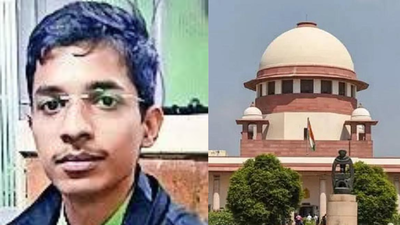
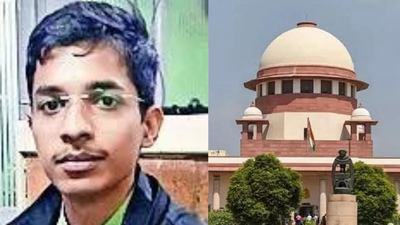
JABALPUR: “I didn’t argue emotionally — I simply placed the law as it is,” said Atharva Chaturvedi, 19, a NEET aspirant recalling the moment he stood before the country’s highest court with the Constitution and past judgments to support his case. Atharva cleared NEET 2024–25 with 530 marks out of 720 as an EWS candidate, but he was left out of the admission process because a clearly implemented EWS reservation policy was absent in private medical colleges in Madhya Pradesh. He chose to fight the case himself without engaging a senior advocate.
Atharva said he argued his own case before the Madhya Pradesh High Court and the Supreme Court of India and secured relief after he was denied MBBS admission under the Economically Weaker Section (EWS) quota in private medical colleges in Madhya Pradesh.Before the High Court, he cited the 103rd Constitutional Amendment and said Articles 15(6) and 16(6) mandated 10% EWS reservation in private, non-minority educational institutions. The court directed the state to complete the process of increasing seats and implementing EWS reservation in private medical colleges within a year.However, the policy remained unimplemented in the following admission cycle. Despite securing an EWS rank of 164 in NEET 2025–26, he again did not get admission and moved the apex court through an online petition. On Feb 10, as a bench headed by Chief Justice Surya Kant was rising for the day, Atharva Chaturvedi sought 10 minutes to present his case, and the bench agreed.Invoking its powers under Article 142, the Supreme Court observed that the petitioner was denied admission due to circumstances beyond his control and that state authorities failed to comply with earlier judicial directions. The court directed the National Medical Commission and the Madhya Pradesh govt to ensure his admission to an MBBS course in a private medical college, and warned that further delay would cause irreversible harm to a deserving candidate.“I was nervous initially,” Atharva told TOI, “but I studied the earlier orders carefully. I knew the law was on my side, so I just followed the legal provisions.”He said his advocate father, Manoj Chaturvedi, helped him understand previous judgments, but said the decision to argue his case personally was deliberate. “Travelling to Delhi repeatedly was difficult and expensive. That’s why I chose to file the petition online and appear virtually,” he said.Court observers said the bench was struck by the clarity with which he explained constitutional intent, reservation policy and administrative lapses, which they said was rarely seen even among experienced lawyers.As people asked him why he wanted medicine degree when, they said, the courtroom seemed to be calling, Atharva continued preparing for NEET with the aim of becoming a doctor.