
A desert ice cave in New Mexico that has stayed below freezing for 3,400 years | World News
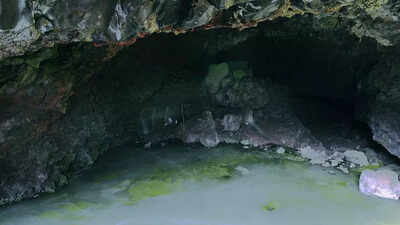
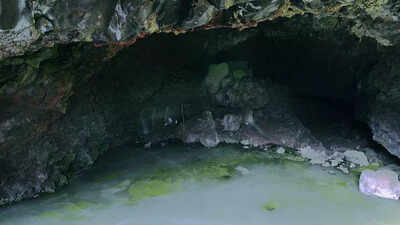
Hidden deep in the heart of New Mexico lies a frozen world that defies its desert surroundings. While temperatures outside soar under the summer sun, the Bandera Volcano Ice Cave remains a frigid 31°F (minus 0.6°C) year-round. Inside, ice up to 20 feet thick carpets the floor, a centuries-old layer preserved by the cave’s unique formation. Scientists say it has stayed below freezing for more than 3,400 years, making it one of the oldest intact ice caves in the United States. The stark contrast between the scorching desert just outside and the icy interior is breathtaking. Visitors step from a sunbaked landscape into a natural freezer, a hidden relic of time frozen in the desert.
How Bandera ice cave in New Mexico became a frozen desert wonderland
The Bandera Ice Cave is a lava tube. Molten lava once flowed beneath the surface during volcanic eruptions. When the lava on top cooled, the molten lava beneath kept moving. Eventually, it drained away, leaving a hollow tunnel. That’s the cave we see today. Its shape traps cold air, while the porous walls keep the desert heat out. Snowmelt and rainfall seep in and freeze instantly on the icy floor. Over centuries, ice built up, layer by layer. Experts say this is why the cave has stayed so consistently cold.Despite the subzero temperatures, the cave is not entirely lifeless. Arctic algae thrive on the icy surface. They form a vibrant blue-green layer across the frozen floor. Paul Mauermann, an environmental educator, says the algae’s survival in such a cold spot is remarkable. It’s tiny life holding its own in extreme conditions. You wouldn’t expect it in a desert, yet it’s there. It seems to make the cave feel almost otherworldly.
The strange frozen landscape of Bandera Volcano ice cave
The Bandera Volcano itself is dormant now, but it tells a story of explosive eruptions. The cinder cone formed a crater about 800 feet deep. Lava flows cooled and hardened. Some drained away, creating tunnels and the ice cave. Scientists can study these flows to understand volcanic activity over millennia. The surrounding lava fields stretch across 23 miles, a reminder of the raw power that shaped this frozen oasis.The cave is more than just a frozen oddity. It’s a natural laboratory. Researchers study ice preservation, microbial life, and volcanic geology all in one place. Visitors, meanwhile, are drawn by the sheer surrealism of it. Imagine walking on a desert mountain trail, then stepping into a world that feels like the Arctic. It’s quiet, eerie, and awe-inspiring. Some say it almost feels like time itself slows down inside.