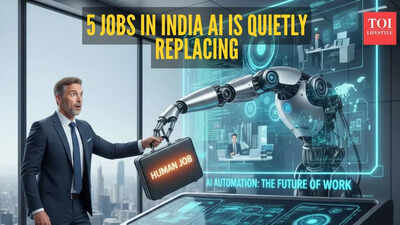
AI isn’t coming for jobs anymore. It’s already here, sitting quietly in offices, call centres, editing rooms, and HR dashboards. And while every new technology creates panic, this time the concern isn’t exaggerated. Multiple global and Indian studies now agree: certain roles are far more vulnerable than others.This doesn’t mean people will suddenly be jobless overnight. But it does mean the nature of these jobs is changing fast and not always in the worker’s favour.

Here are five jobs in India that are most exposed to AI disruption, backed by real data and research.
1. Data entry and back-office processing jobs
Let’s start with the obvious one.India has long been the global hub for back-office work – data entry, form processing, invoice handling, basic accounting tasks. But these are exactly the kind of repetitive, rule-based jobs that AI and automation are best at replacing.According to a NASSCOM–BCG report, nearly 40% of India’s current workforce will need reskilling by 2027 due to automation, with clerical and data-heavy roles facing the highest riskThe World Economic Forum’s Future of Jobs Report 2023 also lists data entry clerks among the fastest-declining roles globally.In simple terms: if your job mostly involves copying, pasting, verifying, or sorting information, AI can already do it faster, cheaper, and without breaks.
2. Customer support and call centre roles
For years, call centres were considered “safe” because they required human interaction. That safety net is disappearing.AI chatbots, voice assistants, and automated customer support systems are now handling everything from bank queries to flight cancellations. And they’re getting better at understanding Indian accents and regional languages.A McKinsey Global Institute study estimates that up to 30% of tasks in customer service can already be automated using existing AI tools.In India specifically, Gartner predicts that by 2026, over 75% of customer interactions will be handled by AI without human intervention. Human agents won’t disappear completely, but entry-level call centre jobs, the ones that employ millions, are shrinking fast.
3. Content writing and basic journalism roles
This one makes people uncomfortable, especially in media and digital publishing.AI can now write product descriptions, SEO articles, listicles, sports summaries, financial explainers, and even celebrity news within seconds. And yes, many Indian companies are already using it.A Reuters Institute Digital News Report found that newsrooms worldwide are actively experimenting with AI-generated content, particularly for routine reporting. Meanwhile, a PwC India report notes that content creation and media roles are undergoing “significant AI-led restructuring,” with demand shifting from writers to editors, fact-checkers, and strategists.
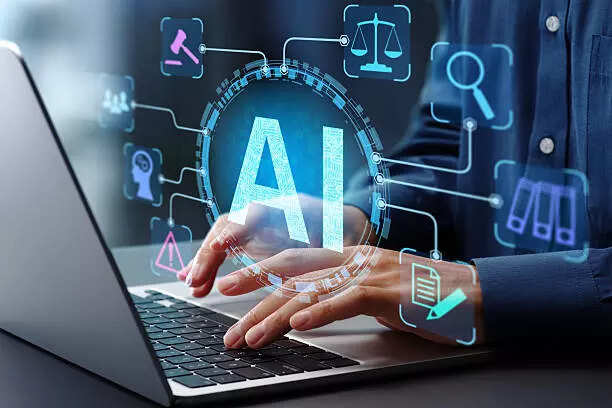
The truth is, original thinking isn’t at risk but formula-based writing absolutely is. If a piece can be generated using templates, AI will do it.
4. Accounting, bookkeeping, and basic finance roles
Traditional accounting jobs are another major pressure point.AI-powered tools now handle invoice reconciliation, expense tracking, tax calculations, payroll processing, and compliance checks with minimal human involvement.According to Deloitte’s Global Human Capital Trends, nearly 50% of finance tasks can be automated, particularly entry-level roles. In India, ICAI (Institute of Chartered Accountants of India) has openly acknowledged that automation is reshaping the profession and pushing accountants toward advisory and strategic roles instead.Bookkeepers and junior accountants who don’t upskill may find fewer opportunities over time.
5. Recruitment and HR screening roles
This one surprises many people.AI is now screening resumes, shortlisting candidates, analysing interview responses, and even predicting employee attrition. Large Indian companies already use AI tools to filter thousands of applications in minutes.A Harvard Business Review study found that AI-based hiring tools are increasingly used to reduce time-to-hire and bias – though not always successfully. LinkedIn’s Future of Recruiting report also highlights that automated screening has become standard practice, reducing reliance on junior HR staff.This doesn’t mean HR is dying. It means admin-heavy HR roles are shrinking, while people-focused roles are growing.So, should Indians be scared of AI?Not scared but definitely alert.A World Bank report on AI and emerging economies suggests that countries like India will see job transformation more than job loss, but only if reskilling keeps pace.The real risk isn’t AI. It’s staying static while everything else evolves.Jobs that rely on repetition, predictability, and volume are the most exposed. Jobs that need judgement, creativity, emotional intelligence, and cultural understanding still need humans, badly.AI isn’t replacing people. It’s replacing tasks.And in India’s rapidly changing job market, the ones who adapt will stay relevant. The rest may slowly find their roles fading into the background – quietly, but permanently.