
From Bombay to Mumbai: The deeper constitutional meaning of renaming cities in India
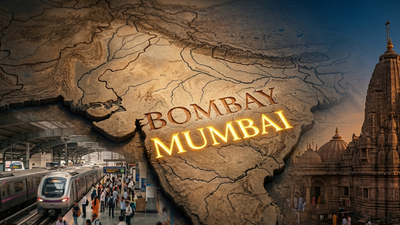
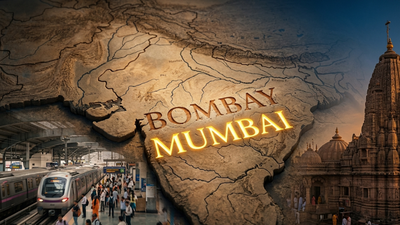
“To rename a city is not merely to change a word on a map, but to engage with the constitutional expression of identity, memory and democratic will.” This thought captures the essence of the ongoing discourse on the renaming of cities in India. What appears, at first glance, to be a symbolic or administrative exercise, in reality sits at the intersection of constitutional identity, historical memory and governance.In recent decades, India has witnessed several instances of renaming – Bombay to Mumbai, Calcutta to Kolkata, Bangalore to Bengaluru, and Allahabad to Prayagraj and so on. These decisions are often justified as attempts to move away from colonial-era nomenclature and restore indigenous linguistic and cultural identity. Yet, the issue is not merely historical or political; it raises a deeper constitutional question: how should a nation remember its past while defining its present?Names as constitutional markers of identityNames are not neutral labels. They reflect power, shape perception and carry within them layers of historical experience. Colonial place names were often products of administrative convenience or linguistic distortion under foreign rule. In that sense, renaming is not simply an act of substitution; it is an assertion of narrative ownership.As the proverb goes, “a name is the first story we tell about a place”. When that story is externally imposed, it risks disconnecting communities from their own historical consciousness. Restoring historically rooted names, therefore, becomes an exercise in reclaiming cultural memory within a constitutional framework that values identity and diversity.For younger generations, this assumes particular importance. Names act as gateways to history. A name like Prayagraj evokes civilisational continuity and cultural geography in a way that a later-imposed nomenclature may not. In this sense, renaming is not about erasing history but about reclaiming it.Cultural continuity and constitutional evolutionThe debate must, however, move beyond a simplistic restoration narrative. Culture is not static; it evolves. The Constitution itself embodies this dynamic balance, preserving identity while enabling progress.Renaming cities can thus be seen as part of a broader process of cultural renewal. It reflects an attempt to retain what is meaningful, refine what is outdated, and discard what no longer aligns with contemporary constitutional values. As the saying goes, “we cannot cross the same river twice.” The past cannot be replicated in its entirety, but it can inform the present in meaningful ways.This interplay between continuity and change is central to India’s constitutional ethos. The challenge lies in ensuring that renaming becomes an instrument of inclusion rather than exclusion.The legal framework and federal balanceFrom a legal perspective, the renaming of cities is anchored within India’s constitutional and administrative framework. While Parliament holds the authority to alter the names of States and Union Territories, the power to rename Cities and Towns primarily rests with state governments, subject to established procedures and approvals.This reflects the federal structure of the Constitution, where states play a key role in shaping regional identity. At the same time, the involvement of the Union ensures uniformity and administrative coherence. Renaming, therefore, is not an arbitrary act; it is a structured exercise within the bounds of constitutional governance.However, legality alone does not resolve the issue. Good governance requires that such decisions be transparent, consultative and well-reasoned. Public participation is essential, for identity cannot be imposed but it must be collectively acknowledged.Practical realities and administrative implicationsRenaming a city extends far beyond symbolism. It entails widespread administrative changes, so to say, modifications in official records, transport systems, postal services, legal documents and digital databases. These changes carry financial costs and logistical challenges.Critics argue that such exercises may divert attention from pressing urban concerns such as infrastructure, healthcare and economic development. This concern cannot be dismissed lightly. However, governance is not a zero-sum exercise. Cultural identity and material development are not competing priorities; a mature state must address both.At the same time, the transition must be managed carefully. For residents and visitors alike, a sudden change in nomenclature can create confusion. Effective communication, phased implementation and administrative preparedness are therefore essential to ensure that symbolic change does not translate into practical inconvenience.Between cultural restoration and political expressionThe renaming of cities inevitably intersects with politics. Critics often view such decisions as instruments of ideological assertion, warning that they may be used to reshape public memory in line with particular narratives.This concern underscores the need for caution, but it should not lead to outright rejection of renaming as a legitimate exercise. The real question is not whether cities should be renamed, but whether such decisions are grounded in historical evidence, public interest and constitutional values.A well-considered renaming exercise i.e. supported by research, consultation and clarity of purpose, can strengthen cultural identity without compromising social cohesion. Conversely, arbitrary or frequent changes risk creating confusion and undermining institutional credibility.Identity, memory and the public dimensionCities are more than physical spaces; they are repositories of collective memory. Their names carry emotional, cultural and historical significance. Changing a name, therefore, is not merely an administrative act, it is an intervention in how societies remember themselves.For the public, this debate has tangible implications. Public Interest Litigation, governance accountability and civic identity are all shaped by how spaces are defined and understood. If renaming is approached without care, it risks diluting trust. If undertaken responsibly, it can reinforce a shared sense of belonging.For younger generations in particular, rootedness in identity is increasingly important in a rapidly globalising world. Names serve as anchors, linking the present to a deeper historical continuum.A balanced constitutional approachThe way forward lies in balance. Renaming should neither be dismissed as mere symbolism nor pursued as an end in itself. It must be guided by clear principles:
- Historical authenticity grounded in credible evidence
- Public consultation ensuring inclusivity
- Administrative feasibility and planning
- Sensitivity to India’s plural and diverse fabric
Such an approach ensures that renaming remains a process of restoration rather than rupture.ConclusionUltimately, the renaming of cities is not merely a cultural or administrative question, but it is a constitutional one. It reflects how a nation negotiates its past, asserts its identity and shapes its future.The true measure of progress lies in governance and the well-being of citizens. Yet, to ignore the significance of names would be to overlook their role in shaping collective consciousness. Names influence identity, and identity, in turn, informs the constitutional imagination of a nation.Renaming, when undertaken with deliberation and responsibility, is not an act of erasure. It is an act of remembrance, one that aligns history with constitutional values and ensures that the stories we inherit are also the stories we choose to tell.