Why Nepal’s vote count crawls: Each ballot paper lifted, shown to reps, okayed before next picked
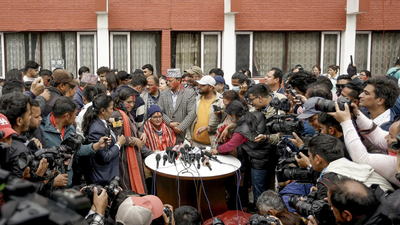
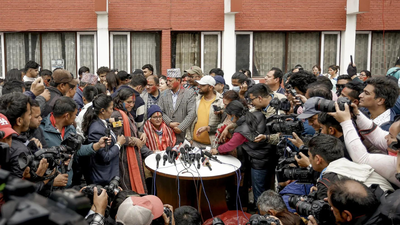
KATHMANDHU: In Nepal’s vote counting rooms, the pace is set by a single sheet of paper. A ballot is lifted from the pile, unfolded and held up. Party representatives lean forward. One looks closely at the mark. Another nods. Only after everyone in the room is satisfied does the counting officer place it on the right stack and reach for the next one.Then the next ballot paper is picked and the ritual is repeated.
If a mark is faint, the room slows. If a representative wants another look, the ballot is raised again. “If one representative objects later, the whole room can stop,” an election official said. “So everyone watches every ballot.”In post-Sept 2025 Nepal, where the uprising left 77 people dead and brought down the previous dispensation, speed is being sacrificed for legitimacy.The burden of that caution is huge. Nepal has 189 lakh registered voters, and every voter casts two separate ballots — one for the 165 first-past-the-post seats and another for the 110 proportional representation seats in the 275-member House. With turnout estimated at around 60%, officials are now dealing with more than 2.2 crore ballot papers across the two categories.The delay starts even before the first sheet is opened. Ballot boxes from remote mountain districts must first be brought in, and in Nepal that still means bad roads, blocked passes, poor weather and, in some places, air support. Only after the boxes arrive can the count settle into its slow, repetitive rhythm.That is why the Nepal Election Commission’s early hopes of a quick finish slipped almost immediately. Even 60 hours after counting began, the results were still not final. By Sunday evening, most of the 165 direct seats had been declared, but not all. The proportional representation count was still unfinished. Election officials and party leaders had already begun treating Tuesday, not the weekend, as the more realistic horizon for the final picture.Yet the slow count has not obscured the scale of the verdict.Rastriya Swatantra Party (RSP) has surged so far ahead that the direction of the result is no longer in doubt. If current trends hold, the party is expected to cross or come close to 184 of the 275 seats once PR votes are allocated. That is comfortably above the 138-seat majority mark and close to the two-thirds threshold — enough to amend the Constitution without support from any other party.Several world leaders, including PM Narendra Modi, have already congratulated RSP and its prime ministerial face Balen Shah. But formal steps still matter. Until the PR tally is complete and the Election Commission finishes the full declaration, it could still be a couple of days before Balen is officially in a position to be named winner and invited to form the next govt.