Delhi excise policy case: High court to hear CBI plea against Arvind Kejriwal, Manish Sisodia’s discharge on March 9 | Delhi News
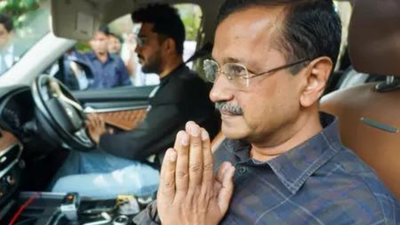
NEW DELHI: The Central Bureau of Investigation (CBI) has moved the Delhi High Court against a trial court order discharging all 23 accused in the Delhi excise policy case, including former chief minister Arvind Kejriwal and former deputy chief minister Manish Sisodia. The plea is slated for hearing on March 9, according to news agency ANI. As per the Delhi High Court cause list, the matter is scheduled to be heard on March 9 by a Bench of Justice Swarna Kanta Sharma. The CBI’s appeal comes hours after Special Judge (Prevention of Corruption Act) Jitender Singh at Rouse Avenue Court discharged all accused, holding that the prosecution failed to establish any prima facie case of conspiracy or criminal intent in the formulation of the now-scrapped Delhi Excise Policy 2021–22. In a strongly worded order, the court observed that the agency attempted to “weave a conspiracy narrative” but relied largely on conjectures rather than concrete evidence. It ruled that the material placed on record did not withstand judicial scrutiny and was insufficient to proceed to trial. The court was critical of the CBI’s reliance on approver statements, noting that granting pardon to an accused and subsequently using his testimony to fill investigative gaps or implicate others was improper. Allowing such a course, the judge cautioned, would amount to a serious breach of constitutional principles. The court also indicated that it would recommend a departmental inquiry against CBI officials for naming public servant Kuldeep Singh as accused number one in the chargesheet. The case originated from allegations that the Aam Aadmi Party (AAP) government’s excise policy was designed to benefit certain private liquor players through reduced licence fees and fixed profit margins, leading to alleged kickbacks and losses to the Delhi government. The CBI had registered an FIR in August 2022 following a complaint by then lieutenant governor V.K. Saxena, claiming that deliberate loopholes were built into the policy framework during its formulation. However, the special court, while discharging the accused, made significant observations regarding the role of the lieutenant governor’s office in the policy’s processing. Virtually upholding the policy framework, the court noted that the then lieutenant governor was consulted and that his secretariat was actively involved in the movement and scrutiny of the file. It said the contemporaneous documentary record showed discussions with the LG, incorporation of suggestions, approval by the council of ministers, and subsequent appraisal by the LG. “The material shows institutional participation of the LG Secretariat in scrutiny and movement of the file. The policy was neither concealed nor processed in isolation, but travelled through recognised constitutional channels,” the court observed. Rejecting the prosecution’s claim that Kejriwal and Sisodia unilaterally tweaked the policy, the judge said the documentary chain — including committee reports, departmental notings, Group of Ministers deliberations, Cabinet approvals and communications with the LG Secretariat — reflected shared deliberation at multiple levels. The court held that the charge of unilateral manipulation could not logically be sustained against the deputy chief minister alone when the same records demonstrated consultation and processing through the LG’s office. It added that the theory of conspiracy could not selectively survive against one constitutional authority while being rendered inapplicable to another on the basis of the same material. At the same time, the court clarified that its observations did not imply that any other constitutional functionary ought to have been arraigned as an accused. Rather, it said, the record disclosed no unilateral manipulation and showed that the policy was processed in accordance with established constitutional procedures and the Transaction of Business Rules. The trial court’s ruling effectively halted the CBI case at the charge-framing stage. The High Court will now examine the agency’s challenge to that discharge order on March 9.(With agency inputs)