
Savitri Mata Pushkar Ropeway: I did not find the Aravallis more beautiful than the hills back home, what I found was how a 2.5-billion-year-old mountain… |
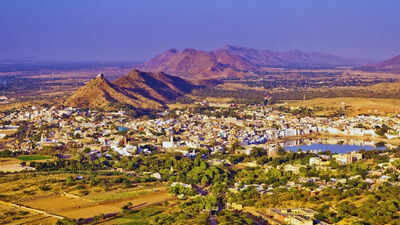
I grew up in Dima Hasao (erstwhile North Cachar Hills) in Assam, Shillong, and Hoz in Arunachal Pradesh, places where hills are part of daily life. In these places, you don’t “go to hills”, you are already surrounded by them. They are green, layered, and almost always wrapped in clouds. Because of that, I never thought another range in India could surprise me.But my first visit to Pushkar in Rajasthan changed that. And how!I had travelled to Rajasthan before, but Pushkar was new to me. I had heard about the sacred pond, the Brahma temple, and the camel fair, but no one had really spoken to me about the Aravalli range in a way that prepared me for what I was about to see. You see, I always thought of Aravalli Range as just another dry-arid mound of rocks and smattering of bushes here and there. Little did I know that Mother Nature was going to humble me in the grandest way possible.
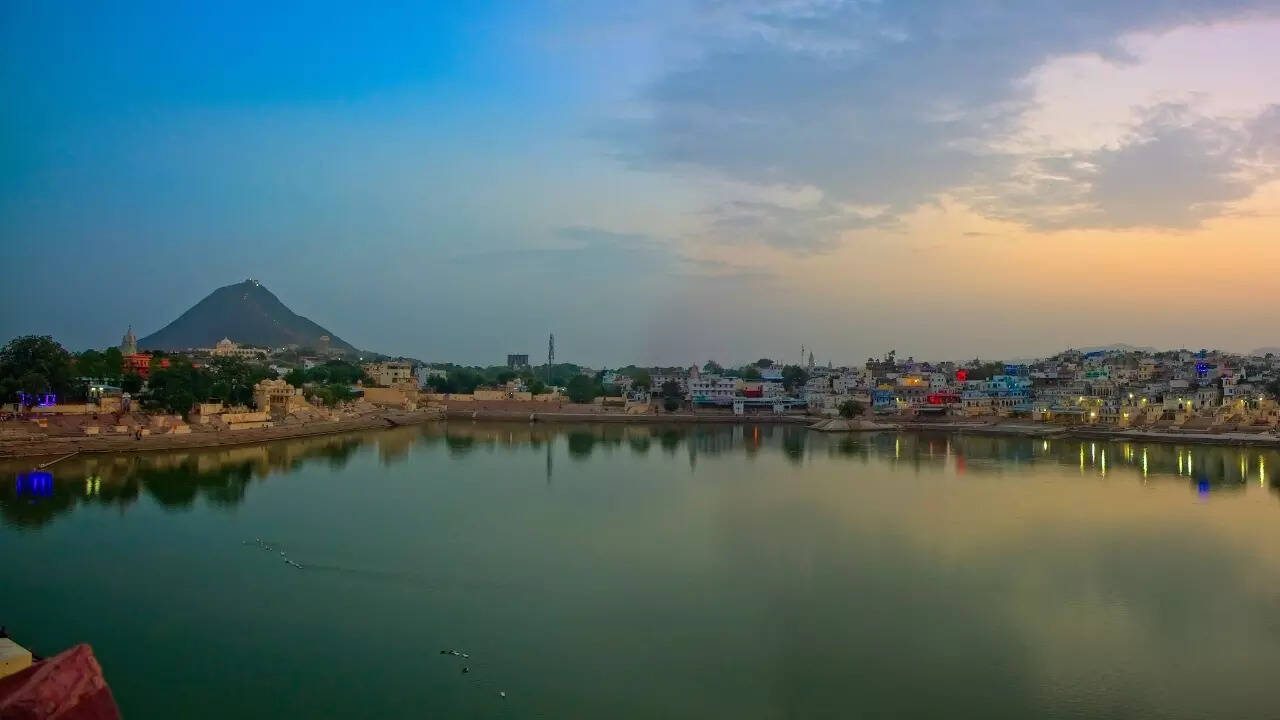
The sacred Pushkar Lake
I reached Pushkar in the evening. The town felt compact and busy, with narrow lanes lined with cafés, handicraft shops, and small temples at almost every turn. There was a constant mix of temple bells, scooter horns, and conversations in different languages. Compared to the quieter towns back home, Pushkar felt more intense, chaotic but in a good way I guess. So for those who are yet to see the town, the sacred pond, known as Pushkar Lake, sits at the centre of the town. When I first saw it at dusk, priests were performing aarti and devotees were sitting along the ghats. The water reflected the lights from the surrounding temples. It felt spiritual, but also very grounded, people were praying, chatting, feeding pigeons, and visitors like me were busy taking photos, some selfies included. Religion here is woven into everyday life, I was told by a friendly babaji whose meditation I probably disturbed unknowingly, by my many ‘burning’ questions.
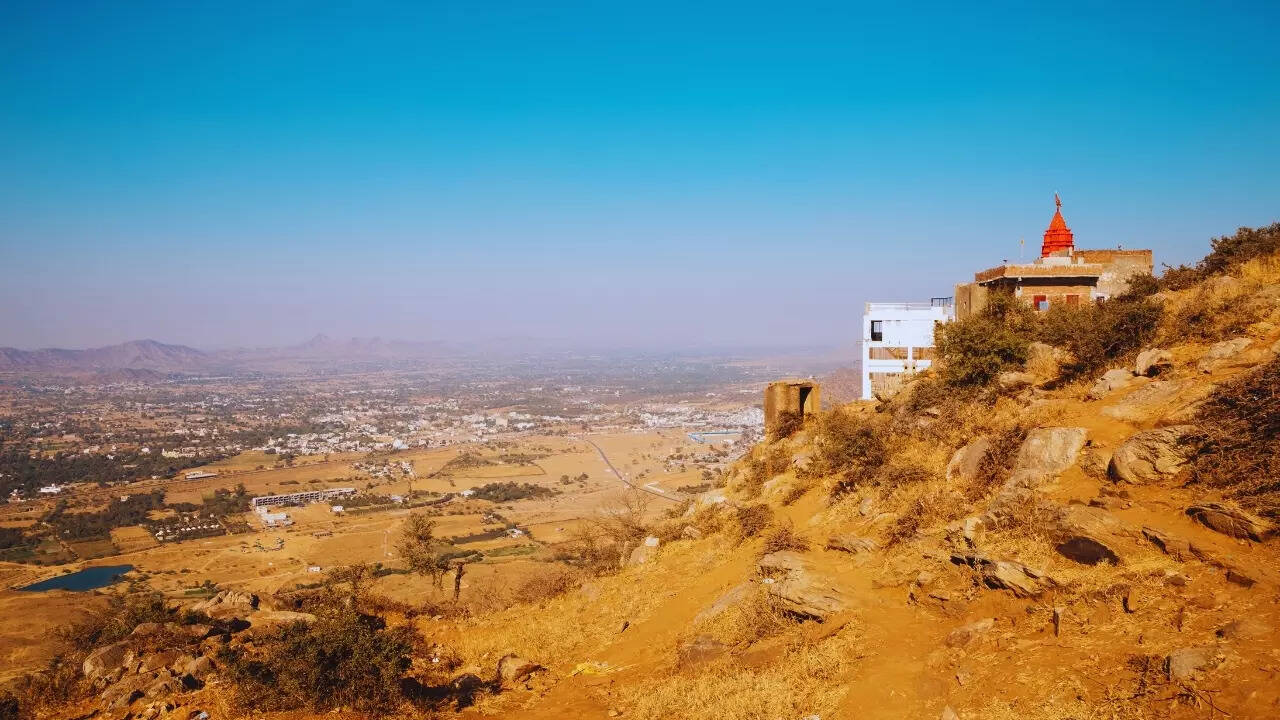
Savitri Mata temple in Pushkar
The next morning, my itinerary included the famous Savitri Mata Pushkar Ropeway. I had been told that it offers the best view of the town and the surrounding hills. All I knew was that ropeways are usually associated with tourist viewpoints in hill stations, so I was curious to see how this one compared. We drove a short distance away from the main town, and nearer to the desert area. Well, that’s what I was able to see from my passenger side window. The expanse of desert lay ahead, a camel or two here and there. As the cable car began to move, Pushkar slowly spread out below me. The town looked smaller and more distant, buildings and pond further away from me. And suddenly, I noticed something that made me sit up straighter: the Aravalli range. I had seen photos of the Aravallis before, but seeing them in person was different. They are not tall or dramatic like the mountains in the Northeast. They don’t rise sharply into the sky. Instead, they stretch in long, low ridges. The land looked dry and rocky, with patches of scrub vegetation (so I was not totally off my prediction). The colours were shades of brown, beige, and muted green.
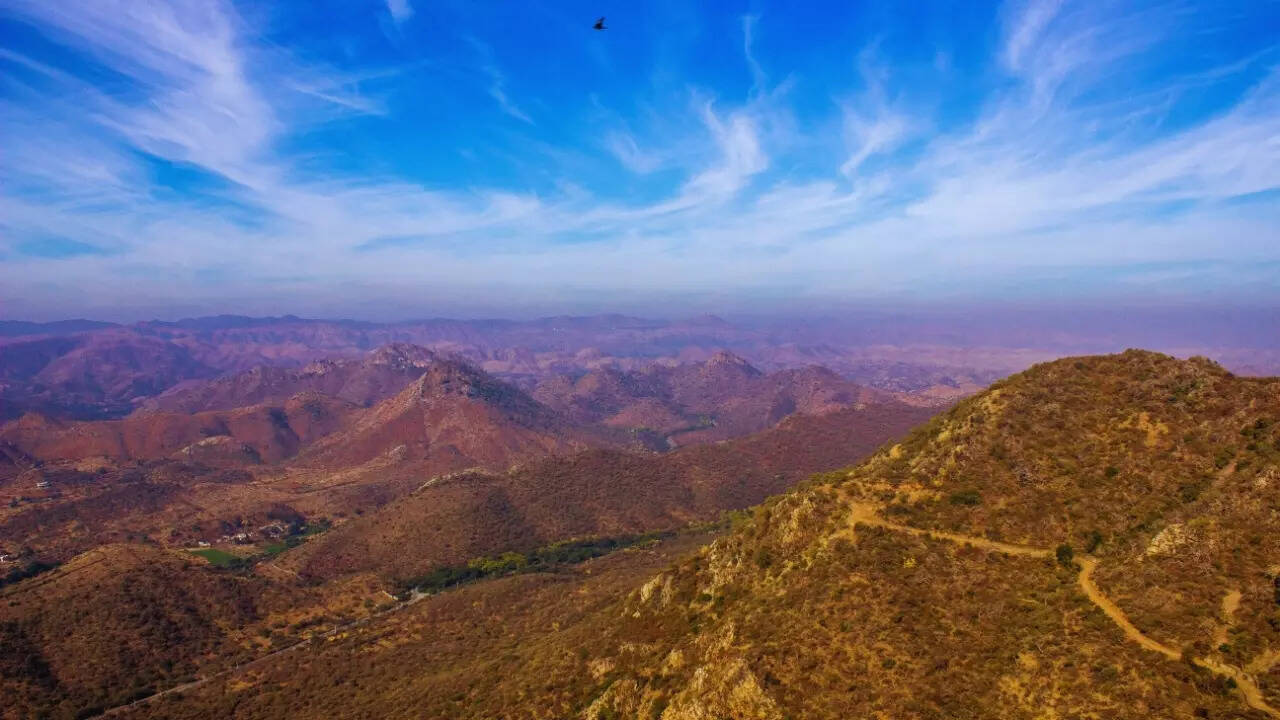
Aravalli Range
My first reaction was practical: these hills are old. Very old. I later read that the Aravallis are among the oldest mountain ranges in the world, around 2 billion years old and counting. Looking at them, that made sense. They didn’t look “young” or freshly formed. They looked worn down by time.From the top near the Savitri Mata Temple, the view was wide and open. I am used to mountains that block your view after a few layers. In Pushkar, the landscape felt open. The Aravallis rolled outward, and beyond them the desert stretched further than I could see. That openness struck me the most.
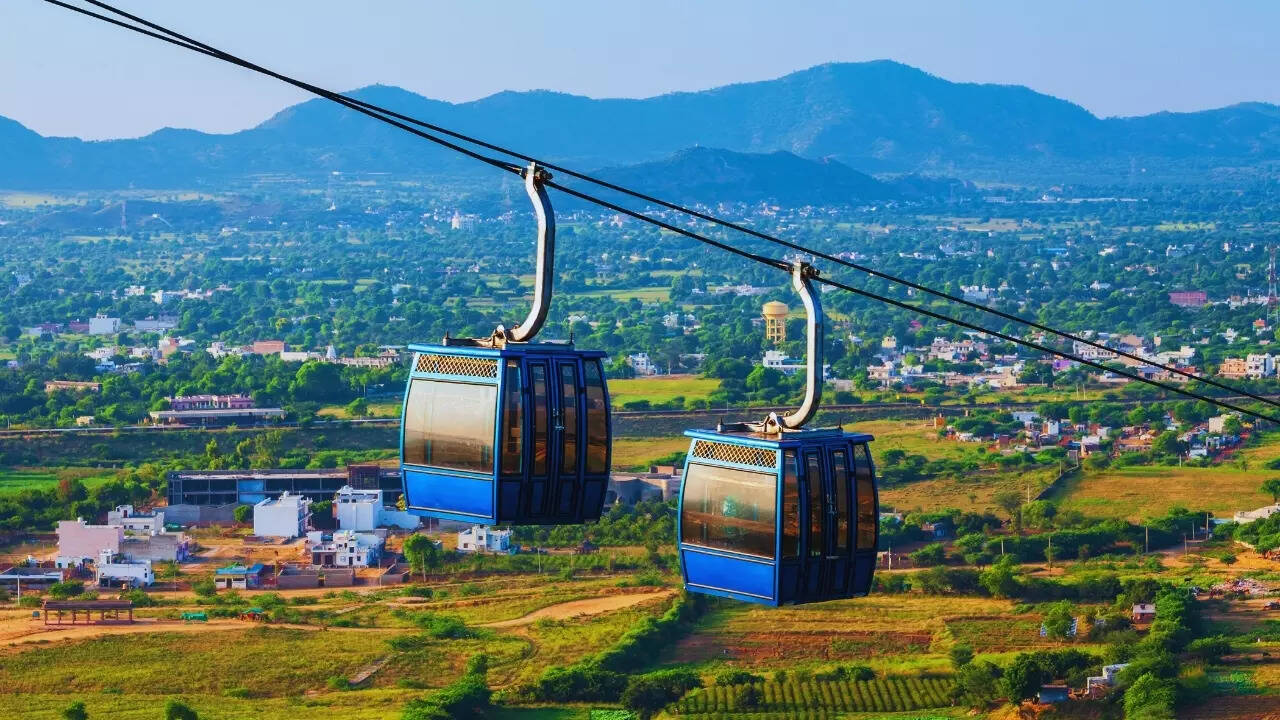
Savitri Mata Pushkar Ropeway
Standing there, I could see Pushkar town clearly, the sacred pond in the centre, the temple spires, and the busy bazaar roads. I could also see camels moving slowly on the outskirts. They looked almost unreal to me at first. Where I come from, we see cattle and sometimes mithun, but never camels. Here, they are part of the local economy and tourism. Some were decorated with colourful saddles, waiting for visitors who wanted desert rides. And the sunset, the most glorious sunset I have ever seen. Spending several hours on the outskirts of the town was worth it.
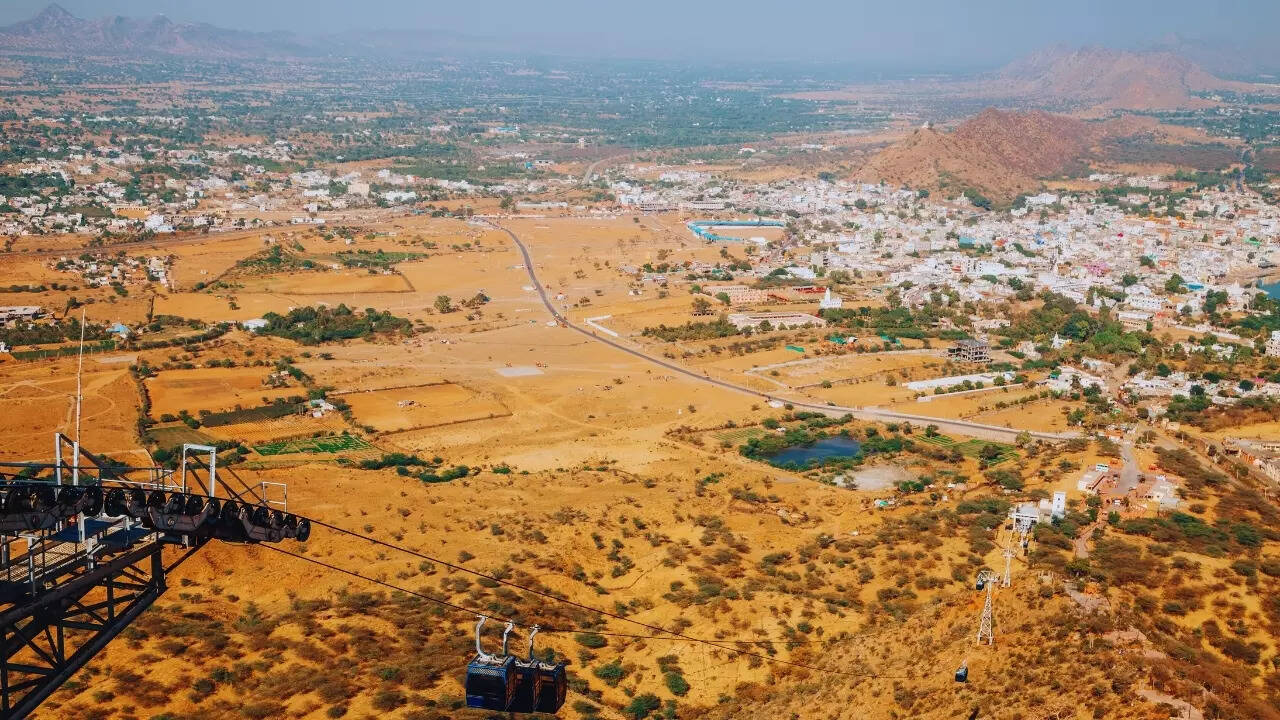
Aerial view of Pushkar from Savitri Mata Pushkar Ropeway
I did not find the Aravallis more beautiful than the hills back home, and I don’t think that is the right way to look at it. What I found was a different kind of beauty. One that exists in dry terrain, ancient rock formations, and open skies. One that feels steady and expansive rather than lush and enclosing. What stayed with me throughout the day, however, was the image of the Aravalli range from the ropeway.Growing up in the Northeast, I sometimes felt that our region was seen as distant or separate from the rest of India. Travel changed that for me. Seeing the Aravallis made me realise how geographically diverse the country truly is. The hills of Assam or Arunachal Pradesh and the Aravallis of Rajasthan are completely different in appearance, vegetation, and climate, but they are both deeply connected to the communities living around them.