
2,842 Gazans vaporised by thermobaric bombs? All about shocking weapon ‘used’ by Israel in Palestine
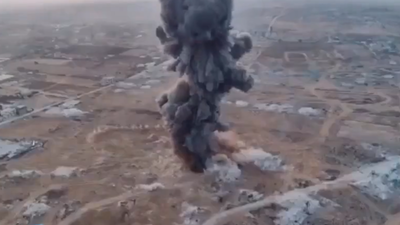
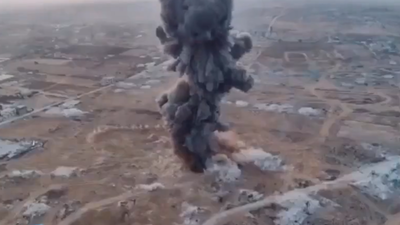
Thousands of Palestinians have gone missing since the start of Israel’s war in Gaza, according to an investigation broadcast by Al Jazeera.The report said at least 2,842 people were documented as disappeared by Gaza’s Civil Defense teams since October 2023, based on forensic field records.
The investigation cited military experts who attributed the disappearances to the use of high-temperature weapons, including thermobaric and thermal munitions, sometimes referred to as “vacuum” or “aerosol” bombs.The figure of 2,842 is based on records compiled by Gaza’s Civil Defence.Spokesperson Mahmoud Basal said teams use a “method of elimination” at strike sites. “We enter a targeted home and cross-reference the known number of occupants with the bodies recovered,” Basal was quoted as saying by Al Jazeera.“If a family tells us there were five people inside, and we only recover three intact bodies, we treat the remaining two as ‘evaporated’ only after an exhaustive search yields nothing but biological traces—blood spray on walls or small fragments like scalps,” Basal added.The investigation said certain munitions could generate extreme heat capable of rapidly incinerating human tissue.Vasily Fatigarov, described as a Russian military expert in the report, said thermobaric weapons differ from conventional explosives in their effects. He said they disperse a fuel cloud that ignites to create a large fireball and a pressure wave, followed by a vacuum effect
What is a thermobaric weapon?
Thermobaric weapons, also known as fuel air explosives or vacuum bombs, are a class of conventional munitions designed to produce extremely high heat and a sustained blast wave. Unlike traditional bombs that contain both fuel and oxidiser within a sealed casing, thermobaric weapons use oxygen from the surrounding air to intensify their explosion. The word thermobaric combines “thermo”, meaning heat, and “baric”, relating to pressure, reflecting the dual destructive force generated by these munitions.
How do they work?
Thermobaric weapons typically function in two stages. First, the munition disperses a cloud of flammable aerosol fuel across the target area. This fuel mixes with atmospheric oxygen. A secondary ignition then detonates the cloud, producing a powerful fireball and a prolonged pressure wave. Because the explosion relies on oxygen from the air, it can generate extremely high temperatures, often reported to reach up to 3,500 degrees Celsius.
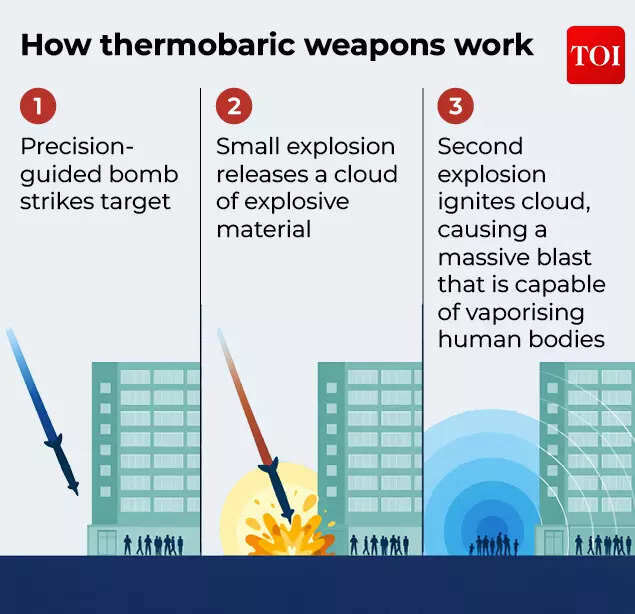
How thermobaric weapons work
The blast wave from a thermobaric weapon lasts longer than that of conventional high explosives and can travel into buildings, bunkers and tunnels. In enclosed spaces, the pressure wave can reflect off walls, amplifying its impact.
What are pressure bombs ?
The term “pressure bomb” is not a formal military classification but is commonly used to describe munitions that rely primarily on overpressure rather than fragmentation. In conventional explosives, much of the damage is caused by shrapnel. In thermobaric and similar blast enhanced weapons, the main destructive force comes from the intense heat and sustained pressure wave.This makes them particularly effective against fortified positions or underground facilities, where the blast can penetrate confined areas more effectively than standard explosives.
Why are they considered so destructive?
Thermobaric weapons are designed to maximise blast impact over a wider area. The sustained overpressure can cause severe internal injuries, including lung rupture and damage to internal organs, even when there are limited external wounds. The rapid consumption of oxygen during the explosion can also create a vacuum effect, increasing lethality in enclosed environments.Because of their heat and pressure effects, these weapons can cause significant structural damage, especially in urban settings. Buildings may collapse not only from the initial blast but also from the extended pressure wave.
Are thermobaric weapons legal?
Thermobaric weapons are not specifically prohibited under international law. However, their use is governed by international humanitarian law, including the principles of distinction and proportionality. Parties to a conflict must distinguish between military targets and civilians and must avoid attacks that would cause excessive civilian harm relative to the anticipated military advantage.Human rights organisations have raised concerns about their use in densely populated areas, arguing that the wide area effects make civilian harm more likely.
Who possesses them and why are they controversial?
Several countries, including the United States and Russia, are known to have developed thermobaric munitions. They have been used in conflicts targeting bunkers, cave systems and tunnel networks.Their use in urban warfare remains controversial. While militaries argue that such weapons are effective against hardened or underground targets, critics contend that their powerful blast and heat effects increase the risk of civilian casualties and large scale destruction. As modern conflicts increasingly take place in cities, the debate over thermobaric and pressure bombs continues to draw international attention.