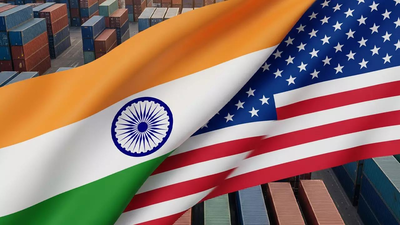
US tariffs: Garment exporters stay bullish
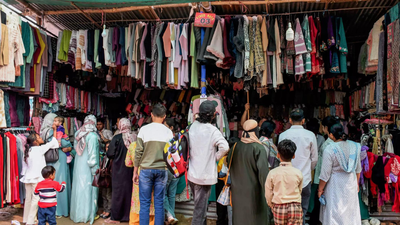
NEW DELHI: Shishir Kapoor, an ethnic womenswear exporter from Lucknow, asserts that he is not offering any discount to American buyers, and his business has not seen any impact due to the 50% tariffs on Indian exports. For MLK Exports, more than half its exports are to the US.“My buyers are in the upper and mid-tier segment, and they can reduce their margin. We have refused to offer any discounts,” he said, while dealing with buyers at the India International Garment Fair. Not all exporters enjoy that comfort as most players are complaining of losing some orders due to the uncertainty triggered by the steep tariffs and the repeated flip-flops by US President Donald Trump. But, new markets are also beckoning. Europe and the UK are the new hunting grounds as they hope to take advantage of the trade agreements.Kolkata-based Kariwala is doubling capacity to manufacture sustainable bags (made of cotton and jute) that sell in top stores as well as garments, despite the geopolitical challenge. Kariwala president Anand Sureka said the company has got new orders for bags from a leading supermarket in France as it seeks to diversify. “The EU deal will make tariffs zero for us (from 10% on garments and 2.9% on bags) and we hope that some orders that go to Bangladesh will come to us.“Jyoti Apparels MD HKL Magu, an industry veteran, said demand for plus-sized women garments that he exports to the US, remains robust, but April onwards there may be some uncertainty. While American buyers are seeking 10-15% discount, Magu is also focusing on European and British stores. “Earlier we would ship 18,000-20,000 pieces of 40 styles to the US. Now, we are doing 1,800 pieces of 400 styles,” he said about the changes that businesses have had to make.It’s not all gloom and doom for India’s apparel exporters as the sector learns new ways to navigate the changed landscape. Smaller exporters are insisting on upfront payments from smaller buyers.For Tirupur-based HW Apparels, which deals in menswear, supplies to US are now targeted at large stores, with smaller buyers from New York, who ordered 10,000-15,000 T-shirts, staying away. Earlier, it would ship four-five containers a month, a number down to two-three, stashed with 55,000-60,000 pieces of garments of $3-4 each.“Only those with volumes are now doing business with us and everyone – from manufacturer to seller and buyer – is supporting each other,” said sales and sourcing manager Shivraj. “You need to come up with options on how to deal with Trump,” he added as T-shirts from India now face a 67% tariff, compared with 17% earlier.While doing business with US is tricky amid the tariff standoff, there are opportunities emerging due to turbulence in Bangladesh, a major global player in textiles. “In one year, the situation has changed a lot: Bangladesh is down, we are seeing interest from Russia. We just had some buyers from Australia. We will try to increase our focus on EU,” said Vinod Rathore, who heads exports at Lux Industries, a hosiery products company. Exporters remain hopeful that a deal with US will materialise sooner than later, and that’s keeping them and buyers engaged.