Triple talaq-halala FIR puts focus on legal grey area | India News
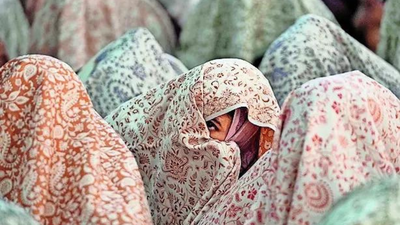
NEW DELHI: When police in UP registered an FIR on Dec 9, 2025, it was not just another complaint under the 2019 Triple Talaq law. The allegations were shocking and went further, into a grey zone the law has never squarely addressed: What happens to women after talaq is pronounced.According to the FIR filed in Amroha’s Said Nagli, the woman, after being divorced through instant triple talaq, was pressured by her husband, her brother-in-law and clerics to undergo “halala” multiple times so she could be returned to the marriage. An exception that permits a divorced Muslim couple to remarry, the practice of halala often involves planned, short-term marriages — even arranged one-time encounters — to facilitate consummation of the woman with another man, enabling the former couple to reunite.The woman’s complaint detailed the ordeal. She said she was “gang-raped under false pretenses of halala carried out under threats, intimidation and coercion”.Police have invoked the law banning instant triple talaq — sections 3 and 4 of the Muslim Women (Protection of Rights on Marriage) Act, 2019. Multiple provisions and relevant sections of BNS that deal with rape, aggravated hurt, criminal intimidation and criminal conspiracy, have also been added.In the initial FIR, there are three accused: Her husband, his cousin and a hakim (traditional healer.) Since then, police have added more accused to the list.Amroha police told TOI that one accused — her husband — had been arrested so far. “The FIR has been registered on the basis of a written complaint. Further action will depend on corroboration and evidence,” SHO Vikas Sahrawat said. Amroha police are on the lookout for others on the run, he added.This week, based on Zubaida’s (name changed) age at the time of her marriage, police added multiple provisions of the Pocso Act to the FIR, expanding its scope. (The move, incidentally, also brings into focus an unresolved legal grey area, as Muslim personal law is not codified and does not prescribe a minimum age, instead linking marriageability to puberty. The issue remains unsettled by the Supreme Court so far, with courts in different states taking conflicting positions.)The FIR covers several years of alleged abuse, assault and rape. Zubeida told police she was forcefully married off in 2015 at the age of 15, and subjected to pronouncements of instant triple talaq twice — once in 2016, and again in 2021, followed by three coerced reconciliation attempts through halala.“I felt like I was being handed over every time. I was too ashamed to come out with what had happened to me. I didn’t want my daughter to grow up reading about it,” Zubaida told TOI. A former student of one of Aligarh’s top schools, Zubaida comes from a family with a history in public service — her grandfather was DSP in UP police and her father a lawyer.After the first triple talaq in 2016, she said she was told she could return to her husband only after undergoing halala, a process that, according to her complaint, involved sexual assault by someone introduced as an “intermediary”. In Feb 2025, she said she was told she would need to follow the halala process twice as her marriage had broken down twice by then. Zubaida’s complaint said after years of being a single mother and financial difficulties, she had once again fallen for the accused’s false promise of remarriage. “It was after a long time that I realised what had happened to me was wrong,” Zubaida said.With her husband now behind bars, Zubaida said she was struggling to keep life going for her daughter.Her husband, meanwhile, has alleged that he was harassed and threatened by Zubaida and her relatives. In his written complaint, dated Nov 26, 2025, he claimed that Zubaida “tried to forcibly enter his house and threatened him with false criminal cases”.Earlier in 2021, according to documents, Zubaida’s divorce was finalised through a family court’s decree, with the court placing the daughter’s custody with the father at the time.Halala finds no mention in Indian statutory law. The 2019 Muslim Women Act criminalised instant triple talaq, making its pronouncement a punishable offence, but it did not — and does not — recognise halala.According to activists, halala cases rarely leave a paper trail. Fear of stigma, economic dependence and concerns about children often keep victims silent.“In many cases, women don’t even know that what is being done to them is wrong,” said Zakia Soman, Bharatiya Muslim Mahila Andolan founder. “Halala is not mentioned in the Quran. It survives through misinterpretation, patriarchal control and silence. There is a hush-hush around it. For a woman to come forward takes extraordinary courage.” Soman added that the practice survived in pockets, operating through informal and largely invisible set-ups. “Triple talaq was criminalised on paper, but the ecosystem that sustained it was never dismantled. Without regulations, halala survives as an unpoliced, underground arrangement,” she said.Soman cited cases where clerics themselves offered to “perform” halala, and others where women were passed between men to settle personal disputes, family feuds or even debts — arrangements that remain largely hidden unless a woman breaks ranks and approaches the police. Soman said practices such as halala, child marriage and puberty-as-marriage-age thrive in a legal grey zone.Experts point to structural gaps that make such cases hard to prosecute. One is the absence of mandatory registration of Muslim marriages and divorces. “Nikahs are largely undocumented,” said Naish Hasan, a Lucknow-based activist who has worked with halala survivors for over two decades. “When there is no paper trail, the burden of proof falls entirely on women.”She said the practice remained alive, particularly among poor and marginalised women. “For years, cases kept surfacing before we even had language for it,” she said.Hasan said her fieldwork included around 40 detailed case studies from Lucknow district alone. “Justice should reach every last woman,” she added. Petitions challenging the practice of halala, including one filed by Hasan in 2021, have been pe-nding before Supreme Court.