The UPenn case explained: A federal demand for Jewish staff identities and the university’s pushback
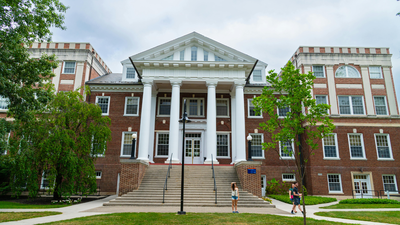
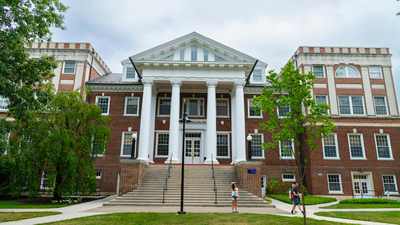
At first glance, it reads like a routine civil-rights inquiry: A federal agency investigating whether a university did enough to address antisemitism on campus. But the dispute now unfolding between the University of Pennsylvania and the US Equal Employment Opportunity Commission (EEOC) has become something else entirely — a test of how far the state can go in naming, cataloguing and compelling disclosure of religious identity, even in the name of protection.In federal court filings, Penn says the government has demanded records that would identify Jewish staff members and Jewish-affiliated groups — information the university argues it cannot hand over without crossing constitutional, historical and ethical red lines. The standoff, detailed by the New York Times (NYT), has since widened, drawing in Jewish faculty themselves and prompting a deeper debate about privacy, precedent and power on American campuses.
What the federal government is asking for
The case centres on an EEOC subpoena issued as part of an investigation into allegations of antisemitic discrimination at Penn. According to Penn’s federal court filings, NYT reports, the subpoena seeks records that would identify Jewish employees and people associated with Jewish organisations and programmes at the university.The EEOC, in its court posture, has presented the inquiry as a standard enforcement action under civil-rights law: An attempt to assess whether unlawful harassment or discrimination occurred and whether the employer’s response met legal standards. That framing is reflected in the filings in the case, where the agency argues that identifying potential victims and witnesses is central to its investigative mandate.Penn does not dispute the legitimacy of investigating antisemitism. In its filings, however, it disputes the method: a demand that, in effect, would require the university to sort employees by religious identity and transmit that information to the federal government.
Why Penn says this is not routine
In its federal court filing, Penn characterises the demand as “disconcerting” and “extraordinary,” arguing that it implicates employee privacy, physical safety and First Amendment protections. The university also points, in the same filing, to what it describes as a “frightening and well-documented history” of governments assembling lists of Jews — a history it says makes compelled disclosure of religious identity fundamentally different from routine workplace data requests.Penn further states, in court records in the case, that it offered an alternative path to cooperation: Notifying employees about the investigation, informing them of their right to contact the EEOC directly, and facilitating access without disclosing names. According to the NYT findings of the case record described in the filing, Penn says the EEOC rejected that approach and then moved to enforce the subpoena.The university’s position, as framed in its filing, is not that antisemitism should go unexamined, but that identification by registry is a boundary it cannot cross.
When the ‘protected group’ objects
What gives the case unusual weight is who has intervened. The Daily Pennsylvanian reports that more than 150 Jewish faculty members filed an amicus brief supporting Penn’s refusal, while explicitly stating that they back efforts to combat antisemitism on campus. Their argument is stark: The subpoena, in its current scope, would sweep up the very people it claims to protect.In the amicus brief, many signatories say they would fall within the scope of the requested disclosures and fear that compiling names and personal details would expose them to risk. The brief also argues that the subpoena effectively seeks “full lists of Jewish individuals” and invokes “troubling historical persecution of Jews,” framing this not as an abstract privacy worry but as a personal-security concern for those on the list.The Daily Pennsylvanian reporting also underscores the breadth of the intervention: The faculty alliance spans 11 of Penn’s 12 schools, and the group clarifies that it is not formally affiliated with the university even though its members are Penn employees — signalling that the unease is not merely institutional messaging, but an internal community stance.
The precedent question that worries civil libertarians
Beyond Penn, the case raises a harder question: If a federal agency can compel a university to identify employees by religion in one context, what limits exist in the next?In a Guardian opinion essay, Penn faculty members argue that intent cannot neutralise effect. Even if the immediate aim is protection, the power to demand identity-based lists could, in other hands or other times, be repurposed against dissenters, minorities or politically unpopular groups. That argument, clearly labelled as commentary rather than reporting, situates the Penn dispute within a broader anxiety about data, surveillance and the expansion of executive authority.This is not an argument Penn itself makes in constitutional terms, but it is one hovering over the case.
What happens next
The EEOC has asked the court to enforce its subpoena and has opposed efforts by faculty groups to formally intervene. Penn, for its part, has framed compliance as a moral and legal impossibility. A government response is due later this month, after which the court will decide whether the subpoena stands, narrows or fails.Whatever the outcome, the case has already moved beyond a single campus. It has exposed a fragile fault line in modern civil-rights enforcement: how to investigate discrimination without turning identity itself into evidence, and protection into exposure.For universities — and for minority communities watching closely — the question is no longer just about Penn. It is about where the boundary between enforcement and overreach is drawn, and who gets to draw it.