After Greenland, now Diego Garcia: Trump shifts focus to Indian Ocean; impact on India
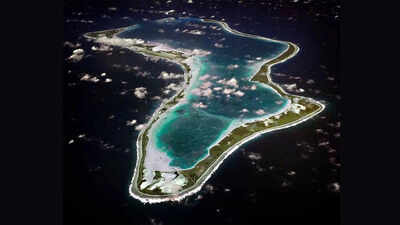
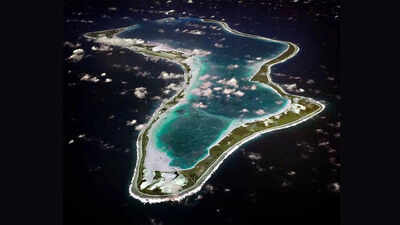
After capturing Venezuelan President Nicolás Maduro and repeatedly threatening to take control of Greenland, US President Donald Trump has now set his sights on a new target: the Chagos Archipelago in the Indian Ocean.Trump has criticised ally, the UK, over a deal that would give Mauritius “ownership” of the archipelago, which comprises over 60 islands. His concern centres on the chain’s largest island, Diego Garcia, which hosts the well-known joint British-American military base, also known as Diego Garcia.
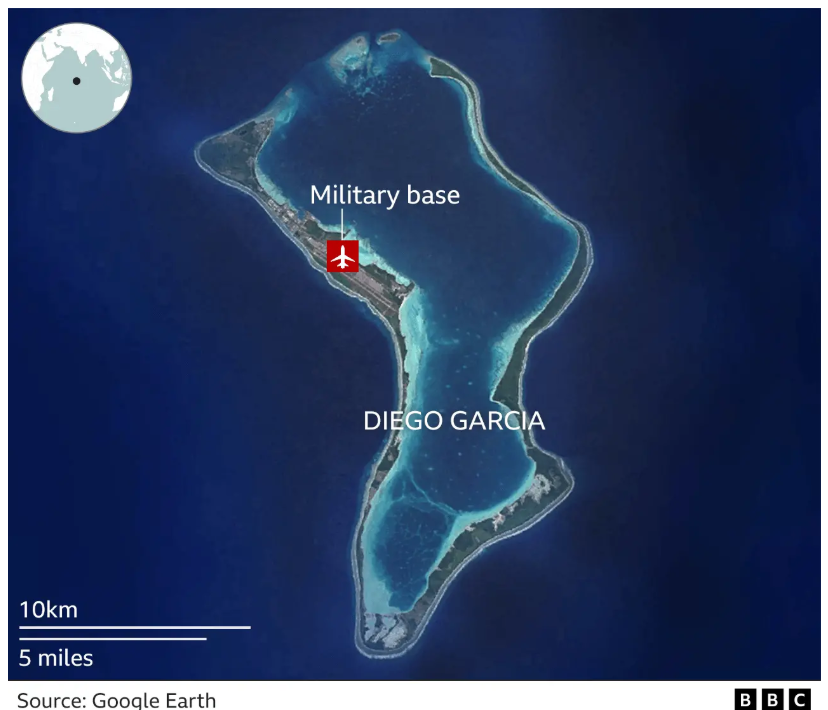
Diego Garcia base
The Republican’s outburst came despite his own administration welcoming the agreement, describing it as a “historic and monumental achievement.”
The UK–Mauritius dispute and the deal
The United Kingdom has “owned” and administered the Chagos Islands as the British Indian Ocean Territory since 1965, three years before Mauritius gained independence from the UK. Mauritius’ Constitution, however, includes the islands as part of its territory. During the 1960s and 1970s, up to 2,000 people were forced off the islands to allow the United States to build what became the Diego Garcia military base.The UK’s control of the archipelago and the forced removal of its local population led to international criticism and calls for sovereignty to be transferred to Mauritius.
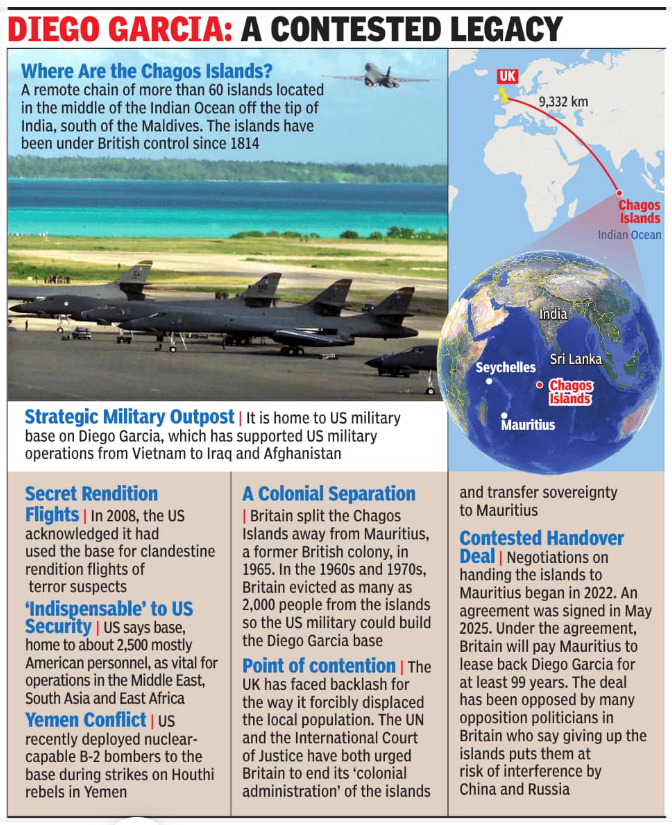
Diego Garcia: A contested legacy
In 2022, negotiations began between the UK’s then Conservative-led government and Mauritius and continued following the 2024 election of Keir Starmer and his Labour Party. Talks dragged on as Mauritius also witnessed a change in government and there were disputes over money, but the agreement was signed off in May 2025 after Britain had sought and received backing from the Trump administration.Under the treaty, which is currently in the ratification stage in the British parliament, the UK would pay Mauritius an undisclosed sum — reportedly about $100 million a year — for 99 years to control the islands.
How Diego Garcia is crucial for US
Washington has described the base, which hosts around 2,500 mostly American personnel, as “an all but indispensable platform” for security operations in the Middle East, South Asia, and East Africa. It has supported America’s military operations from Vietnam to Iraq and Afghanistan. In 2008, the US acknowledged that the base had also been used for secret flights transporting terror suspects.More recently, the United States deployed several nuclear-capable B-2 Spirit bombers to Diego Garcia amid an intense airstrike campaign targeting Yemen’s Houthi rebels.
India’s position: Would New Delhi welcome US control of Chagos?
In addition to its strategic security interests in the Indian Ocean, particularly regarding China, New Delhi has quietly encouraged London to return sovereignty of the archipelago to Mauritius. For India, there is also a historical context. The US decision to establish a full-scale military base on Diego Garcia was made during the Richard Nixon administration, which had sided with Pakistan in the 1971 India-Pakistan war and even sent a naval task force into the Bay of Bengal to try to pressure India. Instead of backing down, India, backed by the-then Soviet Union (mostly present-day Russia), went on to liberate Bangladesh — then East Pakistan — ahead of the arrival of the US Navy’s USS Enterprise, the world’s largest and most powerful aircraft carrier at the time.
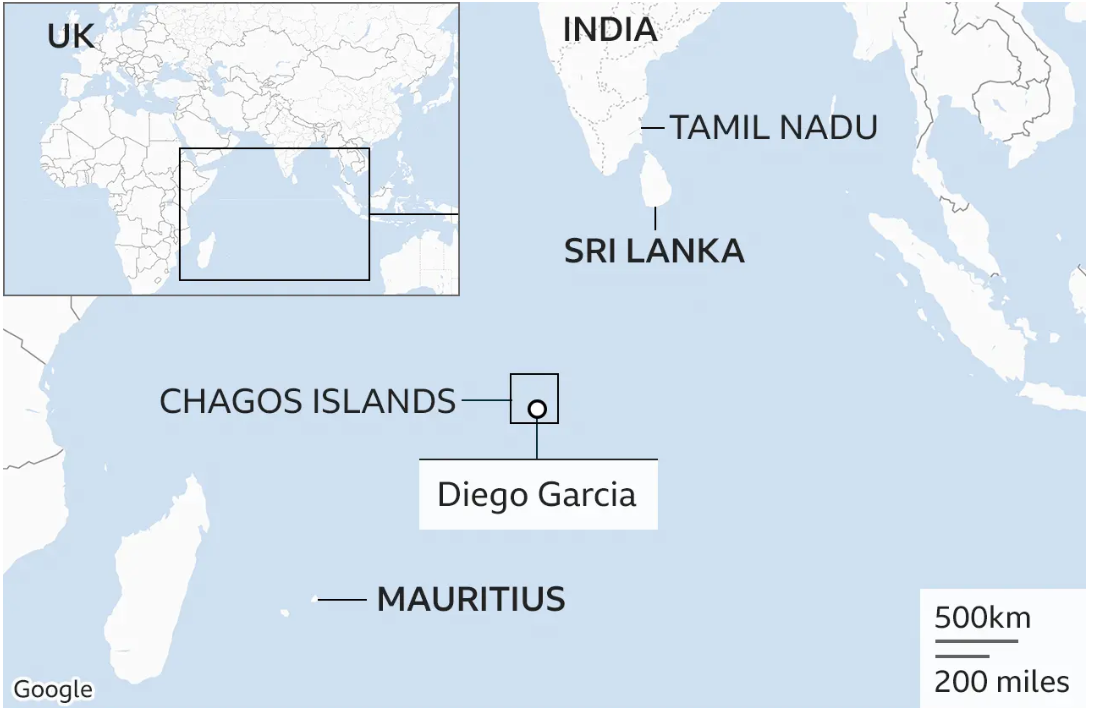
How far is Diego Garcia from India
In September last year, India announced a $680 million (over Rs 6,000 crore) economic package for Mauritius. The assistance, provided through grants and lines of credit, also supports development and the monitoring of the Chagos Archipelago’s marine protected area.The 99-year lease agreement between the UK and Mauritius ensures continued US access to the Diego Garcia base. However, if Trump were to take over the Chagos Archipelago, Mauritius would lose ownership of the islands, and all agreements, including India’s $680 million economic package, would be rendered automatically null and void. This could also undermine India’s strategic interests in the Indian Ocean.(With agency inputs)