
I found a job, and heaven knows I’m miserable now: Why this Smiths lyric feels too real for Gen Z today
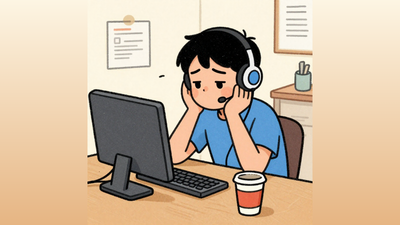
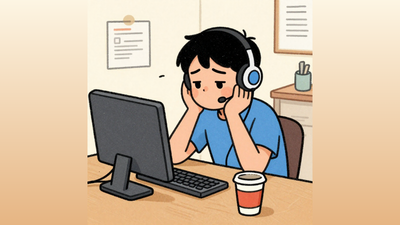
“I was looking for a job, and then I found a job, and heaven knows I’m miserable now.” It’s a lyric from a 1984 Smiths song, but it sounds suspiciously like something you’d hear in a group chat after payday.For a generation that was told jobs equal freedom, stability, and success, Gen Z seems to be asking a very different question: Is this it? The strange thing is, the dissatisfaction kicks in whether they’re employed or not. People are tired while working. People are oddly calm when they’re not. And somewhere between LinkedIn posts about “growth” and TikToks romanticising quitting, work has lost its emotional payoff.
When work stops feeling like the reward
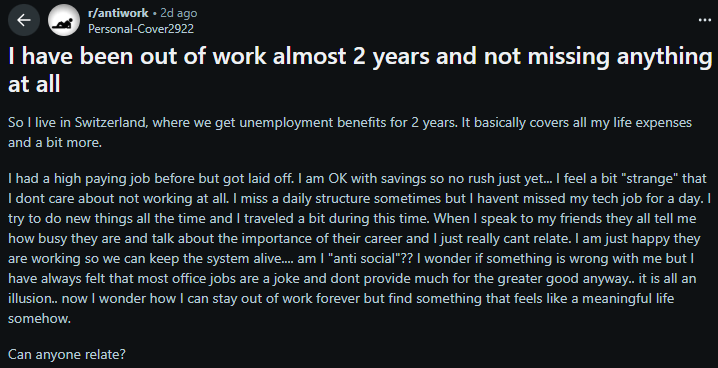
A Reddit post that recently went viral captures this mood perfectly. A tech worker in Switzerland, laid off but supported by unemployment benefits, admits they don’t miss their job at all. Not even a little. They miss routine, maybe, but not the work itself. While friends talk about deadlines and promotions, they feel detached, even confused by the obsession. “Most office jobs are a joke,” they write. “It’s all an illusion.” The real question they’re wrestling with isn’t how to get back to work—but how to build a life that actually feels meaningful.
This sense of emotional distance from work isn’t fringe. It’s becoming normal.According to UKG’s global workforce research, 83 percent of Gen Z workers report feeling burned out, the highest of any generation. More than a third say they would quit a job if it harmed their mental or physical health. What’s especially telling is what they don’t want: raises alone aren’t enough. Time, flexibility, and breathing room matter more than money.
Burnout begins before the first offer letter
But for many, burnout starts even earlier— way before the first offer letter arrives.A 2025 Forbes analysis on Gen Z job seekers paints a bleak picture of the hiring process itself. Six in ten Gen Z applicants say job hunting leaves them emotionally drained. Only about 18 percent actually land a role after applying, while nearly half walk away with nothing. Long application forms, unpaid assignments, endless interview rounds, and ghosting have made job hunting feel less like opportunity and more like endurance testing. Sixty percent quit mid-process simply because they’re exhausted. Most don’t have savings to fall back on, which makes every rejection feel heavier.So by the time Gen Z actually gets hired, many are already running on empty.Then comes the job itself, and the disappointment deepens.A Europe-wide workplace satisfaction study reported in 2023 found that Gen Z is the least happy generation at work, scoring lower than Millennials, Gen X, and even Boomers. On a scale measuring overall job satisfaction, Gen Z consistently ranked at the bottom. It’s not that they’re ungrateful or unrealistic. It’s that the promise of work doesn’t match the lived experience.
Always busy, rarely fulfilled
The job exists. The salary comes in. The calendar fills up. But something feels off.Part of the problem is that work has become all-consuming without feeling consequential. Being “always available” is the default, not the exception. Messages don’t stop after hours. Productivity is tracked. Performance is quantified. And yet, the actual impact of the work often feels abstract or meaningless. You’re busy all the time, but rarely fulfilled.That’s why a line like “heaven knows I’m miserable now” doesn’t feel dramatic. It feels rather accurate for the current lot of young workers.It also explains why so many young people are quietly stepping away. Some take breaks. Some downshift. Some, like the Reddit user, realise they’re calmer without a job than they ever were with one. This isn’t laziness. It’s a rejection of a system that equates exhaustion with value.
Not anti-work, just anti-pointless work
Gen Z isn’t anti-work. They’re anti-pointless work. They want effort to lead somewhere—emotionally, socially, and creatively. When it doesn’t, they disengage. When the cost to mental health outweighs the benefit, they walk.The irony is that this generation still wants structure, purpose, and contribution. They just don’t want to sacrifice themselves to get it. The old script of ‘suffer now, enjoy later’ doesn’t land when “later” looks uncertain and burnout feels permanent.So when The Smiths sang, “I was happy in the haze of a drunken hour… but heaven knows I’m miserable now,” they accidentally wrote the soundtrack for a workforce that’s tired of pretending work alone will make them whole.For Gen Z, the crisis isn’t about finding a job. It’s about finding a life that doesn’t revolve entirely around one.