US free Europe? EU chief Leyen invokes 1971 ‘Nixon shock’ in Davos; what it means
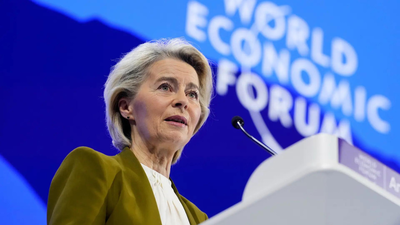
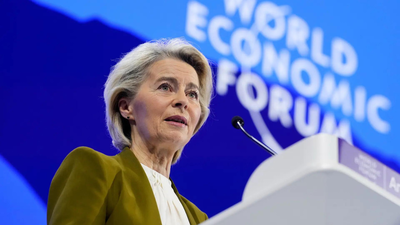
A reference to a long-past monetary rupture took centre stage at the World Economic Forum, when European Commission president Ursula von der Leyen invoked the 1971 “Nixon shock” – the moment the United States delinked the dollar from gold – to argue that Europe must once again use geopolitical disruption as a catalyst for change. “1971 was the year of the so-called Nixon shock and the decision to delink the US dollar from gold in an instant. The foundations of the Bretton Woods system and the entire global economic order set up after the war effectively collapsed,” von der Leyen said in her address.
She said the episode had two lasting consequences: It paved the way for a truly global economic order, while also offering Europe a warning about over-dependence.“It was a warning to reduce our dependencies, in this case, on a foreign currency,” she said, adding that today’s geopolitical upheavals presented a similar moment of reckoning. “The seismic change we are going through today is an opportunity, in fact a necessity, to build a new form of Europe.”
Why 1971, and why now
Von der Leyen’s decision to revisit the end of the Bretton Woods system – which had anchored global currencies to the dollar and gold after World War II – stood out at a forum dominated by debates on war, trade fragmentation and technological disruption.The 1971 move, announced by then US President Richard Nixon, is widely seen by economists as the turning point that ushered in the modern era of fiat currencies, floating exchange rates and global capital flows. It also cemented the dollar’s central role in international finance.By drawing on that moment, von der Leyen framed today’s instability – marked by wars, sanctions, supply-chain shocks and rising debt – as another inflection point, particularly for Europe’s strategic autonomy.
A speech read beyond its text
While von der Leyen spoke of opportunity rather than crisis management, her remarks press a wider point among economists and political observers about the legacy of the post-1971 financial order.The move away from the gold standard enabled governments to expand money supply without direct commodity backing, a system that critics argue has contributed to long-term inflation pressures and mounting public debt. Supporters counter that it also allowed economies to grow, absorb shocks and avoid deflationary spirals.Von der Leyen did not address these debates directly. Nor did she outline specific monetary reforms. Her focus remained on Europe’s political and economic capacity to respond collectively to shocks, rather than on the mechanics of global finance.
Europe at a crossroads
Her speech comes at a time when the European Union is grappling with questions of strategic dependence – from energy and defence to technology and currency exposure – amid intensifying rivalry between major powers. Also Europe right now is engaged in a bitter spat with its biggest ally and transatlantic partner United States over a renewed push by Trump to wrest control of Greenland. By invoking 1971, von der Leyen placed current challenges within a longer historical arc, suggesting that moments of rupture can redefine power structures, sometimes unintentionally.Whether Europe can translate that lesson into concrete policy – without repeating past excesses – remains an open question. What is clear is that a speech anchored in a half-century-old monetary shock has reopened discussion about who shapes the global economic order, and how much room remains to reshape it.