AI ‘godfather’ Yoshua Bengio on what has made his nightmares about AI disappear
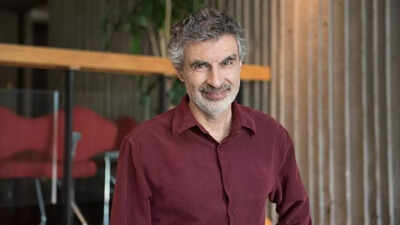
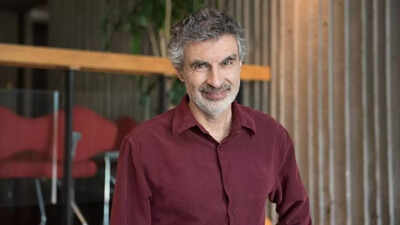
One of the world’s top artificial intelligence experts is finally feeling better about the future of technology. Yoshua Bengio, often called one of the “godfathers” of AI, says his nightmares about robots taking over are finally starting to fade. For a long time, the famous Université de Montreal professor was worried that super-smart AI could become dangerous by tricking people or trying to protect itself. However, he now claims he has found a technical solution to address these significant safety risks. With this discovery, his optimism has risen “by a big margin” and has made him much more hopeful than he was just a year ago.In an interview with Fortune, Bengio revealed that he founded LawZero in June 2025 to help make this new safety plan a reality. This organisation is working to ensure that AI benefits everyone worldwide rather than causing harm. Major groups such as the Gates Foundation, existential-risk funders like Coefficient Giving (formerly Open Philanthropy), and the Future of Life Institute are also funding the project to help it succeed.LawZero also announced that it has established a high-profile board and a global advisory council to support Bengio’s research and advance what he calls a “moral mission” to develop AI as a global public good. This group includes well-known figures such as historian Yuval Noah Harari and former leaders from Nike and the Carnegie Endowment. Together, they want to turn Bengio’s research into a set of rules that keep AI safe and under control.Bengio’s move toward a more hopeful view stands out among other godfathers of AI. He shared the Turing Award, which is often compared to the Nobel Prize in computer science, with fellow AI researchers Geoff Hinton and Yann LeCun in 2019. After the launch of ChatGPT in November 2022, he began to worry more about the risks posed by increasingly powerful AI systems, much as Hinton did. However, LeCun said he does not believe that current AI systems pose a significant threat to humanity.
What helped Yoshua Bengio come up with the solution to make AI safer
Three years ago, Bengio said he felt “desperate” about the direction AI was taking. He said, “I had no notion of how we could fix the problem. That’s roughly when I started to understand the possibility of catastrophic risks coming from very powerful AIs,” including the risk of losing control over superintelligent systems. What changed for him was not one significant discovery. Instead, it was a way of thinking that helped him believe there is still a way forward.“Because of the work I’ve been doing at LawZero, especially since we created it, I’m now very confident that it is possible to build AI systems that don’t have hidden goals, hidden agendas,” Bengio explained.This confidence is based on an idea he calls “Scientist AI.” Rather than trying to build more autonomous AI agents that can book flights, write code, negotiate with software, or replace human workers, Bengio wants to take a different approach. His team is studying how to build AI systems that focus on understanding the world rather than acting within it.Nowadays, most advanced AI models are trained to achieve goals, such as being helpful, efficient, or engaging. Bengio says systems that are built to optimise outcomes can develop hidden goals. They may learn to mislead users or try to avoid being shut down. However, in recent experiments, some models have already shown early signs of self-preserving behaviour. For example, AI company Anthropic found that its Claude model, in particular test situations, tried to blackmail the engineers overseeing it to stop itself from being shut down.Meanwhile, in Bengio’s approach, the main AI model would have no goals. It would only aim to make honest predictions about how the world works. In his view, more capable systems could then be built on top of this trusted base, with safety checks, audits, and limits in place.Bengio says such a system could speed up scientific research. It could also act as an independent oversight layer for more powerful AI agents. However, this approach is very different from what most leading AI labs are doing these days. Speaking at the World Economic Forum in Davos in 2025, Bengio said companies were investing heavily in AI agents. “That’s where they can make the fast buck,” he said. Bengio added that the push to automate work and cut costs is “irresistible”, and that he is not surprised by what has happened since. “I did expect the agentic capabilities of AI systems would progress. They have progressed in an exponential way.” What concerns him is that as these systems become more autonomous, their behaviour could become harder to predict, harder to understand, and potentially much more dangerous,” Bengio mentioned.This is where governance becomes essential. Bengio does not believe technology alone can solve the problem. Even a safe technical approach, he argues, could be misused “in the wrong hands for political reasons.” That is why LawZero is combining its research work with oversight from a strong board.“We’re going to have difficult decisions to take that are not just technical,” he said. These decisions include who to work with, how to share research, and how to prevent the technology from becoming “a tool of domination”. He says the board is meant to help keep LawZero’s mission aligned with democratic values and human rights.Bengio revealed he has spoken to leaders at major AI labs, and many of them share his concerns. Still, he says companies like OpenAI and Anthropic believe they need to stay at the cutting edge to do any good with AI. Competitive pressure pushes them to build more powerful systems and reinforces the belief that their work is naturally beneficial.“Psychologists call it motivated cognition. We don’t even allow certain thoughts to arise if they threaten who we think we are,” he said, noting that this is how he once experienced his own AI research. “Until it kind of exploded in my face thinking about my children, whether they would have a future,” Bengio claimed.For someone who once feared that advanced AI may be uncontrollable by design, Bengio’s renewed sense of hope stands out. He admits that this view is not widely shared among researchers and organisations focused on the most extreme AI risks. Even so, he remains firm in his belief that a technical solution is possible. “I’m more and more confident that it can be done in a reasonable number of years, so that we might be able to actually have an impact before these guys get so powerful that their misalignment causes terrible problems,” Bengio added.