EC in SC: Art 324 needs to be read as including power of SIR | India News
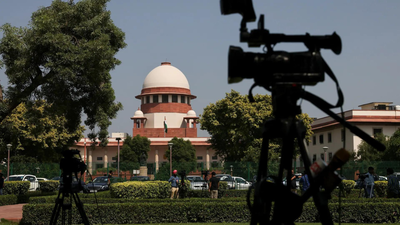
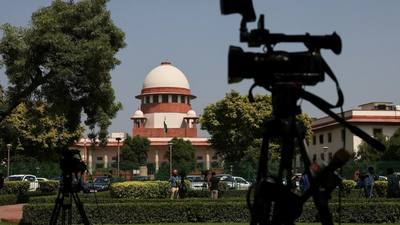
New Delhi: The Election Commission Tuesday told Supreme Court the Constitution empowers it to devise means, methods and procedure for preparation of voter lists for a free and fair election and asserted that its order for a pan-India special intensive revision (SIR) of electoral rolls has a legislative character.Continuing with the debate over the constitutional validity of SIR, proceedings for which began in Nov last year, EC counsel senior advocate Rakesh Dwivedi told a bench of CJI Surya Kant and Justice Joymalya Bagchi SC had ruled that Article 324 of the Constitution enables the commission to devise ways and means where the statute, rules and regulations are silent on SIR. “The nature of the revisional exercise is left to the discretion of the commission and would depend upon the prevalent circumstances. That is why the SIR exercise is uniform for all states except Assam, where the situation is different,” Dwivedi said. “Hence, ‘preparation of electoral rolls’, as envisaged in Article 324, needs to be widely construed as including the power of revision of electoral rolls.” Dwivedi said Article 324 read with Article 326 gives EC exclusive power to prepare electoral rolls for all elections to assemblies and Parliament, and “during such preparation, including revision of electoral roll, it has exclusive power to consider whether the person claiming entitlement of enrolment is a citizen of India.”In an interesting deviation, Dwivedi, while reading SC’s judgments, wondered as to why SC quoted Winston Churchill and William Pitts to give weight to their rulings holding voter and free and fair elections to be key to democracy. “Both were colonists who were averse to giving rights to Indians even though Britain was a democracy,” he said. Justice Bagchi said ancient India had a true democracy while that of Britain was an elitist one. “Framers of the Constitution did not copy from the British system. Equality is ingrained in the Indian Constitution, which fraternalises democracy.”