
Why Nvidia CEO Jensen Huang says engineers “shouldn’t code at all”: Here’s what he thinks matters more
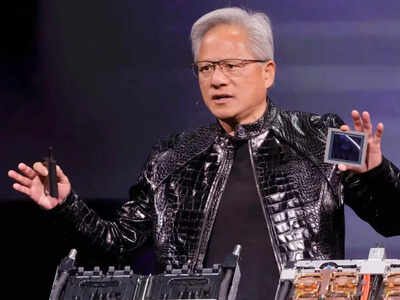
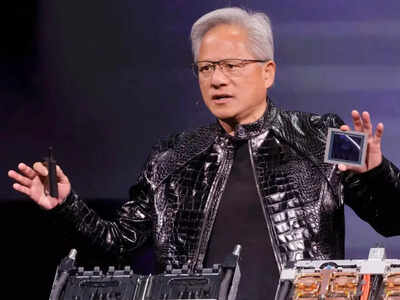
Nvidia CEO Jensen Huang has a clear view of how engineering work should change in the age of artificial intelligence. Engineers, he says, should spend zero percent of their time writing code.In a recent episode on the No Priors AI podcast, Huang said every engineer at Nvidia now uses Cursor, an AI coding assistant, throughout the workday. The intention is not to make engineers faster at coding, but to remove coding altogether from their daily focus.“Nothing would give me more joy than if none of our engineers were coding at all,” Huang said on the podcast. “And they were just purely solving undiscovered problems.”
The “Purpose vs Task” framework
Huang frames this using what he calls a “Purpose vs Task” model, which he has repeated across multiple interviews, including The Joe Rogan Experience. In this framework, coding is a task. The purpose is discovering new problems and designing solutions that do not yet exist. AI, in his view, should absorb the task so humans can concentrate on the purpose.At Nvidia, this idea has moved beyond theory. According to Business Insider, Huang recently challenged managers during an internal all hands meeting who were asking teams to reduce artificial intelligence usage. “Are you insane?” he reportedly said. Huang also assured employees that their work would not disappear, but would shift toward more complex problems.
Why Huang points to radiology
To explain why this does not necessarily destroy jobs, Huang often points to medicine. He has used the case of radiology, where AI tools now read medical scans faster than humans. Years ago, AI researcher Geoffrey Hinton predicted that radiologists would become obsolete. Instead, the number of radiologists increased.Huang argues this happened because reading scans was never the core purpose. Diagnosing illness and improving patient outcomes was. When machines handled image analysis, the demand for human judgment grew.
Applying the same logic to engineering
Huang believes engineering will follow a similar path. Writing code, in his view, is comparable to reading scans. It is necessary work, but not the work that defines the profession.This position stands out at a time when technology leaders are openly discussing how much code is already produced by machines. Google CEO Sundar Pichai has said that AI now writes over 30% of new code at Google. Anthropic CEO Dario Amodei has said that Claude generates 90% of his company’s code.Huang’s argument does not depend on these figures. His focus is narrower. Engineers, he says, should think less about syntax and more about problem discovery. AI should translate intent into code.
Where caution enters the debate
Whether this approach scales beyond Nvidia remains uncertain. Even leaders inside the AI tooling ecosystem have urged caution. Cursor CEO Michael Truell told Fortune that relying on AI without reviewing code can create weak foundations.Former Tesla AI director Andrej Karpathy has also said that recent projects still required extensive human written code.
An open question for the profession
Huang’s position, however, is consistent. For him, the future engineer is not defined by how much code they write, but by how well they identify problems worth solving.Whether the rest of the software industry can afford to adopt that model is a question still unfolding.