
The heat of air conditioners: How climate change is driving up power bills— a closer look
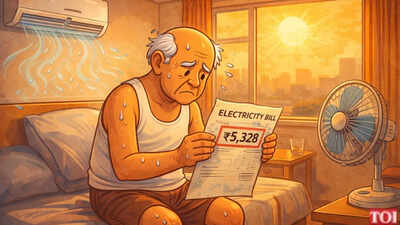
“So whatever happened to global warming?” That was what US President Donald Trump asked in a tweet a few years ago.The answer, increasingly, is showing up not in political debates but on electricity bills.The answer, increasingly, is showing up not in political debates but on electricity bills.Climate change is no longer a distant environmental concern. It is already reshaping how much power the world consumes, when it is consumed, and how much households and businesses pay for it.In the summer of 2025, parts of Europe recorded temperatures above 40°C. As the mercury climbed, electricity demand surged — not just for air conditioners but for everyday cooling across homes, offices and industries. During a June–July heatwave, peak daily power demand in countries such as Spain rose by as much as 14%, forcing grid operators to scramble for extra supply. Wholesale electricity prices in some regions spiked above €400 per megawatt-hour (MWh), according to a report by energy think-tank Ember.Across the world, hotter temperatures are changing how electricity is used, straining energy systems and pushing up costs. What was once framed largely as a climate or environmental issue is now hitting household budgets directly.Here’s a look at how climate change is driving electricity prices, why power bills are rising, and what this means for consumers — in India and globally.The heat is here — and it’s hitting power bills
A global cooling surge – from Europe to India
Electricity use is closely tied to temperature. As global averages rise, the need for cooling grows. In 2024, record heatwaves in big markets like China, the US and India led to more air conditioning use, pushing up power consumption sharply. A report from energy think-tank Ember found that extreme heat doubled electricity demand growth in peak months in some markets.In India, a study cited by Down to Earth found that heatwaves caused around a 9 % surge in electricity demand during peak summer months in 2024, creating what analysts called a “heat–power trap.” Meanwhile, across the European Union, daily electricity demand climbed as much as 14 % during heatwaves, with prices reacting sharply to the jump in demand.This rising cooling load is part of a wider global trend. Global energy use rose 2.2 % in 2024, well above the usual long-term trend, largely because extreme heat boosted air-conditioning demand worldwide, according to the Financial Times, citing International Energy Agency (IEA) data.
India’s rising energy consumption and costs
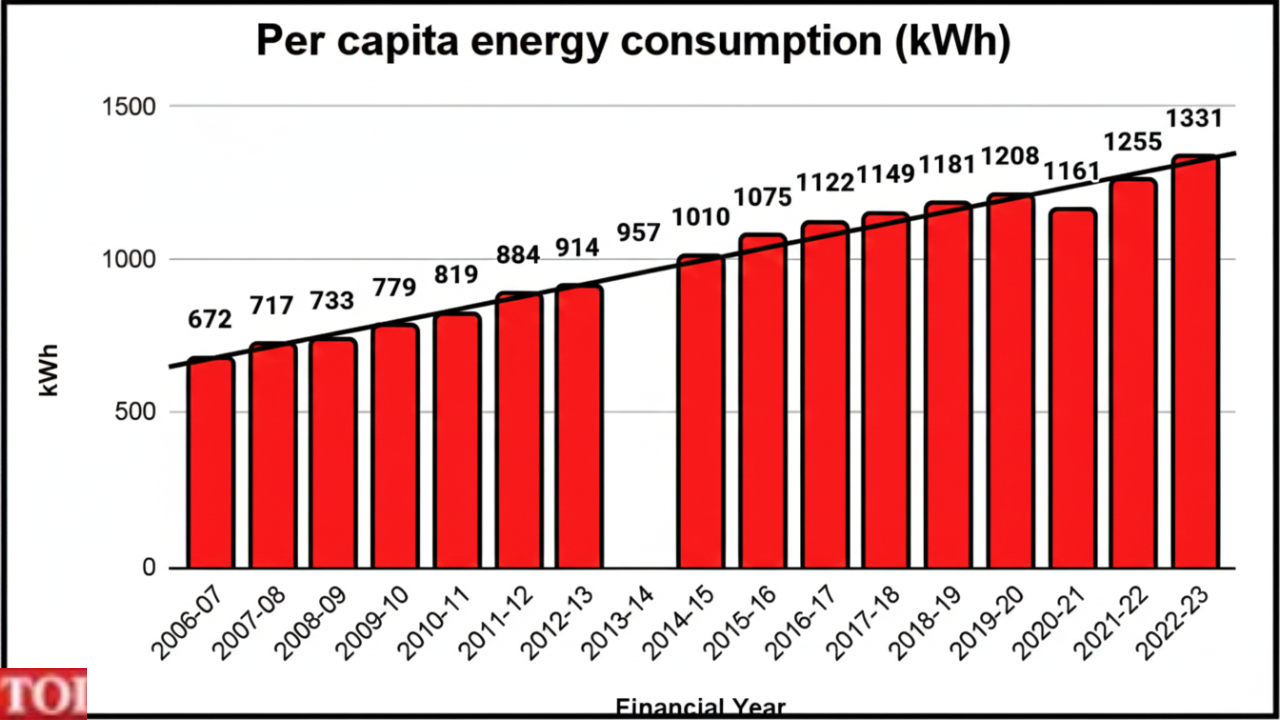
India’s electricity demand is rising sharply, driven by rapid industrialisation, urbanisation, and increased use of cooling systems.According to the Central Electricity Authority (CEA), total electricity consumption across the country in 2022–23 was 1,440,040.82 GWh, a 9.38 % increase over the previous year.Industrial and urbanised states such as Maharashtra, Gujarat, Karnataka, and Tamil Nadu show higher consumption, while less industrialised regions, including Bihar, Jharkhand, and the northeastern states, consume less.Sector-wise, the largest share of electricity went to industry (41.2 %), followed by domestic (24.5 %), agriculture (16.9 %), and commercial use (8.1 %), with the remaining going to public lighting, traction, water works, and miscellaneous purposes.Per capita electricity consumption has nearly doubled over the past years, rising from 672 kWh in 2006–07 to 1,331 kWh in 2022–23. Although the Covid-19 lockdown caused a slight dip in 2020–21, the overall trend shows a steady, linear increase, reflecting the country’s growing energy needs.India’s electricity generation is still heavily reliant on coal. This high dependence on fossil fuels also drives CO2 emissions, with thermal power generation alone producing an estimated 1,155.66 million tonnes of CO2 in 2022–23, highlighting the urgent need to scale up renewable energy for sustainability and cost efficiency.The rising demand and heavy reliance on thermal power not only put pressure on the grid but also translate into higher electricity costs for households and businesses, particularly during peak summer months.
.
Peak demand and grid stress
Electric utilities run a delicate balancing act of supply and demand. To keep the lights on, they must always have enough generation ready for peak periods. Extreme heat throws this balance off, concentrating huge electricity use into short periods as everyone switches on cooling systems at the same time.During heatwaves, these demand spikes put huge stress on grids and force utilities to fire up expensive “peaker” plants, power stations that only run when demand is high. These often use fossil fuels like natural gas, which cost more than baseline generation.In Europe’s 2025 heatwave, for example, average daily electricity prices in several countries doubled or even tripled compared to pre-heatwave levels, showing just how sensitive prices are to demand surges.Utilities usually pass these peak costs on to consumers. Households and businesses end up paying more, either through higher tariffs or dynamic pricing schemes that hike rates during peak hours.
Infrastructure damage and cost
Extreme weather, from heatwaves and wildfires to hurricanes and floods, also damages energy infrastructure. Transmission lines sag under heat, substations flood, and poles topple during storms. Repairs and resilience measures cost money, and much of that cost gets passed to consumers.The International Energy Agency (IEA) has also highlighted that climate hazards like wildfires, cold snaps, and heatwaves cause large-scale outages, showing that energy infrastructure is increasingly vulnerable to climate shocks.This added strain on infrastructure further pushes electricity prices up.
Who bears the burden?
Rising electricity bills don’t hit everyone equally. Low-income families, the elderly, renters, and small businesses often bear the brunt, according to the National Consumer Law Center. In parts of the US, many households reported unexpected spikes in their bills because of extreme heat and other weather events. A 2024 report from the US Energy Information Administration shows that low-income households, families with children, renters, and people identifying as Black, African American, Hispanic, or Latino have the highest rates of energy insecurity. During extreme weather, they face difficult choices, sometimes skipping food, medicine, or other essentials just to keep the lights on or stay cool.
.
Transition to renewable energy
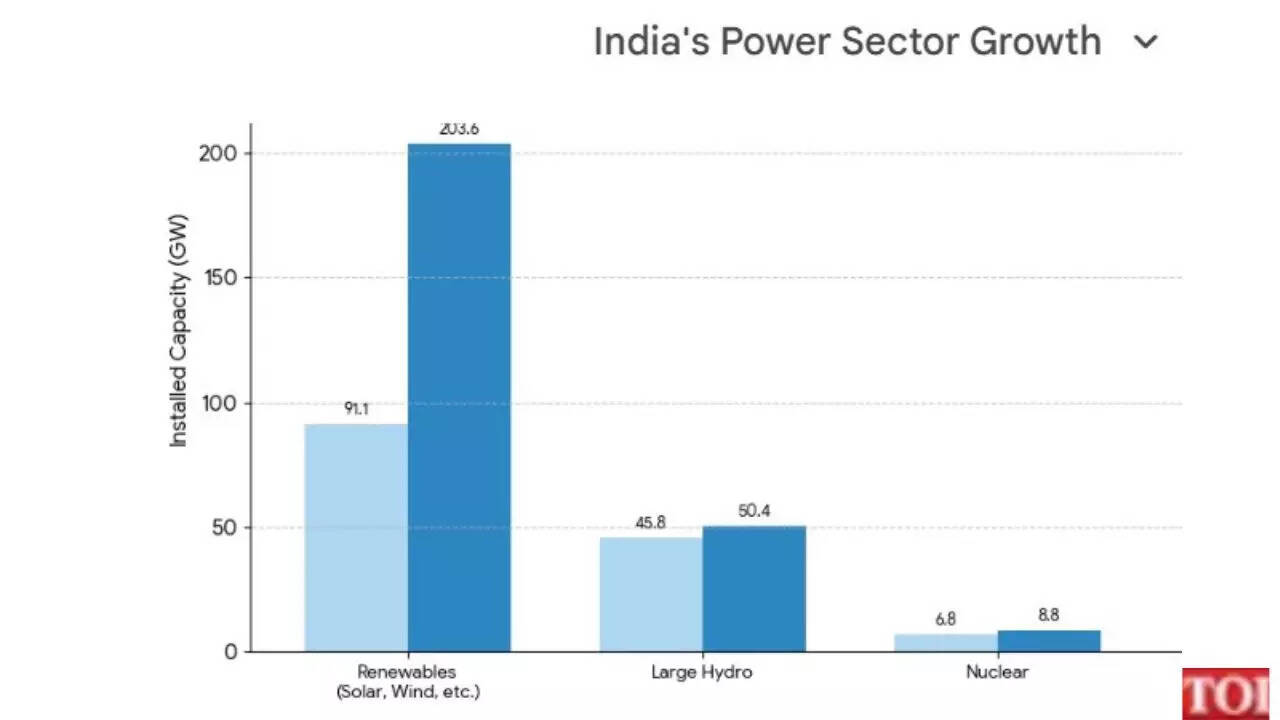
As electricity consumption in India continues to rise, it is crucial that this growth does not come at the cost of the environment. The share of renewable energy in the Indian power sector has been steadily increasing since 2014–15, with particularly strong growth over the last three years. Government schemes such as PM Surya Ghar and PM KUSUM have played an important role in promoting clean energy adoption.India’s installed power capacity has grown by nearly 36 per cent over the past five years, rising from 375 GW in December 2020 to almost 510 GW by December 2025. Much of this growth has come from new and renewable energy sources such as solar, wind, bio-energy and small hydro. Capacity from these sources more than doubled during the period, jumping 122 per cent from 91.1 GW to 203.6 GW, an addition of 112 GW.When large hydro and nuclear power are included, non-fossil fuel sources now account for 263 GW, or 51.6 per cent, of India’s total installed capacity. In contrast, capacity from fossil fuel-based sources coal, lignite, gas and diesel, has increased by just 5.6 per cent since December 2020.The ministry of new and renewable energy says 2025 marked India’s highest-ever annual addition of green energy capacity. A total of 44.5 GW was added till November 30, driven mainly by a sharp rise in solar installations. Solar capacity alone increased by 35 GW during the year, taking the total to 132.9 GW. Wind power capacity rose by 5.8 GW to reach 54 GW.Over the past five years, large hydro capacity increased from 45.8 GW to 50.4 GW. Nuclear power capacity saw a smaller rise, moving from 6.8 GW in 2020 to 8.8 GW in 2025.
Conclusion: The double-edged sword
Electricity is our frontline defence against climate change. We use it to cool homes during deadly heatwaves, power electric vehicles instead of petrol cars, and run data centres, hospitals, and cities that are trying to adapt to a warmer world. But the more we rely on electricity to cope with climate change, the more electricity we consume, and when that power still comes largely from coal and other fossil fuels, it ends up feeding the very crisis it is meant to solve.Rising temperatures push up electricity demand, especially for cooling, forcing grids to fall back on expensive and carbon-heavy thermal power during peak hours. This drives up emissions, stresses infrastructure, and locks countries into a cycle where climate change increases power use, and power generation worsens climate change.Breaking this loop will require more than just higher electricity supply. It will need faster renewable deployment, cleaner peak power solutions, better storage, and serious investments in efficiency. Otherwise, electricity risks becoming both the shield against climate change and one of its strongest accelerants.Governments and utilities know these challenges and are taking action. Many are investing in battery storage, better demand-response systems, and grid upgrades to spread demand more evenly throughout the day and reduce peak load pressure.In India, for instance, a 2025 ministry of power advisory on pairing energy storage systems with solar projects aims to lower electricity bills for businesses, improve sustainability, and help discoms manage peak demand.Energy efficiency measures like better home insulation and appliances that use less power can also reduce the burden on both grids and households.As the planet warms, electricity will only become more essential and more expensive. Whether it deepens the climate crisis or helps break it will depend on how quickly countries shift to cleaner, cheaper, and more resilient power systems.